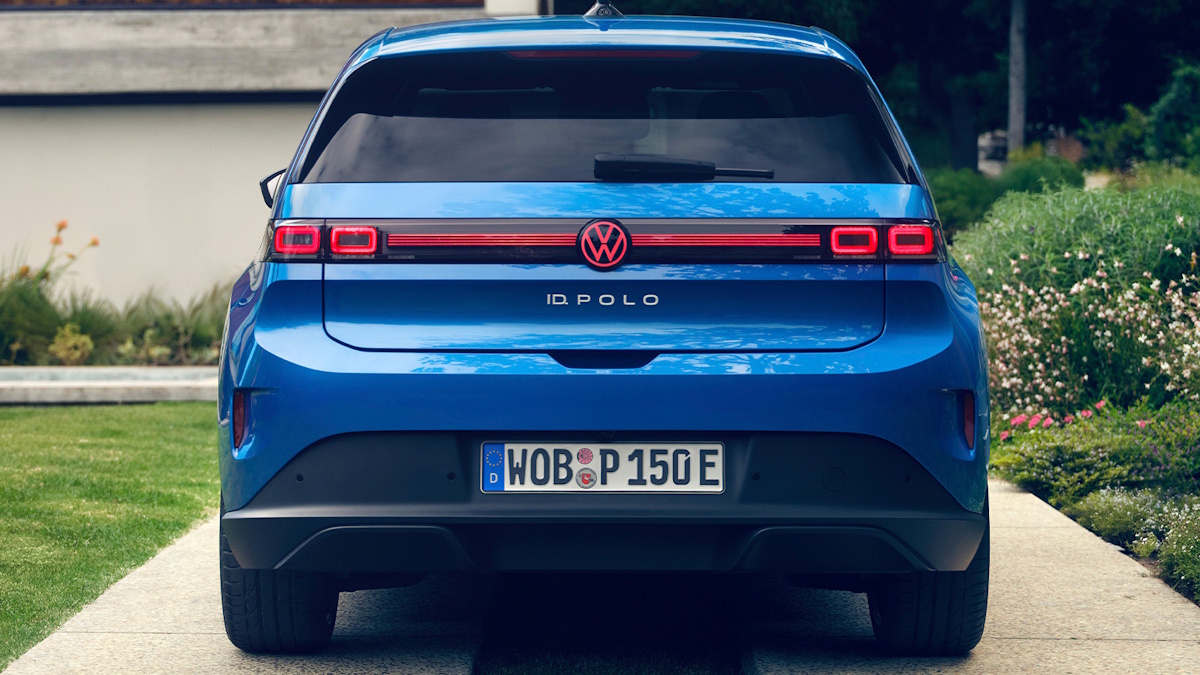
Volkswagen is bringing back one of its most famous names, only this time it’s electric. The ID.Polo revives the Polo badge as a compact electric hatchback, starting from around €24,995 and offering two battery options, with the larger pack good for up to 455 km WLTP and a generous 441 litre boot. If you’re still weighing up whether the cheaper LFP version or the longer range one makes more sense, I covered exactly that in our ID.Polo base trim battery breakdown. The ID.Polo sits a class below the ID.3, which has its own set of alternatives, and it’s aimed squarely at the heart of Europe’s affordable EV market. The trouble for Volkswagen is that this part of the market has exploded, and the Polo is walking into a crowd of talented small electric cars. Here are eight of the strongest rivals it has to beat, plus a few more worth knowing about.

| Battery options | Max WLTP range | Seats | Boot space |
|---|---|---|---|
| 37 kWh (LFP) / 52 kWh (NMC) | 329 km / 455 km | 5 | 441 L |
Renault 5 E-Tech
The Renault 5 is the car that woke this whole segment up, and it’s still the one to beat. It blends retro styling with a genuinely modern electric platform, and it recently became the best selling EV in the UK. Buyers get a choice of a 40 kWh or 52 kWh battery, with the larger pack good for up to 410 km WLTP, which is strong for something this compact. The boot holds a usable 326 litres and prices start at around €25,000. For the ID.Polo, this is the benchmark it’s been built to chase.
| Battery options | Max WLTP range | Seats | Boot space |
|---|---|---|---|
| 40 kWh or 52 kWh | 410 km | 5 | 326 L |
Cupra Raval
Here’s the awkward one for Volkswagen, and it’s partly a quirk of how the group has grown. Over the years Volkswagen has absorbed brands like Seat and Škoda, so today these badges build cars that share most of their parts and end up competing against each other. The Raval is a perfect example. It sits on the same MEB+ platform as the ID.Polo and rolls off the same production line in Martorell, so it’s less a true rival and more a sporty cousin attacking from inside the group. It uses a 37 kWh LFP or 52 kWh battery, with the larger pack quoted at up to around 450 km WLTP, and the boot matches the Polo at 441 litres. Orders are already open, with entry prices from around €25,950.
| Battery options | Max WLTP range | Seats | Boot space |
|---|---|---|---|
| 37 kWh or 52 kWh | 450 km | 5 | 441 L |
Kia EV2
The Kia EV2 might be the most dangerous name on this list. It’s technically a small crossover rather than a hatchback, but it lands right on the ID.Polo’s price and undercut expectations at launch. Buyers pick between a 42.2 kWh battery or a 61 kWh pack, the two using different cell chemistries that I explain in our LFP versus NMC guide. The larger one is good for up to 453 km WLTP. The boot holds 403 litres, it seats five, and Kia builds it in Slovakia. Add the long warranty and it’s a serious value proposition. From around €26,600.

| Battery options | Max WLTP range | Seats | Boot space |
|---|---|---|---|
| 42.2 kWh (LFP) or 61 kWh (NMC) | 453 km | 5 | 403 L |
Citroën ë-C3
If your priority is keeping the price down, the Citroën ë-C3 is the obvious pick. It’s built in Europe, it’s comfortable in that traditional Citroën way, and it focuses on the basics rather than chasing big numbers. You can choose between a 30 kWh and a 44 kWh battery, with the larger pack delivering up to around 300 km of WLTP range. That is more than enough for most city and suburban driving, while the 310-litre boot is competitive for the class. You can see how it stacks up in our city EV range comparison. Prices start at roughly €23,300, comfortably below the Polo, which is exactly the point of the car.
| Battery options | Max WLTP range | Seats | Boot space |
|---|---|---|---|
| 44 kWh | 300 km | 5 | 310 L |
Peugeot e-208
The Peugeot e-208 brings a more grown up, premium feel to the segment, with a smart cabin and styling that hides its electric side well. Mechanically it shares plenty with the Opel Corsa Electric, but the Peugeot plays the design card harder. Its 51 kWh battery is good for up to 432 km WLTP, and the 311 litre boot is on par with the rest of the field. It’s one of the pricier options here, climbing over €35,000 in higher trims, so it asks more than ID.Polo money for a slightly older design that still holds up well today.
| Battery options | Max WLTP range | Seats | Boot space |
|---|---|---|---|
| 50 kWh or 51 kWh | 432 km | 5 | 311 L |
Hyundai Inster
The Hyundai Inster is smaller and taller than the Polo, with a boxy, characterful look that’s won it a lot of fans. It comes with a 42 kWh or 49 kWh battery, the larger giving up to 370 km WLTP, and despite its tiny footprint a sliding rear bench frees up handy extra space. The standard boot is a modest 280 litres, growing to 351 litres when you slide the seats forward. I pitched it head to head with the BYD Dolphin Surf in this comparison. Prices start at around €23,900, undercutting the Polo while bringing Korean build quality and a strong warranty.

| Battery options | Max WLTP range | Seats | Boot space |
|---|---|---|---|
| 42 kWh or 49 kWh | 370 km | 4 or 5 | 280 L (up to 351 L) |
BYD Dolphin Surf
This is the budget Chinese challenger that Volkswagen itself points to. The BYD Dolphin Surf uses BYD’s own Blade battery in either a 30 kWh or 43.2 kWh form, with the larger Boost trim good for up to 322 km WLTP and very strong city efficiency. The boot holds 308 litres, it seats four, and it earned a five star Euro NCAP rating. The real story, though, is the price. Across much of Europe it sits around €20,000, well below the ID.Polo, which makes it a tempting entry point for anyone buying their first electric car.
| Battery options | Max WLTP range | Seats | Boot space |
|---|---|---|---|
| 30 kWh or 43.2 kWh | 322 km | 4 | 308 L |
MG4 Urban
The MG4 Urban is the value play with a twist, because it offers far more space than its price suggests, as I explained when I called it a clever second family car. Despite the name it’s a separate model from the regular MG4, built on its own platform with front wheel drive. You get a 42.8 kWh or 53.9 kWh LFP battery, the larger good for up to 416 km WLTP, plus a huge 479 litre boot with another 98 litres underfloor that shames cars from the class above. It seats five. UK prices sit around €27,000, with wider European availability rolling out.
| Battery options | Max WLTP range | Seats | Boot space |
|---|---|---|---|
| 42.8 kWh or 53.9 kWh | 416 km | 5 | 479 L |
A Few More Worth a Look
Beyond the main eight, a handful of others deserve a mention. The Opel Corsa Electric is the Peugeot e-208’s mechanical twin and a strong seller in its own right, with a 51 kWh battery good for up to 357 km WLTP. The Fiat Grande Panda Electric is another affordable Stellantis option with a roomy 361 litre boot. The Ford Puma Gen-E brings a crossover body and a sportier drive for buyers who want something a little taller, while the Leapmotor T03 is the cheapest Chinese entry point right at the bottom of the price ladder. Renault also offers the slightly larger Renault 4 alongside the 5 for anyone wanting a touch more practicality.
So Which One Should Worry Volkswagen Most?
The honest answer is that the ID.Polo arrives into the toughest small EV field Europe has ever seen. The Renault 5 sets the standard, the Kia EV2 and MG4 Urban attack hard on value and space, and the BYD Dolphin Surf undercuts almost everyone on price. Volkswagen’s pitch is quality, familiarity and that trusted badge, which still counts for a lot with buyers. If you’re new to electric cars and trying to make sense of your options, our guide to the best EVs for new drivers is a good place to start. Either way, the ID.Polo has to earn its place rather than assume it.
FAQ
What is the Volkswagen ID. Polo?
It’s Volkswagen’s new compact electric hatchback, reviving the Polo name for the electric era. It’s built on the MEB+ platform in Martorell, Spain, and slots in below the ID.3 in the range.
How much does the ID. Polo cost?
Prices start from around €24,995 for the entry version, with the larger battery and higher trims costing more. The cheapest LFP version is expected to follow the launch models.
What is the closest rival to the ID. Polo?
The Renault 5 is the most direct competitor on size, price and purpose. The Cupra Raval is even closer mechanically, since it shares the same platform and factory.
Which ID. Polo rival has the longest range?
Among the main eight, the Kia EV2 leads with up to 453 km WLTP from its 61 kWh battery, just ahead of the Cupra Raval and Renault 5.
Which rival is the cheapest?
The BYD Dolphin Surf and Leapmotor T03 are the most affordable, often sitting around or below €20,000 depending on the market and local incentives.
Is the Cupra Raval the same car as the ID.Polo?
Not exactly. They share the MEB+ platform and the Martorell production line, but Cupra gives the Raval sportier styling, a wider track and a hot VZ performance version.
Featured Image Credit: Volkswagen
Marko Lubar is the Founder and Editor of ElectricFleet Online, where he covers the latest developments in electric vehicles, battery innovation, autonomous driving, artificial intelligence, and the technologies shaping the future of mobility.
Learn more about Marko and the mission behind ElectricFleet Online on the About Us page.
Latest News