Not long ago, this article would have been short. Under €40,000, an EV either had a modest battery and a range that made you plan your week around charging, or it had a big battery and a price tag that pushed it into a different bracket entirely. That trade-off is finally starting to break down. €40,000 is still real money, more than most European families spend on a car without thinking twice, but it now buys genuine 500km-plus range in several places across the continent. That’s enough for a full week of commuting on one charge, and enough to drive from Amsterdam to the French coast without watching the percentage readout more than the road. Here are eight that actually do it, and where in Europe the numbers line up.
Why Manufacturers Cut Range Before Anything Else
The battery is the single most expensive part of an EV, often a third or more of what it costs to build, so it’s the first place a manufacturer looks when a car needs to hit a lower price. Every extra kWh means more lithium, more cell manufacturing capacity, and more weight the rest of the car has to compensate for. Chemistry plays its own role here too, cheaper LFP packs need more volume for the same range than pricier NMC ones, a trade-off I’ve covered in detail in my LFP vs NMC explainer. There’s also a deliberate business reason: a smaller battery on the entry trim gives buyers something to upgrade away from, which is exactly why the cheapest version of almost every EV on this list isn’t the one that made the cut.
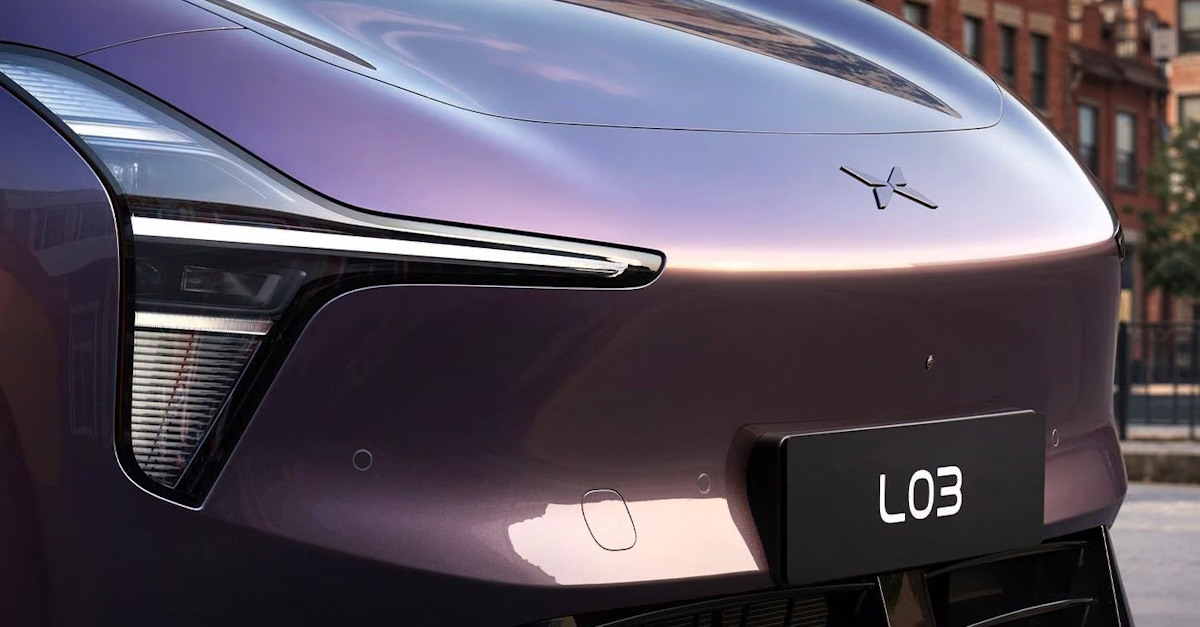
Xpeng L03
The newest name on this list, and one I only just finished covering at launch. Xpeng’s L03 went on sale across Europe this July with a 69 kWh LFP pack good for up to 520km WLTP, priced at €34,990 in France and the Netherlands and €35,600 in Germany, undercutting competitors everywhere it’s sold. It uses a 400V platform rather than the pricier 800V setup on Xpeng’s other models, a deliberate trade to hit this price point without gutting the range. I went through the full launch details separately.
BYD Atto 3 Evo
BYD’s facelifted Atto 3 switched to rear-wheel drive, an 800V platform and a bigger 74.8 kWh Blade battery, pushing WLTP range to 510km. Where it gets interesting is how much the price swings by market. Belgium prices it at €37,711, Denmark works out to roughly €37,500, and France sits at €38,990, all comfortably under the line. The Netherlands lands at €40,990, just over it, and Germany and the UK price it noticeably higher again. If you’re shopping across borders, this is one where crossing into Belgium or France genuinely changes which side of €40,000 you land on.

BYD Seal U
A size up from the Atto 3, and priced accordingly in most of Europe, but not everywhere. In Denmark, the Seal U can be found for around €37,500, comfortably under our line with its 500km WLTP figure intact. Elsewhere the story changes fast: most other European markets price it above €40,000, sometimes well above. It’s the clearest example on this list of a car that qualifies in exactly one market and not the rest, which makes it worth a look specifically if you’re buying in Denmark, and worth skipping this particular search if you’re not.
MG4 EV
MG’s own numbers tell two different stories depending on the day you check them. The Premium trim’s 77 kWh battery delivers up to 545km WLTP, the longest range on this entire list, and its official German list price is €44,990. But MG’s own €6,000 EV-Bonus, which I’ve covered in detail separately, brings that down to €38,990 for as long as the promotion runs. Belgium, France, Italy and the Netherlands all price the same trim under €40,000 without needing a promotion at all, and the UK follows the same pattern.
Tesla Model 3
Tesla’s own segmentation shows up clearly here. The Standard RWD trim lists at around €37,970 in Germany with a genuine 534km WLTP range on its LFP battery, and the same trim prices under €40,000 in France, Belgium, Italy and the Netherlands too. It’s the same 60 kWh pack Tesla says can be charged to 100% daily without the degradation concerns that come with an NMC battery, which makes the range figure more usable in practice than it might first appear.
Tesla Model Y
The trickiest inclusion here, and one worth a specific warning. The base Model Y prices sit right on the €40,000 line across much of Europe, occasionally just above it, but land under it in Germany specifically. Whether you clear the threshold depends on exact spec, options and the week you’re configuring, since Tesla adjusts pricing more often than most manufacturers. If you’re chasing this exact combination of price and range on a Model Y, my advice is to configure it yourself on Tesla’s own site or ask a dealer directly rather than trust a number that might already be stale.

Renault Megane
The Megane sits right on the boundary we set for this list, with a WLTP range of 501km, just enough to clear 500km rather than comfortably beat it. Its price stays under €40,000 without needing a promotion to make it work (except in Germany), which is more than several rivals on this list can say. It won’t win a spec sheet argument against the Tesla or MG entries here, but it doesn’t need to. It’s proof that hitting both numbers at once is becoming normal rather than exceptional, even for a manufacturer that isn’t chasing headlines with either figure.
Citroën ë-C5 Aircross
Citroën’s largest SUV clears both bars too, just narrowly, and in specific markets rather than everywhere at once. The Comfort Range trim’s 73 kWh battery delivers 520 km WLTP, and in Belgium it’s priced at €38,580, comfortably under the line. Its Progressive Hydraulic Cushion suspension also makes it one of the more comfortable rides on this entire list, if outright range isn’t the only thing you’re shopping on.

One to Watch: GAC Aion V
Not confirmed yet, but worth flagging. GAC’s Aion V already has a genuine 510km WLTP figure and a five-star Euro NCAP rating on its 75 kWh LFP battery, and it’s built at Magna Steyr in Graz, the same Austrian plant that assembles Xpeng’s models, so it sidesteps the EU tariff that applies to cars shipped in from China. It launched in Finland back in September 2025 and has since rolled out to Portugal, Poland and Greece. Continental European pricing for markets like Germany and France hasn’t been officially confirmed at the time of writing, but GAC has consistently undercut rivals elsewhere, so there’s a reasonable chance it lands under €40,000 once it does. Worth checking back on.
Where This Goes Next
Every Chinese brand on this list is currently importing at least some of what it sells in Europe from China, which means every one of them is still absorbing some level of EU tariff on top of the price you see. That’s already changing. I’ve mapped out which Chinese manufacturers are building or about to build cars inside the EU, and once a car is built inside the bloc, that tariff cost disappears entirely. BYD’s Hungarian plant, Xpeng’s Austrian production line and MG’s upcoming Spanish factory all point the same direction: the prices on this list are close to the best case right now, and there’s a reasonable argument they get more competitive from here, not less.
That production commitment is also a useful proxy for something worth checking before you buy: not every Chinese manufacturer selling in Europe is actually staying. I’ve written a full breakdown of which Chinese EV brands are genuinely committed and which have already quietly retreated, and the pattern lines up with the same names building factories here, Xpeng, BYD, MG and GAC all have their own dealer network, a serious European partner, or both, which is exactly why they’re the ones on this list. Brands without that commitment have a habit of leaving buyers stranded with unclear parts support a few years in, so it’s worth checking a brand’s European track record for yourself before signing anything, regardless of how good the range and price look on the day.
FAQ
Which EVs cost under €40,000 with at least 500km WLTP range in Europe?
The Xpeng L03, BYD Atto 3 Evo, MG4 EV Premium, Tesla Model 3 Standard RWD and Renault Megane E-Tech all meet both criteria in multiple European markets. The BYD Seal U and Tesla Model Y meet both criteria only in specific markets or configurations.
Why does the price vary so much by country?
Manufacturers set separate pricing per market based on local taxes, competition, currency and incentive structures. The same trim of the same car can differ by several thousand euros between Germany, France, Belgium and the Netherlands.
Is the Tesla Model Y a reliable pick for this budget and range combination?
Not consistently. Pricing sits right on the €40,000 line in much of Europe and changes often. Germany currently prices it under the threshold, but check directly with Tesla’s configurator or a dealer before assuming any specific figure still holds.
Is the GAC Aion V worth waiting for?
Possibly. It already has a confirmed 510km WLTP range and a five-star Euro NCAP rating, and it’s built inside the EU at Magna Steyr in Austria, avoiding import tariffs. Its price for markets like Germany and France hasn’t been officially confirmed yet, though GAC’s pricing elsewhere suggests it could land under €40,000.
Will these cars get cheaper as Chinese manufacturers build in Europe?
It’s a reasonable expectation. Cars built inside the EU avoid the tariffs currently applied to vehicles imported from China, and BYD, Xpeng and MG all have European production either running or under construction.
Featured Image Source: Xpeng
Marko Lubar is the Founder and Editor of ElectricFleet Online, where he covers the latest developments in electric vehicles, battery innovation, autonomous driving, artificial intelligence, and the technologies shaping the future of mobility.
Learn more about Marko and the mission behind ElectricFleet Online on the About Us page.
Latest News