Small electric cars are becoming much more capable, and range is one of the areas where the latest models have moved the goalposts. Cars such as the VW ID.Polo, Kia EV2 and Cupra Raval are now approaching 450 km of official range, while models like the Renault 5 and Nissan Micra are comfortably above 400 km. That makes the old idea of a small EV being useful only around town increasingly outdated. A compact electric car can now cover a decent distance between charges, while still being easier to park and cheaper to run than a larger model.
Editor’s note: This article was originally published in November 2025 and has been updated on September 26, 2026, to include new electric cars that have entered the European market since the original comparison was published.
City driving also suits electric cars particularly well. Lower speeds reduce aerodynamic drag, while stop start traffic gives regenerative braking more opportunities to put energy back into the battery. That’s why the official WLTP figure doesn’t tell the whole story. I’ve included real world range estimates from EV Database where they are available, including for several of the newest cars on the market.
For consistency, every model below is shown with its largest available battery and the corresponding maximum range.
Combined Range Comparison
The combined WLTP figure is the easiest way to compare these cars because it includes a mixture of urban and faster driving. The table is ordered by official range, with the highest figures at the top. If you’re not familiar with WLTP, you can check out my article where I explain the WLTP and CLTC standards used to measure how far an EV can travel on a single charge.
| Model | Battery (kWh) | WLTP Combined Range (km) | Real World Range (km) |
|---|---|---|---|
| VW ID.Polo | 52 | 452 | 335 |
| Kia EV2 | 61 | 452 | 340 |
| Cupra Raval | 52 | 446 | 330 |
| Skoda Epiq | 52 | 440 | 320 |
| Vauxhall / Opel Corsa | 49 | 429 | 335 |
| Renault 5 | 52 | 417 | 335 |
| Nissan Micra | 52 | 408 | 330 |
| Leapmotor B03X | 53.0 | 382 | 300 |
| Hyundai Inster | 49 | 370 | 300 |
| Geely E2 | 47.1 | 345 | 280 |
| BYD Dolphin Surf | 43.2 | 322 | 270 |
| Fiat Grande Panda | 44 | 320 | 260 |
| Fiat 500e | 42 | 320 | 235 |
| Citroën ë-C3 | 44 | 300 | 255 |
| Leapmotor T03 | 37.3 | 265 | 225 |
| Renault Twingo E-Tech | 27.5 | 263 | 185 |
| Dacia Spring | 27.4 | 230 | 165 |
Practicality
Range is only one part of the equation. A small EV still has to carry shopping, luggage and everything else you normally put in a car, so boot space can make a big difference.
The table below shows boot capacity with the rear seats in place and with them folded, where figures are available.
| Model | Boot (L) | Boot (L) Seats Folded |
|---|---|---|
| Skoda Epiq | 475 | 1,345 |
| VW ID.Polo | 441 | 1,240 |
| Cupra Raval | 441 | No Data |
| Leapmotor B03X | 407 | 1,358 |
| Geely E2 | 375 (+70 frunk) | 1,320 |
| Kia EV2 | 362 | 1,201 |
| Fiat Grande Panda | 361 | 1,315 |
| Renault Twingo E-Tech | 360 | 1,010 |
| Renault 5 | 326 | 1,106 |
| Nissan Micra | 326 | 1,106 |
| Citroën ë-C3 | 310 | 992 |
| BYD Dolphin Surf | 308 | 1,037 |
| Dacia Spring | 308 (+35 frunk) | 1,004 |
| Vauxhall / Opel Corsa | 267 | 1,081 |
| Hyundai Inster | 238 | 1,059 |
| Leapmotor T03 | 210 | 880 |
| Fiat 500e | 185 | 550 |
Safety and Warranty
The newer cars in this comparison don’t all have Euro NCAP results yet, so the safety picture is still incomplete. Battery warranties are easier to compare, with most manufacturers offering eight years and 160,000 km. If you want to compare the full warranty coverage across European EV brands, I’ve covered that separately in my article on the longest EV warranties in Europe.
| Model | Euro NCAP Rating | Battery Warranty |
|---|---|---|
| Geely E2 | 5 stars | 8 years / 200,000 km |
| BYD Dolphin Surf | 5 stars | 8 years / 200,000 km |
| Cupra Raval | 4 stars standard, 5 with the optional Safety Pack | 8 years / 160,000 km |
| Renault 5 | 4 stars | 8 years / 160,000 km |
| Vauxhall / Opel Corsa | Not yet tested | 8 years / 160,000 km |
| Nissan Micra | 4 stars | 8 years / 160,000 km |
| Hyundai Inster | 4 stars | 8 years / 160,000 km |
| Fiat 500e | 4 stars | 8 years / 160,000 km |
| Dacia Spring | 1 star | 8 years / 160,000 km |
| VW ID.Polo | Not yet tested | 8 years / 160,000 km |
| Skoda Epiq | Not yet tested | 8 years / 160,000 km |
| Renault Twingo E-Tech | Not yet tested | 8 years / 160,000 km |
| Leapmotor B03X | Not yet tested | 8 years / 150,000 km |
| Leapmotor T03 | Not yet tested | 8 years / 150,000 km |
| Kia EV2 | Not yet tested | 7 years / 150,000 km |
| Fiat Grande Panda | Not yet tested | 8 years / 160,000 km |
| Citroën ë-C3 | Not yet tested | 8 years / 160,000 km |
As you can see, a large number of the cars haven’t been tested at all, and there are two reasons for that. First, some of the EVs featured in this article are new models and haven’t gone through the testing process yet. The second reason is that some manufacturers simply have little interest in having their cars tested because they know they’re unlikely to achieve a result they can brag about.
They’re easy to spot: they’re the EVs in this article that have been on the market for more than a year but still don’t have a Euro NCAP rating. Among those that have been tested, the Dacia Spring performed by far the worst, earning just one star. The Spring’s result was actually what motivated me to write an article about EVs I wouldn’t recommend buying because of their poor Euro NCAP ratings.
Which Small EV Has the Longest Range?
The VW ID.Polo and Kia EV2 are currently tied at the top of the table, both reaching 452 km on the WLTP cycle. The Cupra Raval is only 6 km behind them, while the Skoda Epiq reaches 440 km. The real world figures are slightly different. EV Database puts the Kia EV2 at 340 km, followed by the ID.Polo at 335 km and the Raval at 330 km. The difference isn’t huge, but it shows why the official figure is only one part of the comparison. The ID.Polo also has a 441 litre boot, while the Kia offers 362 litres. The Volkswagen has already picked up the Budget category at the 2026 German Car of the Year awards, although Euro NCAP hasn’t tested it yet.

The Renault 5 remains one of the strongest options for buyers who want a compact EV with a well established real world range figure. Its MY27 update increased the range from 410 to 417 km WLTP through aerodynamic changes, without increasing the battery size. It also retains a four star Euro NCAP rating and a 326 litre boot. The Nissan Micra is very close to the Renault 5 because the two cars share most of their underlying EV hardware. It also offers a 408 km WLTP range and the same 326 litre boot.
For luggage space, the Skoda Epiq currently sits at the top with 475 litres. The VW ID.Polo and Cupra Raval follow with 441 litres each, while the Leapmotor B03X offers 407 litres. With the rear seats folded, the B03X reaches 1,358 litres, slightly more than the Epiq’s 1,345 litres.
Cars Left Off This List
A few small EVs are still difficult to include in a Europe wide comparison because they are available in only a handful of countries. The Dongfeng Nammi Box and Nio Firefly fall into that category for now. The Nissan Pixo is another one to watch. It shares its platform, 27.5 kWh LFP battery and Slovenian production line with the Renault Twingo E-Tech and the redesigned Dacia Spring. Nissan quotes 259 km of WLTP range and a 356 litre boot, but pricing isn’t expected to be confirmed until December 2026 and first deliveries aren’t expected until early 2027.
For buyers who need more range and space than these compact cars offer, my comparison of EVs under €40,000 with more than 500 km of range covers the next step up.
The Models Featured in This Article
VW ID.Polo
Volkswagen’s ID.Polo is one of the first small EVs to get close to the price of a conventional Polo while offering much more range than most cars in this class. In Germany, prices start at €24,995 with a 37 kWh battery and 315 to 329 km of WLTP range. The larger 52 kWh battery takes that figure to 452 km. I’d personally still go for the model with the smaller battery, as I think it’s the better option.
Kia EV2
Kia’s smallest and cheapest EV is built in Slovakia specifically for the European market. The base version uses a 42.2 kWh battery for around 317 km of WLTP range, while upper trims get a 61 kWh battery capable of 452 km. It should achieve 340 km in real world driving, the highest figure in this comparison. The boot holds 362 litres and expands to 1,201 litres with the seats folded.
Cupra Raval
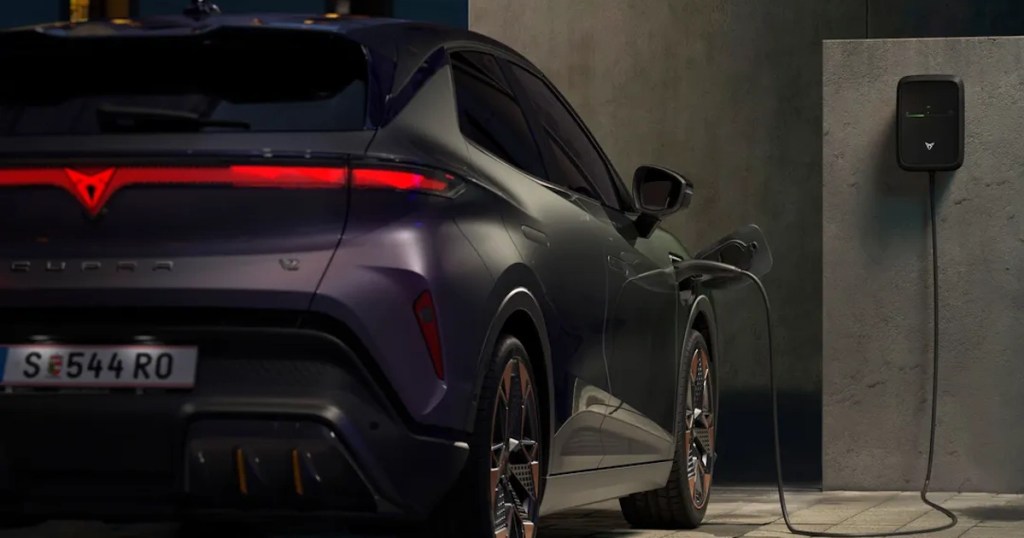
The Cupra Raval uses the same MEB+ architecture as the ID.Polo and Epiq, but gives it a more aggressive design and a sportier driving character. The entry level uses a 37 kWh battery and a 133 hp motor for around 328 km of WLTP range. The 52 kWh trim increases output to 211 hp and range to 446 km, with EV Database estimating around 330 km in real world conditions.
Skoda Epiq
Skoda’s smallest EV is slightly larger than most of the cars in this comparison at 4.17 metres long. Its 52 kWh net battery and 155 kW motor give it 440 km of WLTP range, while real world driving is estimated around 320 km. Its biggest advantage is practicality. The Epiq has a 475 litre boot, which grows to 1,345 litres with the rear seats folded.
Leapmotor B03X
The B03X sits somewhere between a small hatchback and a compact crossover, but its price and dimensions put it directly into this group. Leapmotor offers two LFP batteries. The smaller 39.8 kWh pack gives 292 km of WLTP range, while the 53.0 kWh version reaches 382 km. DC charging peaks at 133 kW, allowing a 10 to 80 percent charge in around 21 minutes. The boot holds 407 litres and expands to 1,358 litres with the rear seats folded.
Geely E2
Geely’s E2 was China’s best selling car of any type in 2025, across petrol, hybrid and electric models. In Europe, the car is sold as the E2 on the continent and EX2 in the UK. The Pro version uses a 35.35 kWh battery and a 60 kW rear motor for 252 km WLTP, while the Max and Ultra use a 47.14 kWh battery and 85 kW motor for up to 345 km. Boot space is 375 litres, plus a 70 litre frunk, and expands to 1,320 litres with the rear seats folded. Euro NCAP awarded the E2 five stars under its tougher 2026 protocol, including the highest Safe Driving score of its test batch.
Renault 5
The Renault 5 helped kick off the latest wave of small European EVs and remains one of the most rounded cars in the class. Its MY27 update kept the 40 kWh Urban Range and 52 kWh Comfort Range batteries but improved the aerodynamics enough to lift the larger version’s WLTP range to 417 km. The update also adds SmartMode, which automatically switches between driving modes, along with an optional Google Gemini voice assistant. The boot holds 326 litres and expands to 1,106 litres with the rear seats folded.
Nissan Micra
The new Micra is built alongside the Renault 5 at Renault’s plant in France, where production has been ramping up to keep up with demand. The two cars share most of their EV hardware, including their battery and motor options, so the figures are very close. The Micra reaches 408 km WLTP with the 52 kWh battery and has the same 326 litre boot as the Renault 5. For buyers who prefer Nissan’s design or simply want a Micra rather than a Renault 5, there is very little difference in the basic range and practicality figures.
Vauxhall / Opel Corsa
The current Corsa Electric is available with 46 or 49 kWh batteries, with the larger version reaching 429 km WLTP. Its 100 kW motor gives it 335 km of estimated real world range according to EV Database, while the boot holds 267 litres. This generation is approaching the end of its run, and Opel has confirmed that the next Corsa will be electric only.
Hyundai Inster
The Hyundai Inster is available with 42 or 49 kWh batteries. The smaller battery is paired with a 71 kW motor, while the larger version gets an 85.5 kW unit. Boot capacity varies from 238 to 351 litres depending on the configuration and seat position. Its estimated real world range also holds up relatively well against the official WLTP figure, making the Inster particularly interesting for urban drivers who want a compact car without giving up too much range.
BYD Dolphin Surf
BYD’s smallest European model is available in several versions, with the Boost version using a 43.2 kWh LFP battery and a 65 kW motor. That combination delivers 322 km of WLTP range and around 270 km in real-world conditions. The 308 litre boot is competitive for the class, and the Dolphin Surf’s five star Euro NCAP rating is notable given its relatively low price. A successor is already being tested in China, and it will be larger, more comfortable, and probably even safer.
Fiat Grande Panda
The Grande Panda uses a 44 kWh battery and an 84 kW motor for 320 km of WLTP range. Its 361 litre boot remains one of its strongest points, expanding to 1,315 litres with the rear seats folded. It used to lead this comparison for luggage space, but newer models from Leapmotor and Skoda have since moved ahead.

Citroën ë-C3
The ë-C3 pairs a 44 kWh battery with an 83 kW motor for 300 km of WLTP range. Its 310 litre boot is reasonably generous for a small EV, and buyers can choose between 7.4 and 11 kW AC charging alongside 100 kW DC charging. It’s built in Europe and sits toward the lower end of this comparison in terms of range, while keeping the basic package relatively simple.
Leapmotor T03
The T03 is Leapmotor’s smallest and cheapest European model. Its 37.3 kWh battery and 95 kW front motor give it 265 km of WLTP range. The 210 litre boot is one of the smallest here, although it grows to 880 litres with the rear seats folded. Its main appeal is the price, which undercuts most of the larger cars in this comparison.
Fiat 500e
The 500e uses a 42 kWh battery and an 88 kW motor for 320 km of WLTP range and 220 Nm of torque. At 185 litres, its boot is the smallest in this comparison, although folding the rear seats increases capacity to 550 litres. The 500e continues to rely heavily on its distinctive retro design to separate it from the more practical newcomers.
Renault Twingo E-Tech
Renault’s cheapest EV uses a 27.5 kWh LFP battery from CATL and a 60 kW motor. The result is 263 km of WLTP range, while EV Database estimates around 185 km in real world driving. That’s towards the bottom of this table, but the Twingo is designed primarily as a city car.
Dacia Spring
The Dacia Spring remains Europe’s cheapest new EV. Built in China, the current model uses a 27.4 kWh battery and a 48 kW motor for 230 km of WLTP range, while real-world range is around 165 km. The 308 litre boot expands to 1,004 litres with the rear seats folded, while a 35 litre frunk adds a little more storage space.
The Spring’s one star Euro NCAP rating remains its biggest weakness. A completely redesigned second generation is due from November 2026, with production moving to Slovenia. Its claimed range is 250 km WLTP, while the new Euro NCAP result will show how much the safety package has changed.
FAQ
Which small city EV has the longest range?
The VW ID.Polo and Kia EV2 currently share the highest WLTP figure at 452 km. The Cupra Raval follows at 446 km. EV Database’s real world estimates put the Kia EV2 at 340 km, followed by the ID.Polo at 335 km and the Raval at 330 km.
Why does city range differ from combined range?
EVs tend to be more efficient at lower speeds because aerodynamic drag is lower. Regenerative braking also recovers energy during deceleration, which is particularly useful in stop start urban traffic. That’s why an EV can often cover more kilometres around town than its combined WLTP figure suggests.
Are these cars safe?
The results vary considerably. The Geely E2 and BYD Dolphin Surf have five star Euro NCAP ratings, while several of the newest cars, including the ID.Polo, Twingo, Epiq and Kia EV2, have not yet been tested.
How fast can these cars charge?
Most of the cars here support between 7 and 11 kW AC charging, while DC charging ranges from around 40 to 174 kW depending on the model.
Are small EVs practical as a second family car?
Many of them are. Cars such as the Renault 5, Nissan Micra and VW ID.Polo combine enough range and boot space for everyday driving, shopping, commuting and school runs.
Marko Lubar is the Founder and Editor of ElectricFleet Online, where he covers the latest developments in electric vehicles, battery innovation, autonomous driving, artificial intelligence, and the technologies shaping the future of mobility.
Learn more about Marko and the mission behind ElectricFleet Online on the About Us page.
Latest News