Your teenager just passed their driving test. Congratulations to them, and condolences to your nerves. Now comes the next question: what car do you actually buy them? The sensible choice might be to go electric, and there are several good reasons why. EVs are simpler to drive, cheaper to run, and the best ones come loaded with safety kit that genuinely helps inexperienced drivers avoid trouble. But not every EV earns its place on this list. I’ve applied a strict filter: five-star Euro NCAP rating, parking sensors as standard, a reversing camera included in the entry-level trim, and a price that doesn’t require a second mortgage. Here’s what made the cut and why.
Why These Four Criteria Matter for New Drivers
Before the shortlist, it’s worth explaining why these specific requirements exist, because they’re not arbitrary.
Safety ratings are non-negotiable
A five-star Euro NCAP rating isn’t just a marketing badge. It reflects how well a car performs in frontal, side and pole impact tests, how well it protects different-sized occupants, and how effective its autonomous emergency braking and lane-departure systems are. For a brand-new driver who is statistically more likely to be involved in a collision than an experienced one, putting them in a car that performed poorly in crash testing is a risk that simply isn’t worth taking. My guide to EVs with poor Euro NCAP ratings shows exactly why this matters, with some popular models have surprising results. You can also browse Euro NCAP ratings for recent EVs to compare the full picture.

Parking sensors and a reversing camera are not optional extras here
A new driver does not yet have a feel for the car’s dimensions. They will misjudge gaps, and they will reverse into things they shouldn’t. Parking sensors give an audible warning before something expensive happens, a reversing camera shows exactly what’s behind the car, and for a new driver, that is genuinely transformative. The emphasis here is on standard equipment in the entry-level trim. There’s no point recommending a car where you have to upgrade two trim levels to get a camera.
Affordable means actually affordable
A new driver is going to probably have higher insurance costs (although that’s depending on the country), will likely scratch something at some point, and doesn’t need a range of 500 km to get to college or go to the supermarket. The cars on this list are all available under €30,000, and at least one starts below €20,000. A more detailed look at the cheapest EVs in Europe right now is worth reading alongside this article if budget is the main concern. I’ve also covered EVs under €30,000 broken down by manufacturer if you want to narrow things down by brand.
The Shortlist: Three EVs That Pass Every Test
BYD Dolphin Surf
The BYD Dolphin Surf is the standout choice if budget is the primary concern. It starts under €20,000 in most European markets, which is genuinely unusual for a car with a five-star Euro NCAP rating. What makes it particularly relevant for new drivers is what comes standard on every single trim: a reversing camera, rear parking sensors, adaptive cruise control, Apple CarPlay and Android Auto, keyless entry and go, and three Isofix mounting points.
The Dolphin Surf is a small hatchback at 4,150 mm long, which makes it easier to place in traffic and more forgiving to park than a crossover. The standard battery delivers approximately 220 km of WLTP range on the base Active trim. The Boost trim steps up to a larger battery with more range, but for a first car used mainly around town, the base spec is often sufficient. I went into more detail on how it compares to the Hyundai Inster in this comparison piece. For city driving range specifically, my look at city EVs with the best real-world range covers the range issue in more detail.
MG4 Urban
The MG4 Urban is one of the most compelling additions to the affordable EV market in 2026. Depending on the country, the base trim starts at around €23,000, making it one of the cheapest ways to get into a full-size electric hatchback. To be clear on the naming: the MG4 Urban is a separate, more affordable model from the standard MG4 EV, built on a different front-wheel-drive platform called E3. The body is the same size at 4,287 mm long but the pricing is substantially lower.

It earned a five-star Euro NCAP rating in 2025, and the safety kit in the Comfort base trim is genuinely impressive. Even the cheapest version includes a reversing camera, rear parking sensors, adaptive cruise control with traffic jam assist, blind spot detection, lane change assist, rear collision braking, rear cross-traffic alert, and a safe door exit alert. The MG Pilot suite also includes auto-hold as standard, which is a small but meaningful feature for a new driver managing hills or stop-start traffic. Seven airbags come as standard across the range.
The base 43 kWh battery delivers 325 km of WLTP range, while the Long Range 54 kWh version extends that to 416 km. DC fast charging peaks at 150 kW, which is a genuinely fast figure for a car at this price point. The 360-degree camera system is reserved for the top Premium trim, but the reversing camera and all-round sensors on Comfort are more than adequate.
Firefly
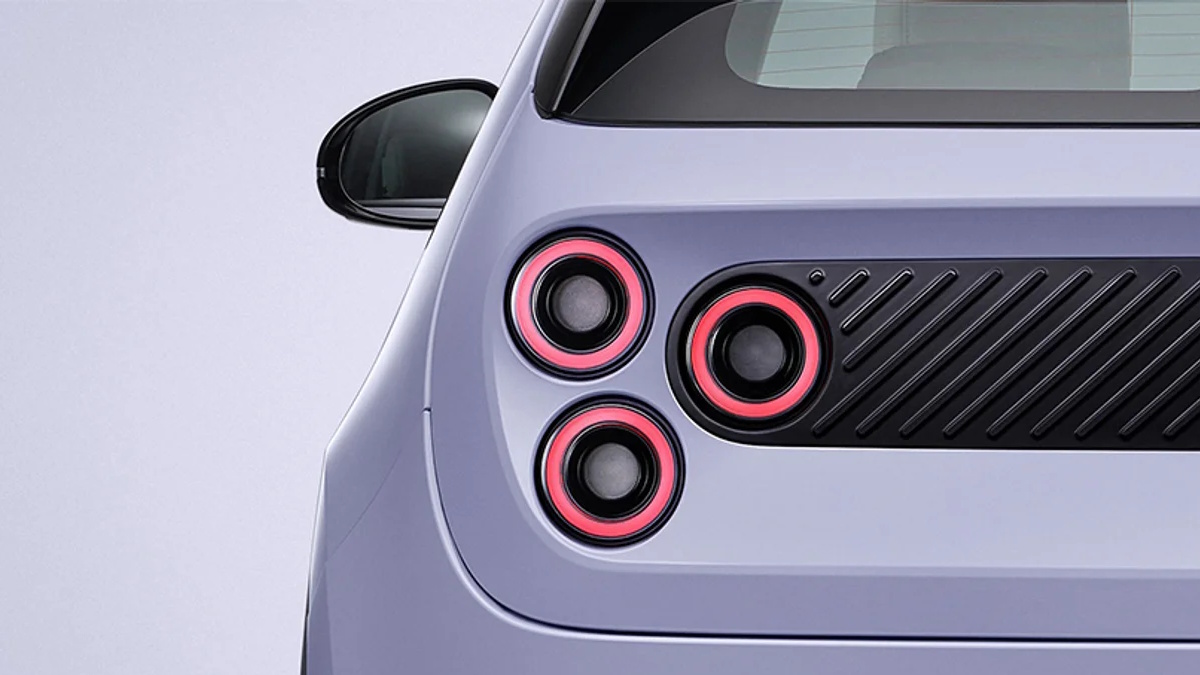
The Firefly is worth a mention even though it is not yet widely available across Europe. It is a compact electric hatchback developed under the Nio umbrella, and it achieved the highest Adult Occupant Protection score of any Euro NCAP tested vehicle at 96%, which is a remarkable result for a small car. The full safety package including blind spot camera and a digital rear-view mirror camera is standard equipment on every car.
It started deliveries in Norway and the Netherlands in August 2025 and has since expanded to Belgium, Greece, Austria, and Portugal, with the UK and additional markets expected to follow soon. Pricing in most EU countries starts at around €29,900, although some markets, such as Denmark, offer slightly lower pricing. If you are in one of the markets where it is already available, it is absolutely worth considering. If not, it is one to keep an eye on as the rollout continues.
What Almost Made the List and Why It Did Not
The Renault 5 E-Tech is one of the most talked-about affordable EVs in Europe right now, and with good reason. But it scored four stars from Euro NCAP rather than five, and the reversing camera is not included on the base trim. For a list with safety as the first criterion, those are two problems in one car.

The Kia EV2 looks promising and does include parking sensors and a reversing camera across the range. Euro NCAP results have not been published yet, so we cannot confirm the five-star requirement. It may well earn that rating when tested, but until it does, it cannot appear on a safety-first list.
The BYD Atto 2 is competitively priced and well equipped, but despite being on the market for around two years, it has yet to be crash-tested by Euro NCAP. A generous equipment list is encouraging, but it is no substitute for actual crash-test results.
A Few Other Things Worth Knowing Before You Buy
Insurance for a new driver will be high regardless of which car you choose. An EV does not automatically cost more to insure than a petrol equivalent, and in some cases it is cheaper, particularly for smaller models. The BYD Dolphin Surf tends to sit in lower insurance groups than you might expect.
Running costs are genuinely lower. Electricity is cheaper than petrol per kilometre driven, and EVs have fewer mechanical components that can wear out. For a young driver using the car mainly for shorter journeys, home charging overnight (if available) would cover most needs.
Simpler is better and safer for a first car. I’d recommend a car with at least some physical buttons to avoid constant tapping on a screen while driving. Kids are already constantly distracted by smartphones nowadays, and they don’t need another layer of distraction when they’re behind the wheel, because it’s simply not safe. Help them keep things simple and straightforward with their first car.
FAQ
Does a new driver need a reversing camera?
It is not legally required, but it makes a significant practical difference. New drivers have not yet developed an instinct for a car’s rear dimensions, and a camera removes much of the guesswork when parking. All cars on this list include one as standard on the entry-level trim.
Which is the cheapest EV on this list?
The BYD Dolphin Surf starts from around €20,000 in many European markets, making it the most affordable option that still meets the five-star Euro NCAP and standard reversing camera requirements.
Is the Renault 5 E-Tech suitable for a new driver?
It is a good car, but it scored four stars from Euro NCAP rather than five, and the reversing camera is not included on the base trim. For a list that prioritises safety above all else, those are two meaningful gaps.
What about the Kia EV2?
The EV2 looks promising and does include parking sensors and a reversing camera across the range. However, Euro NCAP results have not been published yet, so we cannot verify the five-star requirement. I will revisit this once testing is complete.
Can a new driver’s first car be electric?
Yes, and I think an EV is better suited to a new driver than a petrol car. There is no clutch to manage since all EVs are automatic, throttle response is smooth and predictable, and EVs are usually loaded with safety kit. The main adjustment is learning to manage range, which is straightforward for local driving.
Featured Image Credit: Firefly
Marko Lubar is the Founder and Editor of ElectricFleet Online, where he covers the latest developments in electric vehicles, battery innovation, autonomous driving, artificial intelligence, and the technologies shaping the future of mobility.
Learn more about Marko and the mission behind ElectricFleet Online on the About Us page.
Latest News