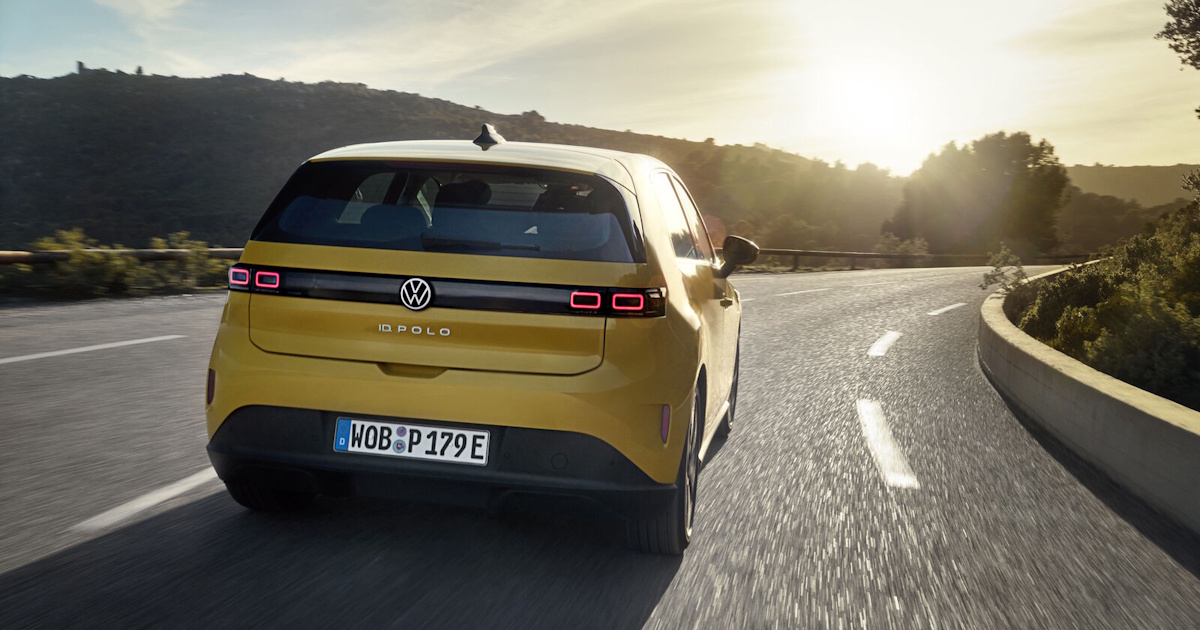
The Volkswagen ID.Polo is one of those upcoming EVs that immediately grabs attention because of its name alone, but what really interests me is how its lineup is structured once you look past the marketing. On the surface, the higher trims with bigger batteries and more power look like the obvious choice. But the more I dig into how these batteries are actually meant to be used, the more I keep coming back to the same conclusion. For most drivers, the base Trend trim with the smaller LFP battery is not just good enough, it might actually be the smarter buy.
Trims And Battery Options
Before going into the reasoning, it helps to clearly lay out what Volkswagen is offering. The ID.Polo comes in three trims, Trend, Life and Style, with two different battery technologies depending on version.
| Trim | Trend | Life | Style |
|---|---|---|---|
| Battery | 37 kWh (LFP) | 37 kWh (LFP) or 52 kWh (NMC) | 37 kWh (LFP) or 52 kWh (NMC) |
| Power Output | 85 kW | 99 kW or 155 kW | 99 kW or 155 kW |
| WLTP Range | up to 329 km | 320 km to 455 km | 320 km to 455 km |
What really matters here is not just the size of the battery, but the chemistry behind it. The 37 kWh version uses LFP chemistry, while the 52 kWh pack uses NMC technology. And that difference completely changes how you approach daily charging and long-term ownership. In fact, choosing between LFP and NMC can be just as important as choosing the battery size itself, something I explored in more detail in my guide to LFP vs NMC batteries in electric cars.
Why Charging Behaviour Changes The Entire Comparison
I think a lot of people automatically assume that a bigger battery means a better daily experience, but that only holds true if you actually use that extra capacity in a meaningful way.
>Related: Top 5 Cheapest EVs in Europe Right Now
LFP batteries are known for their durability at high state of charge, which means they can be comfortably charged to 100 percent on a regular basis without significant long-term degradation concerns. This makes them very straightforward for everyday use, especially for drivers who prefer to simply plug in and charge fully whenever needed.

NMC batteries behave differently. While they offer higher energy density and better performance, they are generally recommended to be kept within a daily charging range of around 10 to 80 percent (i.e., using about 70% of the usable capacity) if long-term battery health is the priority. Charging to 100 percent is still possible and perfectly fine for occasional long trips, but it is not typically recommended as a daily habit.
This difference creates an interesting situation when comparing the usable daily energy of both battery types.
The Part That Made Me Rethink The Whole Thing
If you take that recommended 10 to 80 percent window seriously, the usable daily energy of the larger battery changes quite a bit. If we consider 70 percent of the 52 kWh battery as the daily usable range, the calculation looks like this:
In simple terms, 70 percent of a 52 kWh battery gives you around 36 kWh of usable energy. That is almost identical to the full 37 kWh capacity of the LFP version, which you can comfortably use at 100 percent without worrying about battery wear in the same way.
So what I am really seeing here is not a clear upgrade in everyday usability, but more of a shift in flexibility depending on how you use the car. Now, this does not mean they are identical in all situations, and this distinction is important.
>Related: City EVs With The Best Range
The ID.Polo Trend with the 37 kWh LFP battery presents a very straightforward ownership experience. You can charge it to 100 percent whenever convenient without needing to think about battery preservation strategies or managing charge limits. This simplicity is one of its biggest strengths. Additionally, the base trim is the most affordable entry point into the ID.Polo range, which further strengthens its appeal.
Where The Bigger Battery Still Makes Sense
I do not want to pretend the larger battery is unnecessary, because it clearly is not. The 52 kWh NMC version still has real advantages, especially if you travel long distances regularly or want maximum flexibility.

When fully charged, it gives you significantly more highway range, and it also supports the more powerful 155 kW drivetrain, which changes the character of the car quite a bit. If you often do long trips, the extra capacity will absolutely matter.
So this is not about one version being better in every situation. It is more about what kind of driver you are.
My Take On The ID.Polo Lineup
What the Volkswagen ID.Polo really shows, at least to me, is that battery size alone is not the full story anymore. Once you factor in real-world charging habits and recommended usage patterns, the gap between smaller and larger batteries becomes much less dramatic than it first appears.
>Related: BYD Dolphin Surf vs Hyundai Inster
For my kind of use case, and I suspect for a lot of everyday drivers, the base Trend trim with the 37 kWh LFP battery feels like the most honest and uncomplicated version of the car. It does exactly what you need without asking you to think too much about battery management.
The higher trims still have their place, but I am no longer convinced they are automatically the better deal for everyone.

FAQ
What is the difference between LFP and NMC batteries in the Volkswagen ID.Polo?
The 37 kWh LFP battery is designed for frequent full charging and is more tolerant of being charged to 100 percent regularly. The 52 kWh NMC battery offers higher energy density and longer range but is typically recommended to be kept between 10 and 80 percent for daily use to preserve long-term health.
Is the base Trend trim of the ID.Polo enough for daily driving?
Yes, for most users it is more than enough. With up to around 329 km WLTP range and the ability to charge to 100 percent regularly, the 37 kWh LFP version is very well suited for commuting and urban use.
Why does the usable energy of the 52 kWh battery feel similar in daily use?
Because if you follow recommended charging habits for NMC batteries and use only about 70 percent of the capacity for daily driving, the usable energy becomes roughly 36 kWh, which is very close to the full 37 kWh LFP battery.
Can the NMC battery in the ID.Polo be charged to 100 percent?
Yes, it can be charged to 100 percent, especially before long trips. However, doing so regularly is not recommended if the goal is long-term battery health.
Which ID.Polo trim is best for long-distance driving?
The Life and Style trims with the 52 kWh NMC battery are better suited for long-distance driving because they offer higher range when fully charged and more flexibility for highway use.
Does a bigger battery always mean better real-world usability?
Not necessarily. In daily use, charging recommendations can reduce the effective usable capacity of larger NMC batteries, which makes the difference compared to smaller LFP batteries less significant than expected.
Featured Image Source: Volkswagen
Marko Lubar is the Founder and Editor of ElectricFleet Online, where he covers the latest developments in electric vehicles, battery innovation, autonomous driving, artificial intelligence, and the technologies shaping the future of mobility.
Learn more about Marko and the mission behind ElectricFleet Online on the About Us page.
Latest News