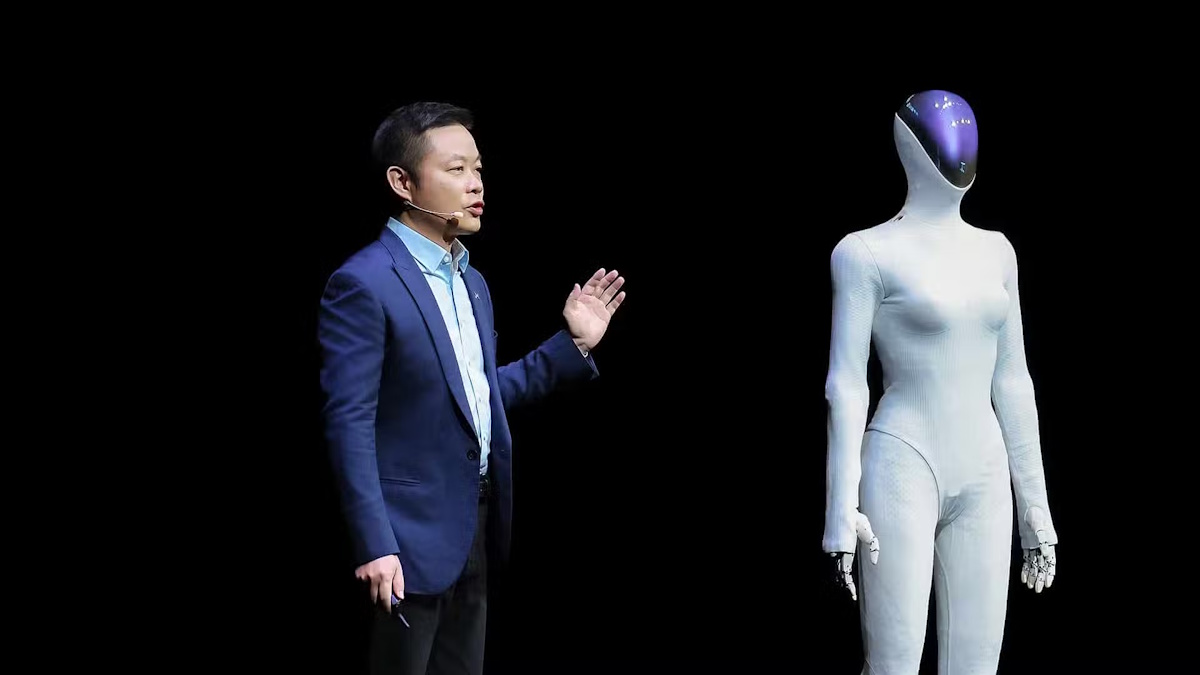
Xpeng’s robotics division has lost another senior executive, according to a report by CnEVPost, citing Chinese media outlet 21jingji. The latest departure comes as the company continues preparing its humanoid robot programme for commercial production later this year.
Mi Liangchuan, who led Xpeng’s robotics business, has reportedly left the company after playing a key role in developing its robotics programme. His departure follows the resignation of another senior robotics executive earlier this month, making this the second high profile exit from the division within just a few weeks.
While leadership changes are not unusual in fast moving technology companies, the timing has attracted attention as Xpeng continues investing heavily in artificial intelligence, robotics, and software alongside its electric vehicle business.
Why Robotics Matters To An EV Company
At first glance, building electric cars and developing humanoid robots may seem like completely different businesses. In reality, they share much of the same technology. Many of the systems used in modern EVs, including cameras, sensors, computing platforms, motion control, and artificial intelligence, are also essential for advanced robotics. The software that helps a vehicle understand its surroundings can often be adapted for robots operating in factories or other environments.
This broader technology strategy is also reflected in Xpeng’s collaboration with Volkswagen. Rather than focusing solely on vehicle production, the two companies are jointly developing next generation software architectures that will underpin future intelligent vehicles. I recently explained how that partnership fits into Xpeng’s wider software strategy in my article about Volkswagen and Xpeng’s autonomous software collaboration.
Xpeng Continues To Invest In Artificial Intelligence
Despite the recent management changes, Xpeng has shown no signs of slowing its investment in robotics. In fact, the company recently reorganised its robotics division, creating additional departments as it moves closer to its goal of beginning mass production of humanoid robots before the end of 2026.
Xpeng’s chairman and CEO, He Xiaopeng, has now taken direct responsibility for the robotics division, highlighting how strategically important the business has become for the company. Although the company’s electric vehicles remain its core business, Xpeng increasingly describes itself as an artificial intelligence company whose technologies can be applied across multiple products, including cars, robots, and future mobility solutions.
The Technology Behind XPENG’s Vision
Many of the technologies Xpeng develops for its vehicles naturally support its broader AI ambitions. One example is the company’s LoFIC camera technology, which improves how onboard cameras handle difficult lighting conditions such as direct sunlight, tunnels, or nighttime driving. Better image quality helps driver assistance systems make more reliable decisions, but similar computer vision technologies can also benefit robotics, where accurately understanding the surrounding environment is equally important.
I recently took a closer look at how Xpeng’s LoFIC technology works and why it represents another step towards more capable software defined vehicles.
What This Means For Xpeng
Leadership changes inevitably raise questions, particularly when they happen close to important product milestones. However, there is currently nothing to suggest that Xpeng has changed its long term direction. The company continues investing in artificial intelligence, autonomous driving, robotics, and intelligent vehicle software, all of which remain closely connected. While its humanoid robot programme is still separate from its passenger car business, both rely on many of the same underlying technologies.
For European buyers, this development is unlikely to have any immediate impact on Xpeng’s electric vehicles. Instead, it offers another glimpse into how some of China’s leading EV manufacturers increasingly see themselves not just as car companies, but as broader technology companies developing software and AI for multiple applications.
FAQ
Who left Xpeng’s robotics division?
Mi Liangchuan, the head of Xpeng’s robotics business, has reportedly left the company.
Why is this departure significant?
It is the second senior executive to leave Xpeng’s robotics team within a month, during a period when the company is preparing its humanoid robot programme for production.
Is Xpeng reducing its investment in robotics?
There is no indication of that. Xpeng recently reorganised its robotics division, and CEO He Xiaopeng has taken direct responsibility for the business as the company continues working towards mass production.
How is robotics connected to Xpeng’s electric vehicles?
Many of the technologies used in Xpeng’s EVs, including AI, cameras, sensors, and software, are also used in its robotics projects.
Featured Image Source: Xpeng
Marko Lubar is the Founder and Editor of ElectricFleet Online, where he covers the latest developments in electric vehicles, battery innovation, autonomous driving, artificial intelligence, and the technologies shaping the future of mobility.
Learn more about Marko and the mission behind ElectricFleet Online on the About Us page.
Latest News