If you are researching an electric car in Europe right now, you will almost certainly come across two battery types: LFP and NMC. Most manufacturers mention which chemistry their car uses, but the explanation rarely goes further than that. The difference matters more than most buyers realise, not just for range, but for how you charge every day, how the battery holds up over years of ownership, and ultimately what the car costs you in the long run.
This article covers everything you need to know: how the two chemistries work, how they age, how they perform, what they cost to produce, and most practically, which one makes more sense depending on how you actually use your car.
What LFP and NMC Actually Mean
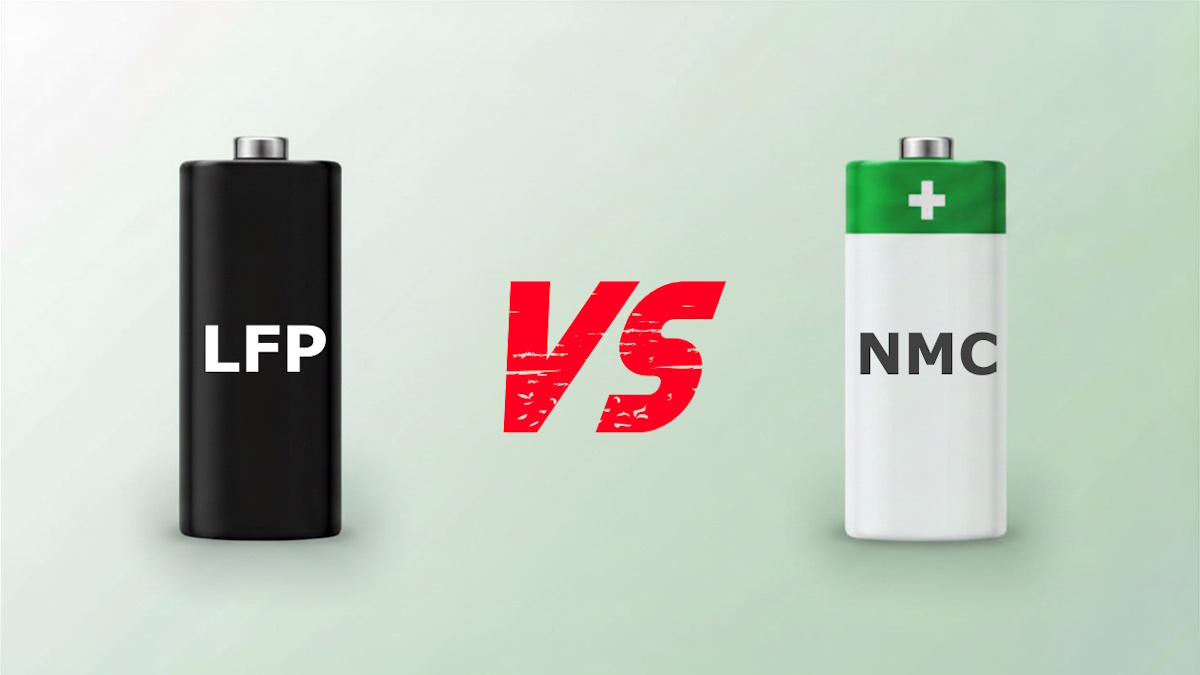
Both are lithium-ion batteries, but the chemistry of the cathode, the positive electrode, is completely different, and that single difference drives almost everything else about how they behave.
LFP stands for lithium iron phosphate (LiFePO₄). The cathode uses iron and phosphate, which are abundant and inexpensive materials containing no cobalt or nickel. The chemistry is inherently stable, meaning the cells are less prone to thermal runaway, the process that can lead to fires in damaged or severely overheated batteries.

NMC stands for nickel manganese cobalt. The cathode combines these three metals in varying ratios. Common formulations include NMC 532, NMC 622 and NMC 811, where the numbers represent the proportion of each element. Nickel and cobalt are expensive, and cobalt in particular comes with both supply chain concerns and ethical sourcing questions related to mining in the Democratic Republic of Congo. In exchange for that cost and complexity, NMC delivers significantly higher energy density.
Energy Density: Why NMC Dominates Long-Range EVs
Energy density, how much energy you can store per kilogram of battery weight, is the core reason NMC has historically dominated the long-range EV segment.
A typical NMC cell delivers somewhere between 200 and 300 Wh/kg depending on the specific formulation. LFP cells typically land between 120 and 180 Wh/kg. That gap means that to achieve the same range, an LFP pack needs to be physically larger and heavier than an NMC equivalent. For a long-range family SUV where 600+ km of WLTP range is the target, that weight penalty becomes significant. A 100 kWh LFP pack weighs considerably more than a 100 kWh NMC pack, which affects not just range but ride dynamics and efficiency. This is why if you look at the cars on my list of EVs with more than 600 km of WLTP range available in Europe, virtually all of them use NMC chemistry. The same pattern holds at the very top of the market: the high-performance EVs I covered in this overview of electric cars above €100,000 are almost exclusively NMC, because at that price point and performance level, energy density is non-negotiable.
The gap is narrowing, however. CATL’s latest generation LFP cells and BYD’s Blade Battery have both pushed LFP energy density higher than what was achievable five years ago, which is one reason LFP is now appearing in cars that would previously have required NMC.
Performance and Power Output
This is an area where the differences are real but often overstated in everyday driving. NMC batteries generally deliver higher peak power output, which translates to sharper acceleration and better sustained performance. The chemistry handles high discharge rates well, and this is why most high-performance EVs, think Porsche Taycan, BMW i4 M50, or any Tesla Performance variant, use NMC.
LFP batteries have a lower peak power ceiling, and at very low state of charge (below roughly 20%) they can exhibit reduced power output more noticeably than NMC. In very cold conditions, this effect is amplified, which is covered in more detail below. For the vast majority of everyday driving, however, the performance difference is not something most drivers will notice. An LFP-equipped city car or compact hatchback with 85 to 100 kW of motor power will feel perfectly responsive in traffic. Where the gap becomes apparent is in sustained high-speed driving, repeated fast acceleration, and track-style use, scenarios that represent a very small proportion of real-world EV usage.
How Each Battery Ages
Battery ageing happens through two distinct mechanisms, and understanding both helps explain why charging behaviour matters so much.
Cycle ageing refers to degradation caused by the repeated process of charging and discharging. Every time you charge and discharge a battery through its full capacity, you complete one cycle. Over thousands of cycles, the internal structure of the cells degrades gradually and usable capacity decreases. LFP chemistry is significantly more resistant to cycle ageing than NMC. LFP cells commonly achieve 2,000 to 5,000 charge cycles before reaching 80% of original capacity, while NMC cells typically manage 1,000 to 2,500 cycles under comparable conditions.
| Battery Type | Cycle ageing resistance | Calendar ageing at high SoC |
| LFP | High (2,000–5,000+ cycles) | Tolerant |
| NMC | Moderate (1,000–2,500 cycles) | Sensitive |
To put real-world numbers to this: a Geotab analysis of over 22,700 electric vehicles found an average annual degradation rate of 2.3% across all EV models studied, projecting that the average battery retains 81.6% of its original capacity after eight years. That is a reassuring baseline, though Geotab also found significant variation by model and operating conditions.

Notably, eight established models from their dataset had stabilised to an average of just 1.4% annual degradation over time, suggesting that the first year or two often see a sharper initial drop before the rate levels out. The same study identified high-power DC fast charging above 100 kW as the single largest stressor on battery health, leading to degradation rates up to twice as high as those seen with lower-power charging (3.0% vs 1.5% per year). This is directly relevant to anyone regularly using rapid chargers on motorways, and it is the context behind the concerns I covered in this article on BYD’s megawatt charging and the 76°C battery temperature controversy.
Calendar ageing refers to degradation that happens simply over time, regardless of how much the battery is used. A car that sits in a garage for two years will still lose some capacity, and the rate at which this happens depends on storage conditions, primarily temperature and state of charge. Both LFP and NMC age faster when stored at high temperatures, but NMC is considerably more sensitive to being stored at high states of charge.
Geotab’s data adds useful nuance here: degradation from state of charge only becomes a meaningful concern when a vehicle spends more than 80% of its total operating time at or near a full or nearly empty charge level. For most everyday drivers who charge regularly and drive daily, this threshold is rarely crossed. That said, NMC is still more sensitive to prolonged high-SoC storage than LFP, and the general recommendation to avoid leaving an NMC battery sitting at 100% for days at a time remains valid.
The practical implication of both forms of ageing combined is that an LFP battery in a city car doing daily short trips and regular charging will almost certainly outlast the rest of the car. NMC in the same scenario will hold up well too, but it requires slightly more conscious charging habits to maximise longevity.
Charging to 100%: The Practical Difference
This is where the two chemistries diverge most visibly in everyday ownership. LFP batteries can and should be charged to 100% regularly. Manufacturers including BYD, Tesla (for their LFP-equipped Standard Range models) and Volkswagen (for the ID.Polo Trend) explicitly state that daily 100% charging is fine for LFP. The chemistry is stable at full charge, and there is no meaningful penalty for topping up completely every night. In fact, some manufacturers recommend a monthly full charge to recalibrate the battery management system’s state-of-charge estimation.
NMC batteries are a different story. Most EV manufacturers recommend keeping NMC batteries within a daily charge window of roughly 20 to 80%, with 100% charges reserved for longer trips when you genuinely need the full range. The reason is electrochemical: NMC cells experience accelerated lithium plating and cathode stress when held at very high states of charge, particularly combined with heat. Most manufacturers set a default charge limit of 80% in the car’s software for exactly this reason, and some actively discourage regular charging to 100% in their owner documentation. I looked at this in detail when analysing the Volkswagen ID.Polo trim lineup, and the conclusion was the same: for most everyday drivers, the LFP base trim is actually the smarter choice precisely because you never have to think about charge limits.
| Battery Type | LFP | NMC |
| Daily Charge | Good for 100% | Better at 80% limit |
| Lifespan | Long (10-15+ years) | Moderate (10 years) |
The Software Buffer Question
Here is something that does not get discussed enough, and it is genuinely important for understanding what the numbers on your dashboard actually mean.
When a car shows 100% on its dashboard, that almost never corresponds to the physical maximum capacity of the cells. Manufacturers, both for NMC and LFP, implement a software buffer that reserves capacity at the top and bottom of the pack. The cells never reach their true electrochemical maximum during normal operation.
For NMC, this buffer is typically in the range of 5 to 8% at the top. So when your NMC-equipped car shows 100%, the cells are physically sitting at somewhere around 92 to 95% of their maximum theoretical capacity. This is deliberate engineering, not deception. It significantly extends cell longevity by keeping the cells away from the most stressful part of their voltage curve. For LFP, a similar buffer exists, though the chemistry is more tolerant at high states of charge, so the buffer tends to be smaller and the longevity benefit less critical.
What this means practically: the degradation penalty for charging your NMC car to “100%” is lower than if manufacturers gave you direct access to the true cell maximum. But the recommendation to keep daily charging below 80% still stands, because even within the buffered range, keeping cells in the middle of their capacity window reduces long-term degradation.
Cold Weather Performance
This is an area where LFP has a genuine and significant disadvantage, particularly relevant for buyers in Scandinavia, Central Europe and other markets with cold winters.
LFP batteries lose usable capacity in cold temperatures more dramatically than NMC. At 0°C, an LFP battery can lose 20 to 30% of its usable range compared to the rated WLTP figure. At -10°C or below, the loss can be 30 to 40% or more. The cells also charge more slowly in cold conditions, and fast charging may be further restricted by the battery management system until the pack has warmed up.

NMC batteries also perform worse in cold weather, but the effect is less severe. At 0°C, range loss is typically 10 to 20%, and charging behaviour, while slower, is generally more predictable. For a driver in Norway or Finland who needs reliable winter range, this difference can be decisive. For a driver in southern Spain or Portugal where temperatures rarely drop below 5°C, it matters much less.
It is worth noting, however, that heat works in the opposite direction on long-term battery health. Geotab’s real-world data found that vehicles operating in hot climates degrade 0.4% faster per year than those in mild climates. This means that while LFP has the cold-weather disadvantage for daily range, buyers in very hot regions like southern Europe in summer should also factor in the long-term effects of heat on any battery chemistry. Both LFP and NMC benefit from active thermal management, and this is one area where the quality of a manufacturer’s battery management system matters as much as the chemistry itself.
| Battery Type | Range loss at 0°C | Range loss at -10°C |
| LFP | 20–30% | 30–40% |
| NMC | 10–20% | 20–30% |
The LFP vs NMC Range Paradox
This is a question worth addressing directly, because it comes up every time someone compares an LFP-equipped car with an NMC-equipped alternative.
Suppose you are comparing two cars. One has a 40 kWh LFP battery with 300 km of WLTP range, which you charge to 100% every night. The other has a 52 kWh NMC battery with 400 km of rated range, but following the manufacturer’s recommendation you charge it to 80% for daily use, giving you around 320 km of usable range. The actual daily range difference between those two cars is small. And the LFP car costs less upfront, requires no thought about charge limits, and will likely degrade more slowly over time.
This is not a hypothetical. It is the exact logic I applied when evaluating the Volkswagen ID.Polo lineup, and it holds up for any comparison where the size gap between LFP and NMC packs is modest. Where it breaks down is at the top end of the market, where NMC packs of 77 kWh or more give you 500+ km even at 80% charge, and no LFP equivalent currently matches that in the same vehicle footprint. The conclusion is nuanced: for short to medium daily ranges (under 200 km per day), a well-sized LFP battery often makes more practical sense than a larger NMC pack. For long-distance driving, frequent motorway use, or situations where maximum range on a single charge genuinely matters, NMC retains a clear advantage.
Production Cost and the Chinese Factor
LFP is cheaper to produce than NMC, and the gap is meaningful. The primary reasons are material costs: iron and phosphate are abundant and inexpensive, while nickel, manganese and especially cobalt are expensive and subject to supply volatility. Depending on cell format and production scale, LFP cells currently cost roughly 20 to 30% less per kWh to manufacture than NMC equivalents.
This cost advantage is one of the main reasons Chinese manufacturers have standardised on LFP for their European export models. BYD’s Blade Battery is LFP. The MG4‘s standard range version uses LFP. The Leapmotor T03 uses LFP. Most of the affordable Chinese EVs available in Europe today use LFP chemistry, and the lower production cost is a significant part of what allows them to undercut European competitors on price while maintaining reasonable margins.

There is also a strategic dimension: China controls a dominant share of global LFP production capacity. Using LFP keeps Chinese manufacturers less exposed to the nickel and cobalt supply chains, which are geographically concentrated in countries including Indonesia, the Philippines and the DR Congo, and which have historically been subject to significant price swings. For the broader EV industry, the falling cost of LFP is pushing the chemistry up the market. What was once confined to entry-level and short-range vehicles is now appearing in mid-range models, and CATL’s sodium-ion technology, which shares some characteristics with LFP in terms of stability and low cost, may eventually push affordability even further.
Long-Term Ownership Costs
Battery replacement is the scenario most buyers think about, even if statistically it happens less often than feared. A replacement NMC pack for a mid-size EV can cost €8,000 to €15,000 or even more depending on capacity or manufacturer. LFP packs are cheaper per kWh, so a replacement is somewhat less expensive in absolute terms, though the likelihood of needing one is also lower given LFP’s superior cycle life.
More relevant for most owners is the resale value question. NMC-equipped cars with carefully managed charge histories tend to hold capacity better than casually used NMC cars, which is one reason a used EV with documented charging habits commands a premium. LFP-equipped cars are more forgiving and their capacity retention is more predictable, which may make them easier to sell as used vehicles in the future as buyers become more educated about battery chemistry.
There is also the matter of Nio’s Battery-as-a-Service model, which separates the battery cost from the vehicle purchase entirely and sidesteps the degradation concern for the buyer. I explained how that works and whether it makes financial sense in this overview of Nio’s BaaS model for European buyers.
Pros and Cons: At a Glance
| LFP | NMC | |
| Energy density | Lower (120–180 Wh/kg) | Higher (200–300 Wh/kg) |
| Typical range | Shorter for same weight | Longer for same weight |
| Daily Charge | Good for 100% | Better at 80% limit |
| Cycle life | 2,000–5,000+ cycles | 1,000–2,500 cycles |
| Calendar ageing at high SoC | Tolerant | Sensitive |
| Cold weather performance | Significantly worse | Moderately worse |
| Peak power output | Lower | Higher |
| Fire safety | More stable | Less stable (but still safe) |
| Production cost | ~20–30% cheaper | More expensive |
| Cobalt content | None | Yes (varies by formulation) |
| Best for | City/daily use, mild climates | Long-range, cold climates, performance |
Which Battery Is Right for You?
The honest answer is that it depends almost entirely on how and where you drive. For most European urban and suburban drivers doing daily commutes of under 100 km, an LFP-equipped EV is more than adequate and arguably lower-maintenance over time. You charge to 100%, you do not worry about it, and the battery will almost certainly outlast your ownership period.
For drivers who regularly cover long distances, live in cold-winter countries, or want the highest possible performance, NMC is still the right choice. The energy density advantage is real, the cold weather resilience matters in practice, and for cars above a certain price point the performance expectations demand NMC chemistry.
| Driver profile | Recommended chemistry |
| Urban commuter, mild climate, short daily range | LFP |
| Suburban driver, occasional long trips, mild climate | LFP or NMC (depends on pack size) |
| Frequent motorway driver, 300+ km days | NMC |
| Cold climate (Scandinavia, Central Europe in winter) | NMC |
| Performance or premium EV buyer | NMC |
| Long-term ownership priority, minimal maintenance | LFP |
| Company car with high annual mileage | LFP (if range is sufficient) |
The perception that LFP means compromise is increasingly outdated. The chemistry has matured considerably, and at the price points where it typically appears today, it is often the more sensible long-term choice.
FAQ
What does LFP stand for in EV batteries?
LFP stands for lithium iron phosphate (LiFePO₄). It refers to the chemistry of the cathode in the battery cell. LFP batteries are known for their stability, long cycle life, and lower production cost compared to NMC alternatives.
What does NMC stand for in EV batteries?
NMC stands for nickel manganese cobalt. The cathode combines these three metals in varying ratios. NMC delivers higher energy density than LFP, which is why it is used in most long-range EVs, but it costs more to produce and requires more careful charging habits.
Can you charge an LFP battery to 100% every day?
Yes. Unlike NMC batteries, LFP chemistry is stable at high states of charge. Most manufacturers explicitly permit and even encourage regular 100% charging for LFP-equipped models. BYD, Tesla (for LFP models) and Volkswagen (for the ID.Polo Trend) all confirm this.
Should you charge an NMC battery to 100%?
For daily use, most manufacturers recommend keeping NMC batteries within a 20 to 80% charge window. Charging to 100% occasionally for long trips is fine, but regularly holding an NMC battery at full charge accelerates degradation. Most NMC EVs allow you to set a charge limit in the car’s settings. That said, Geotab’s real-world data suggests that state of charge only becomes a significant degradation factor when a vehicle spends more than 80% of its total time at or near a fully charged or nearly empty state, meaning occasional 100% charges are unlikely to cause serious harm.
When your EV shows 100%, is the battery actually full?
Not quite. Manufacturers implement a software buffer that keeps cells away from their true electrochemical maximum. When your dashboard shows 100%, the cells are typically at around 92 to 95% of their physical capacity. This extends cell life by avoiding the most stressful part of the voltage curve, and it applies to both LFP and NMC batteries.
Why do Chinese EVs use LFP batteries?
LFP is cheaper to produce than NMC, contains no cobalt or nickel, and China controls a dominant share of global LFP production capacity. For Chinese manufacturers targeting affordable price points in Europe, LFP allows competitive pricing without sacrificing safety or longevity. BYD’s Blade Battery, used across much of its European lineup, is an LFP design.
Which battery type lasts longer?
LFP generally has a longer cycle life, typically 2,000 to 5,000 or more charge cycles before reaching 80% capacity, compared to roughly 1,000 to 2,500 cycles for NMC under similar conditions. In practice, a Geotab analysis of over 22,700 real-world EVs found an average annual degradation rate of 2.3% across all models, projecting 81.6% remaining capacity after eight years. LFP is also less sensitive to calendar ageing at high states of charge. For long-term ownership, LFP has a durability advantage, though both chemistries perform well in normal everyday use.
Does cold weather affect LFP batteries more than NMC?
Yes. LFP batteries lose more usable range in cold temperatures than NMC. At 0°C, an LFP battery may lose 20 to 30% of its rated range, while NMC typically loses 10 to 20%. For buyers in cold climates, this is a meaningful consideration when choosing between the two chemistries.
Will LFP batteries become more common in larger EVs?
The trend points that way. Improvements in LFP energy density, driven particularly by CATL and BYD, are pushing the chemistry into mid-range and even some larger vehicles. The cost advantage over NMC is significant enough that manufacturers have a strong incentive to use LFP wherever the energy density trade-off is acceptable.
Marko Lubar is the Founder and Editor of ElectricFleet Online, where he covers the latest developments in electric vehicles, battery innovation, autonomous driving, artificial intelligence, and the technologies shaping the future of mobility.
Learn more about Marko and the mission behind ElectricFleet Online on the About Us page.
Latest News