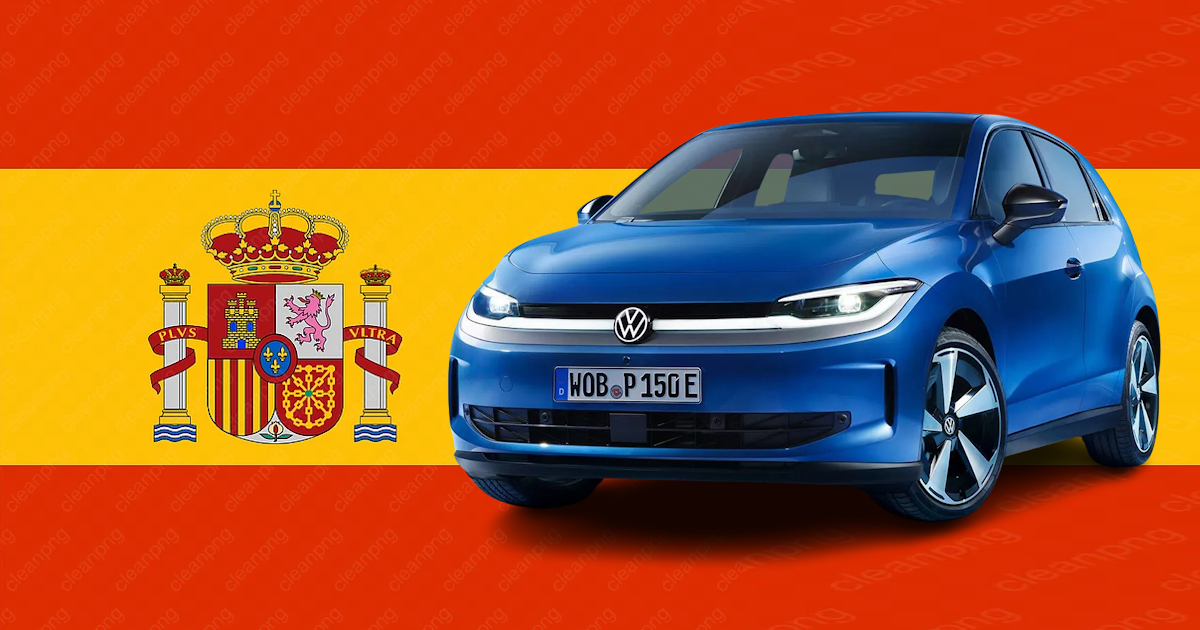
Spain has formally approved the regulatory framework for Auto+, its new national incentive scheme for electric vehicle purchases, with funding confirmed through to the end of 2030. The detail worth knowing before anything else: where a car is built now matters almost as much as how it’s powered. Take two identical electric cars, same price, same battery size, same everything, and build one in the EU instead of importing it from outside Europe. That one car alone earns an extra €1,125 in grant money, just for where it was assembled and where part of its battery came from. The scheme forms part of the broader España Auto 2030 strategy, and the detailed rules were published in Spain’s Official State Gazette (BOE) in early July this year, with applications opening shortly after. According to Spain’s Ministry of Industry and Tourism, which now administers the scheme centrally, funding applies retroactively to eligible vehicles purchased from 1 January 2026.
Two Pillars, and Who Qualifies
Auto+ replaces the previous Moves III scheme, which expired at the end of 2025 and was administered separately by Spain’s regional governments. The new programme centralises applications under the Ministry of Industry and Tourism instead, a change intended to cut processing times from months down to a matter of weeks.
The scheme covers two groups of buyers. Pillar 1 applies to private individuals purchasing a new vehicle, or a nearly new one registered within the last 12 months. Pillar 2 covers companies and self employed workers carrying out economic activity, and goes further by extending support to financial leasing and rental agreements, provided they run for at least three years. Only vehicles carrying Spain’s DGT zero emissions label are eligible at all, and private buyers are limited to one vehicle each, while companies can claim for up to ten.
Maximum grants are €4,500 for a new battery electric passenger car, €5,000 for an electric van, €1,100 for electric motorcycles, and €1,500 for heavier electric quadricycles. Reaching the full passenger car amount also requires the manufacturer or dealer to apply an additional mandatory discount of €1,000, meaning total possible savings on a qualifying car reach €5,500.
| Vehicle type | Maximum grant | Extra condition |
|---|---|---|
| Passenger car (M1, BEV/FCEV) | €4,500 | Needs an additional €1,000 dealer discount to reach this figure |
| Electric van (N1) | €5,000 | |
| Electric motorcycle (L3e, L4e, L5e) | €1,100 | Bike must cost €10,000 or less |
| Electric quadricycle (L6e, L7e) | €1,500 |
How the Funding Amount Is Actually Calculated
The size of the grant a specific car qualifies for depends on a three part scoring system Spain’s government calls EEE, for Electric, Economic and European. Fully electric and hydrogen fuel cell vehicles receive the full 50% weighting available under the electric criterion, while plug in hybrids and range extended electric vehicles receive half that.
The economic criterion adds up to another 25% for passenger cars priced under €35,000 before tax, or 15% for those under €45,000. The European criterion, worth up to 25% in total, splits into two parts: 15% for vehicles with final assembly inside the EU, plus a further 10% if part of the battery is also produced within the EU. That last point was reportedly debated during the scheme’s drafting, and has since been clarified to mean battery assembly in Europe is sufficient, rather than requiring the battery cells themselves to be manufactured there.
| Criterion | What it rewards | Maximum weight |
|---|---|---|
| Electric | Fully electric or hydrogen fuel cell (half for plug in hybrid or EREV) | 50% |
| Economic | Priced under €35,000 (or 15% under €45,000) | 25% |
| European | EU final assembly (15%) plus part EU made battery (10%) | 25% |
Add all three criteria together and a car needs to be fully electric, priced under €35,000, assembled in the EU and fitted with a partly EU made battery to reach the maximum €4,500 grant. Drop the European criterion entirely, say for a car imported fully built from outside the EU, and the same fully electric, sub-€35,000 car tops out at 75% of the maximum instead, or €3,375. That €1,125 gap is the European bonus in practice.
Chinese Brands Aren’t Automatically Excluded, But They Do Lose Out
This is the part worth flagging clearly for anyone following Chinese EV brands in Europe. A car imported directly from China can still qualify for a meaningful share of the funding if it’s fully electric and priced below the relevant threshold, but it misses out on the 25% tied to European manufacturing entirely, since neither the assembly nor the battery production happens inside the EU.
That distinction cuts the other way for the Chinese brands that have started building cars in Europe. I’ve covered how several manufacturers have shifted production onto the continent specifically to avoid EU tariffs on Chinese made EVs, and Auto+ gives those same cars a second, separate reason to be built here. BYD builds in Hungary, Xpeng and GAC both assemble cars at Magna Steyr’s plant in Austria, and more than one Chinese brand now runs production lines inside Spain itself. A European built Chinese EV priced under €35,000 would be positioned to claim the same manufacturing bonus as a domestically built Cupra or Volkswagen, regardless of which country actually owns the brand.
Which Cars Actually Hit the Full Grant
Working through the EEE criteria against cars already on sale narrows the field considerably. Several of the models in my roundup of affordable European EVs, including the Cupra Raval and Volkswagen ID.Polo, are fully electric, priced under €35,000 and assembled inside the EU, which puts them in range of the full €4,500 grant. My separate guide to EVs under €25,000 in Europe covers several more that would clear the same bar, including the Renault Twingo, Renault 5 and Leapmotor’s Spain built T03 and B03X.

Buyers looking at something larger should expect a smaller grant rather than none at all. Most of the cars in my list of EVs under €40,000 with 500km-plus range sit above the €35,000 threshold but below €45,000, which under Auto+’s economic criterion still unlocks a partial bonus rather than the full one.
One caution worth repeating here: chasing the largest possible grant shouldn’t come at the expense of checking how a car actually performs in a crash. Auto+’s criteria say nothing about safety, and some of the cheapest, EU built options score poorly on that front. I’ve written specifically about which affordable EVs I’d think twice about buying due to weak Euro NCAP results, and it’s worth reading alongside any decision driven mainly by the size of the subsidy.
Funding May Not Last the Full Year
The scheme’s total budget for 2026 is €400 million, and there are no plans to increase that envelope. Industry trade publication La Tribuna de Automoción has reported that more than half of the €400 million may already be committed to vehicles purchased since January, given the scheme’s retroactive eligibility, and estimated the budget could be exhausted as early as September or October this year. Anyone planning to rely on Auto+ funding for a purchase later in 2026 should treat that as a real possibility rather than a worst case scenario.
Auto+ sits alongside two related programmes under the same España Auto 2030 plan. Moves Corredores carries a separate €300 million budget for charging infrastructure, while an additional €580 million has been allocated to PERTE VEC, an industrial support programme for vehicle and battery production rather than consumer purchases.
FAQ
How much can I get from Spain’s Auto+ scheme?
Up to €4,500 for a new battery electric passenger car and up to €5,000 for an electric van, provided the vehicle scores highly enough on the Electric, Economic and European criteria. Reaching the full passenger car amount also requires an additional €1,000 discount from the manufacturer or dealer.
When does Auto+ apply from and how long does it run?
The scheme applies retroactively to eligible vehicles purchased from 1 January 2026 and is approved to run until 31 December 2030.
Does a car have to be built in Europe to qualify?
No, but it helps. A fully electric car built outside the EU can still qualify for part of the funding based on its powertrain and price, but it misses out on the 25% of the grant tied to EU final assembly and partly EU made batteries.
Will the funding run out before the end of the year?
It’s a real risk. Industry reporting suggests more than half of the €400 million 2026 budget may already be committed to vehicles purchased since January, with some estimates pointing to the funds being exhausted by September or October.
What replaced Spain’s previous Moves III incentive scheme?
Auto+ replaced Moves III at the start of 2026. The main structural change is that funding is now managed centrally by Spain’s Ministry of Industry and Tourism rather than distributed by the country’s regional governments.
Marko Lubar is the Founder and Editor of ElectricFleet Online, where he covers the latest developments in electric vehicles, battery innovation, autonomous driving, artificial intelligence, and the technologies shaping the future of mobility.
Learn more about Marko and the mission behind ElectricFleet Online on the About Us page.
Latest News