Last edited: 27 July 2026, to correct BYD’s revised Hungary production timeline, add the newly confirmed Geely-Ford Valencia joint venture, note the related Polestar 7 case in Slovakia, and add Hongqi, GWM and Changan to the manufacturers scouting European factories.
Chinese car manufacturers are not just selling EVs in Europe anymore. They are building them here. Right now, in 2026, factories in Hungary, Austria and Spain are already assembling Chinese electric cars for European buyers. And the reason this is happening comes down to one decision Brussels probably did not anticipate when it introduced tariffs on Chinese EVs back in 2024.
Once a car is built inside the EU, those tariffs simply do not apply. A BYD assembled in Hungary is treated the same as a Volkswagen assembled in Germany, which means the entire price penalty that tariffs were supposed to create disappears the moment production moves onshore.
Six Chinese manufacturers have already made this move, or are under a formal agreement to do so, and at least three more are actively scouting locations. Some built their own plants. Some partnered with established European manufacturers. And some chose their factory locations with a very specific eye on the politics of the tariff vote, which turns out to be one of the more interesting parts of this story.
Here is exactly what is happening, brand by brand, and what it means if you are buying an EV in Europe right now.
Why Local Production Changes Everything
When the European Commission introduced additional tariffs on Chinese made EVs in October 2024, the logic was straightforward. Chinese cars were arriving in Europe with prices that European manufacturers simply could not match, and Brussels believed state subsidies back in China were a big part of why. So tariffs were introduced to level the playing field, ranging from an extra 17% for BYD up to 35.3% for SAIC, on top of the standard 10% duty that already existed. I covered the full breakdown of those rates, including a 2026 update on the price undertaking scheme that’s starting to offer some manufacturers a way out of them, in this detailed overview of EU tariffs on Chinese electric vehicles.
What happened next was not quite what Brussels had in mind. Rather than absorbing the cost or pulling back from Europe, Chinese manufacturers started looking at the map differently. Hungary, Austria, and Spain suddenly became very attractive places to put a factory. And once production moves there, the tariff conversation becomes largely irrelevant.
Quick Overview: Who Is Producing Where
| Manufacturer | Location | Partner | Status | First Model |
|---|---|---|---|---|
| BYD | Szeged, Hungary | — | Equipment installation underway; series production now targeted for Q4 2026 | Dolphin Surf |
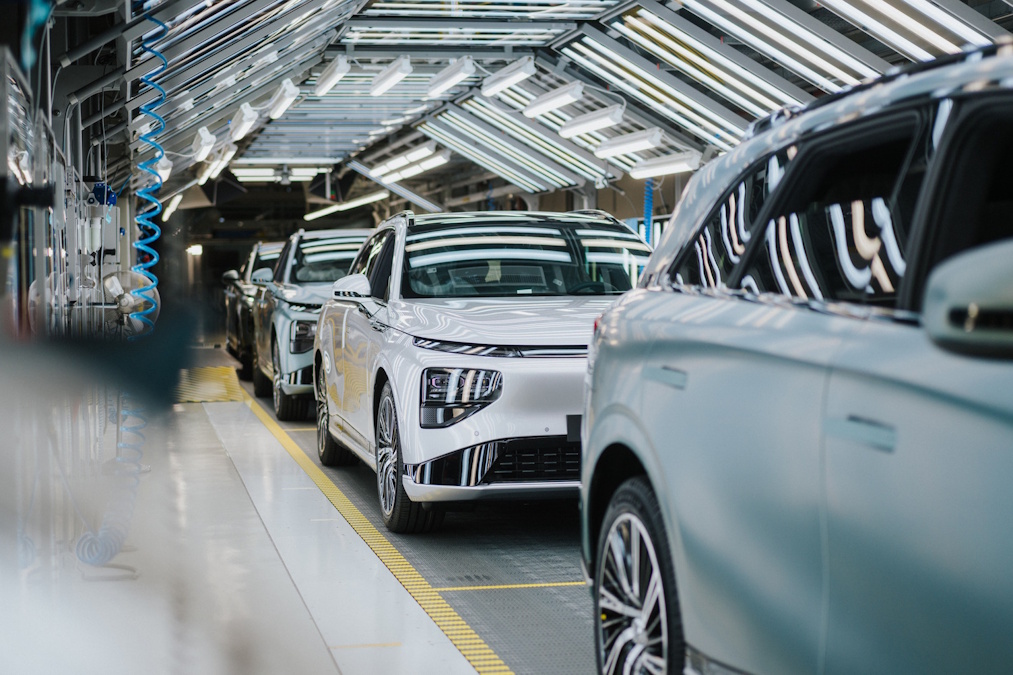
| Xpeng | Graz, Austria | Magna Steyr | Active since September 2025 | G6, G9 |
| GAC Aion | Graz, Austria | Magna Steyr | Active since November 2025 | Aion V, Aion UT |
| Chery / Ebro | Barcelona, Spain | Ebro-EV Motors | Ebro models active since 2024; Omoda 5 planned for 2026 | Ebro S700/S800 |
| Leapmotor / Stellantis | Zaragoza, Spain | Stellantis | Production planned Q3 2026 | B10 |
| MG / SAIC | Galicia, Spain | — | Announced; production from 2028 | TBC |
| Geely | Valencia, Spain | Ford | Operational H1 2027 | Two Geely EV models, production from 2028 |
BYD — Hungary (Szeged)
BYD’s factory in Szeged is by far the biggest single manufacturing commitment in this story. The total investment is reported at up to €4 billion, and the plant is designed for an eventual capacity of 300,000 vehicles per year, which puts it in the same league as a large Volkswagen facility.

The timeline has slipped since this was first written. Trial production began in January 2026, and series production was originally expected from Q2 2026. But BYD’s Executive Vice President Stella Li told Reuters in June 2026 that full-scale output is now targeted for the fourth quarter of the year instead, with equipment still being installed at the site at the time. That’s roughly a year behind BYD’s original end-of-2025 target. The company has also paused its separate planned factory in Turkey indefinitely, with no construction started and no timeline given, choosing to concentrate resources on Hungary and on finding a second European production site instead.
The first model rolling off the Szeged line, whenever full production begins, is the BYD Dolphin Surf, the compact entry level electric hatchback that is already one of the most affordable EVs available in Europe. The Atto 2 follows shortly after, with the Atto 3, Dolphin, Seal and Seal U all planned for the same facility in the future.
What is interesting about BYD’s choice of Hungary is that it was not a rushed decision driven purely by tariffs. BYD has been operating in the country since 2017, first producing electric buses in Komárom, then adding battery assembly operations in Fót and Páty. In 2025, the company moved its entire European headquarters from the Netherlands to Budapest. Szeged is really just the next logical step in a very patient, long term approach to the European market, even if that approach is currently running behind its own schedule.
Xpeng — Austria (Graz, via Magna Steyr)
Xpeng took a very different approach to European production, and in many ways it is the smarter short term move. Instead of building its own plant, Xpeng uses Magna Steyr’s existing facility in Graz to assemble cars for the European market. Magna Steyr is one of the world’s leading contract vehicle manufacturers, which means Xpeng gets access to world class production quality, existing certifications and a fully running factory without spending years and billions setting one up from scratch.
As I covered when it happened, Xpeng began European production of the G6 and G9 in Austria in September 2025, and both models have been coming off the Graz line since then. For European buyers, that means both models are now manufactured in Austria, avoiding the 30.8% total tariff that would otherwise apply to Xpeng vehicles imported from China.

The G6 in particular has been one of the more talked about Chinese EVs in Europe this year. If you are cross shopping in the mid size SUV space, it is worth reading how the Xpeng G6 compares to the Tesla Model Y, because the gap is smaller than many people expect. There is also the Volkswagen connection worth mentioning: VW invested €700 million in Xpeng in 2023 and the two companies announced a joint smart vehicle development programme shortly after, which gives Xpeng a level of engineering credibility in Europe that most of its Chinese competitors simply cannot replicate.
GAC Aion — Austria (Graz, via Magna Steyr)
Here is where the Magna Steyr story gets even more interesting. The same Graz facility that assembles Xpeng models is also now home to GAC Aion, making it arguably the single most important location in the entire Chinese EV localisation story in Europe.
GAC and Magna announced their production partnership in November 2025, and the GAC Aion V went straight into series production at Graz from that point. Just five months later, in March 2026, the Aion UT joined the lineup. The Aion UT is a compact electric hatchback with up to 430 km of WLTP range and 30 to 80 percent fast charging in just 24 minutes, designed specifically with European urban drivers in mind.

What stands out about GAC’s European approach is how thorough it is beyond just the assembly plant. The Aion UT was designed at GAC’s European design centre in Milan. European headquarters are based in the Netherlands. Roadside assistance across Europe is handled through a partnership with Allianz. This does not look like a company that is simply dipping its toes in the water.
Chery / Ebro — Spain (Barcelona)
Chery’s story in Spain is slightly different from the others because it comes with a genuinely interesting piece of automotive history attached to it. Ebro was a Spanish vehicle brand that disappeared back in 1987, and the joint venture between Chery and Spanish company Ebro-EV Motors has brought it back to life at the former Nissan plant in Barcelona’s Zona Franca industrial area.
Production of the first models, the Ebro S700 and S800, began in late 2024. Both are plug in hybrid SUVs built on Chery’s existing Tiggo 7 Pro and Tiggo 8 Pro platforms, sold under the revived Ebro name. Chery claims this makes it the first Chinese automaker to produce vehicles in Western Europe.

The next phase is Chery branded production at the same site. The Omoda 5, in both electric and combustion engine versions, is planned for 2026, with the Jaecoo 7 to follow. The factory is targeting 50,000 vehicles per year by 2027 and 150,000 units annually by 2029. And there is an export angle too: Chery is planning to use Barcelona as a shipping hub for Latin America, which makes the location even more strategically useful.
Leapmotor / Stellantis — Spain (Zaragoza)
Leapmotor’s European production story has had more turns than most, and the reason why tells you a lot about how political this whole situation has become.
Stellantis acquired a 21% stake in Leapmotor in 2023 for €1.5 billion, and the two companies set up Leapmotor International, a joint venture with Stellantis holding 51% and Leapmotor holding 49%, to handle all manufacturing and distribution outside China. The first European production site was a Stellantis plant in Tychy, Poland, where the compact Leapmotor T03 started rolling off the line from June 2024.
That production ended abruptly in March 2025, with no detailed explanation from either side. But the timing made the reason fairly obvious. Poland had voted in favour of EU tariffs on Chinese EVs. Shortly after that vote, China instructed its automakers to pause major investments in countries that had supported those tariffs. The Tychy plant quietly became a casualty of that pressure, and Leapmotor’s Polish chapter closed without ceremony.

The replacement is Stellantis’s facility in Zaragoza, Spain, a country that abstained from the tariff vote and which also happens to be close to a planned CATL battery factory. Production of the Leapmotor B10 compact SUV is targeted for Q3 2026. The B10 is a car I rated as the best buy SUV EV you can get right now in Europe, so having it manufactured locally rather than imported from China is a significant development for anyone considering one. The B05 hatchback follows after that, and it already featured in my top 10 electric hatchbacks for 2026 for good reason. There are also reports that an Opel badged version of the B10 is in development, which would make it the first Chinese designed vehicle sold under a mainstream European brand.
MG / SAIC — Spain (Galicia)
MG has confirmed what had been rumoured for months: its first mainland European manufacturing facility will be in Galicia, in northwestern Spain. The announcement comes with a headline investment figure of approximately €200 million, a production start date of 2028, and a planned annual capacity of up to 120,000 vehicles. The facility will also create more than 2,000 jobs across Europe, and SAIC says it will integrate vehicle R&D, manufacturing, component supply and logistics on a single site rather than just assembling cars shipped in as kits.
That last point matters: A fully integrated facility means MG is not just trying to sidestep the tariffs. It is building something with a longer horizon in mind.

The timing of the announcement is significant too. MG recently delivered its one-millionth vehicle in Europe and operates through a network of more than 1,300 dealer partners across 34 markets, making it by some distance the highest-volume Chinese car brand on the continent. At the current SAIC tariff rate of 45.3 percent on China-made imports, that volume comes with a serious price penalty baked into every car, and local production removes that entirely.
For buyers, what this means in practice is that MG4 and other models built in Galicia from 2028 onward will no longer carry that tariff cost in the sticker price. Whether MG passes the saving on, uses it to improve margins, or some combination of both will depend on how competitive things get in each segment by the time production starts. Given where the MG4 already sits relative to rivals like the Volkswagen ID.3 and Renault Mégane E-Tech, the pressure to price competitively will be real.
Geely / Ford — Spain (Valencia)
This is the newest entry on this list, and it’s a genuinely different structure from every other deal covered so far. Geely and Ford announced a joint venture to share production at Ford’s existing plant in Spain, rather than Geely building or acquiring a factory of its own.
Ford will hold 66% of the new entity and Geely 34%. Pending regulatory approval, the joint venture is expected to become operational in the first half of 2027, with the first vehicles rolling off the line in 2028: three Ford-branded multi-energy models and two Geely-branded electric models. The Valencia plant already has a potential annual capacity of around 500,000 units, making it one of the largest single sites in this entire European localisation story once it’s shared between the two brands.
The arrangement also says something about how differently this round of Chinese investment is playing out compared with BYD’s or MG’s approach. Rather than Geely displacing a European manufacturer’s capacity or building a competing plant nearby, Ford gets to fill idle capacity at a plant it already owns and share development costs, while Geely gets EU-built cars and a partner it has history with. Geely bought Volvo from Ford back in 2010, and both companies pointed to that relationship directly when announcing this deal. Whether that goodwill translates into a smooth rollout by 2028 is still to be seen, but it’s a notably different model to the standalone factories BYD and MG are building elsewhere in Europe.
Polestar — Slovakia (Kosice)
Volvo and Polestar are also part of the Geely group, so it’s worth addressing them here, even though their story doesn’t quite belong in the same category as everything above. Volvo has manufactured in Europe for decades, at Torslanda in Sweden and Ghent in Belgium, long before Geely bought the brand from Ford in 2010. Its European production has nothing to do with Chinese EV tariffs, it’s simply how Volvo has always built cars.
Polestar is the part of this story that actually connects to the tariff picture. Volvo and Polestar signed a memorandum of understanding in 2025 to build the Polestar 7, a compact electric SUV due in 2028, at a new Volvo plant under construction in Kosice, Slovakia. The plant represents an investment of around €1.2 billion, with capacity for up to 250,000 vehicles a year, and it will be Volvo’s third European factory alongside Torslanda and Ghent. A next generation Volvo model is due to be built there first, ahead of the Polestar 7.
Some of Polestar’s current lineup, including the Polestar 2 and parts of Polestar 4 production, is built in China and exported to Europe, which falls under the same Geely tariff rate covered earlier in this piece. Moving Polestar 7 production to Slovakia removes that cost for at least one future model, even though it’s arriving through a Swedish run factory rather than a dedicated Chinese brand plant like the others in this piece.
The Political Layer: Where You Build Matters
The Leapmotor situation is the most visible example of something that runs quietly through all of these stories. The choice of where to build is not just an industrial decision, it is a geopolitical one.
Countries that voted for EU tariffs on Chinese EVs have, not coincidentally, seen very little Chinese automotive investment flow their way. Countries that abstained or stayed neutral have attracted billions. That is not a coincidence, and it is not subtle either.
Hungary is the clearest case. The government there has maintained unusually close ties with Beijing by EU standards, and the country has effectively become the default hub for Chinese automotive investment in Central Europe. BYD chose Szeged, and CATL is building a major battery factory in the region. Together, these investments are creating something that looks a lot like a Chinese EV industrial cluster sitting inside the EU’s eastern border.
Spain’s position is different but equally deliberate. National and regional governments there actively went after Chinese automotive investment, and it has paid off in a fairly significant way. Barcelona has Chery and Ebro. Zaragoza has Leapmotor and Stellantis. Valencia now has Geely, sharing Ford’s existing plant. And there are credible reports that BYD, Changan and Hongqi are all separately weighing Spain for their own next moves.
Austria, with Magna Steyr, sits in a category of its own. Politically neutral in the tariff debate, industrially world class, and already running. Xpeng and GAC Aion are not there because of political calculation, they are there because Magna offers something no new greenfield factory can match: an existing production line that works, today.
Who Could Be Next?
Six manufacturers now producing or under formal agreement is already a significant shift, and the list of names actively scouting further locations keeps growing.
FAW’s Hongqi brand is the most advanced of the remaining newcomers, and it’s taking the same route Leapmotor already opened up. Reuters reported in April 2026 that Hongqi is in talks with Stellantis to build cars at the same Zaragoza plant earmarked for the Leapmotor B10, with the deal being facilitated by Leapmotor itself, since both FAW and Stellantis are investors in the company. Hongqi wants to build every car it sells in Europe locally, as part of a plan to launch 15 electric and hybrid models on the continent by 2028 and pass one million annual global sales by 2030.
Great Wall Motor (GWM) is also actively weighing a European plant, evaluating both Spain and Hungary for a facility targeting up to 300,000 vehicles a year by 2029, alongside the mid-2026 European launch of its ORA sub-brand.
Changan has confirmed it wants its own dedicated European plant rather than sharing a site with another manufacturer. Bloomberg reported in April 2026 that the company is weighing a location in northern Spain, with the Aragón region specifically mentioned, though no final decision has been made. Changan is planning eight new models for Europe by 2027 backed by around €2 billion in regional investment.
And Chery, which already produces in Barcelona, appears to be looking even further north. Talks are reportedly underway between Nissan and Chery over a potential production partnership at Nissan’s plant in Sunderland, in the UK. Nothing is confirmed yet, but the logic is clear: Sunderland is an established EV production site with skilled workers, and Nissan has spare capacity it needs to fill.
What This Means for European Buyers
The practical consequences of all this are significant, and most of them will become more visible over the next year or two.
The most obvious one is pricing. Models produced in Europe avoid tariff surcharges, which creates structural downward pressure on prices over time. Whether manufacturers pass those savings straight to buyers or use them to improve margins depends on how competitive each segment gets. But the direction of travel is clear.

There is also the question of origin. Cars assembled in Austria, Hungary or Spain carry a Made in Europe label, which matters for some buyers directly and for a growing number of company car policies that specify EU origin requirements. That is already the case for the Xpeng G6 and G9, the GAC Aion V and UT, and the Ebro S700 and S800. It will apply to BYD models from Hungary and Leapmotor models from Zaragoza before the end of 2026.
And then there is the bigger picture. One of the EU’s stated goals in introducing tariffs was to buy European manufacturers time to become more competitive in the EV segment. Local production by Chinese brands does not slow that competition down. If anything, it removes one of the last structural disadvantages Chinese brands were operating with, and makes the competitive environment even more intense for European OEMs going forward, especially as the list of manufacturers following this playbook keeps growing.
FAQ
Which Chinese car manufacturers are currently producing vehicles in Europe?
As of late July 2026, five Chinese manufacturers have active or imminent European production: BYD in Hungary, Xpeng and GAC Aion at Magna Steyr in Austria, Chery through its joint venture with Ebro in Barcelona, and Leapmotor through its joint venture with Stellantis in Zaragoza. MG has confirmed a Galicia plant for 2028, and Geely agreed a joint venture with Ford in Valencia on 23 July 2026, with production due to start in 2028. At least three more, Hongqi, GWM and Changan, are actively scouting locations without a confirmed factory yet.
Where is BYD building its European factory, and when will it be running?
BYD is building its European passenger car factory in Szeged, Hungary. Trial production started in January 2026, but the company confirmed in June 2026 that full series production has been pushed back to the fourth quarter of 2026, roughly a year later than originally planned. The first model to be assembled there is the BYD Dolphin Surf, and the plant is designed for an eventual capacity of up to 300,000 vehicles per year.
Why are Chinese carmakers building factories in Europe?
The EU introduced additional tariffs on Chinese made electric vehicles in October 2024, ranging from 17% to 35.3% on top of the existing 10% standard duty. By manufacturing inside the EU, or in countries with preferential trade arrangements, Chinese automakers avoid these tariffs entirely, which makes a significant difference to their pricing and competitiveness.
What is Magna Steyr and why are two Chinese brands using it?
Magna Steyr is a contract vehicle manufacturer in Graz, Austria, operated by Canadian automotive supplier Magna International. It is one of the world’s most capable facilities for lower volume production runs, and it allows brands like Xpeng and GAC Aion to manufacture in Europe without the time and capital cost of building their own plants. Xpeng began production there in September 2025 and GAC Aion followed in November 2025.
Why did Leapmotor stop production in Poland and move to Spain? Leapmotor’s T03 was assembled at a Stellantis plant in Tychy, Poland from June 2024 until March 2025. Production ended after Poland voted in favour of EU tariffs on Chinese EVs, following which China instructed its automakers to limit major investments in countries that had supported those tariffs. Stellantis and Leapmotor subsequently chose Zaragoza in Spain, which had abstained from the tariff vote, as the new production location. The Leapmotor B10 is expected to begin production there in the second half of 2026.
Will Chinese EVs produced in Europe be cheaper to buy?
Not necessarily right away, but the removal of tariff costs creates the conditions for lower prices over time. Whether manufacturers pass those savings to buyers or retain them as improved margins will vary by brand and market. The broader pressure on pricing is downward, which is good news for anyone shopping for an EV in Europe.
Are Volvo and Polestar part of this story too?
Partly. Volvo has produced in Europe for decades, since before Geely bought it from Ford in 2010, so its factories aren’t a tariff workaround. Polestar is different: it signed a deal in July 2025 to build the Polestar 7 at a new Volvo plant in Kosice, Slovakia from 2028, moving that model away from China-based production that would otherwise fall under the Geely tariff rate.
What did Geely and Ford agree in Spain?
Geely and Ford announced a joint venture to share production at Ford’s existing plant in Valencia, Spain. Ford holds 66% of the venture and Geely 34%. Pending regulatory approval, it’s expected to become operational in the first half of 2027, producing three Ford-branded models and two Geely-branded electric models from 2028.
Could Hongqi, GWM or Changan also start producing in Europe?
All three are actively working toward it. Hongqi is negotiating with Stellantis to use the Zaragoza plant already earmarked for Leapmotor. GWM is weighing Spain and Hungary for a plant targeting 300,000 units a year by 2029. Changan is considering northern Spain but has ruled out sharing a factory with another brand. None of these three have a confirmed, under-construction facility yet.
Is Chery planning to produce cars in the UK?
There are reports of talks between Nissan and Chery about a potential production partnership at Nissan’s Sunderland plant in the UK. Nothing is confirmed, but it would make sense logistically given that Sunderland is an established EV production site with available capacity.
Featured Image Credit: Magna
Marko Lubar is the Founder and Editor of ElectricFleet Online, where he covers the latest developments in electric vehicles, battery innovation, autonomous driving, artificial intelligence, and the technologies shaping the future of mobility.
Learn more about Marko and the mission behind ElectricFleet Online on the About Us page.
Latest News