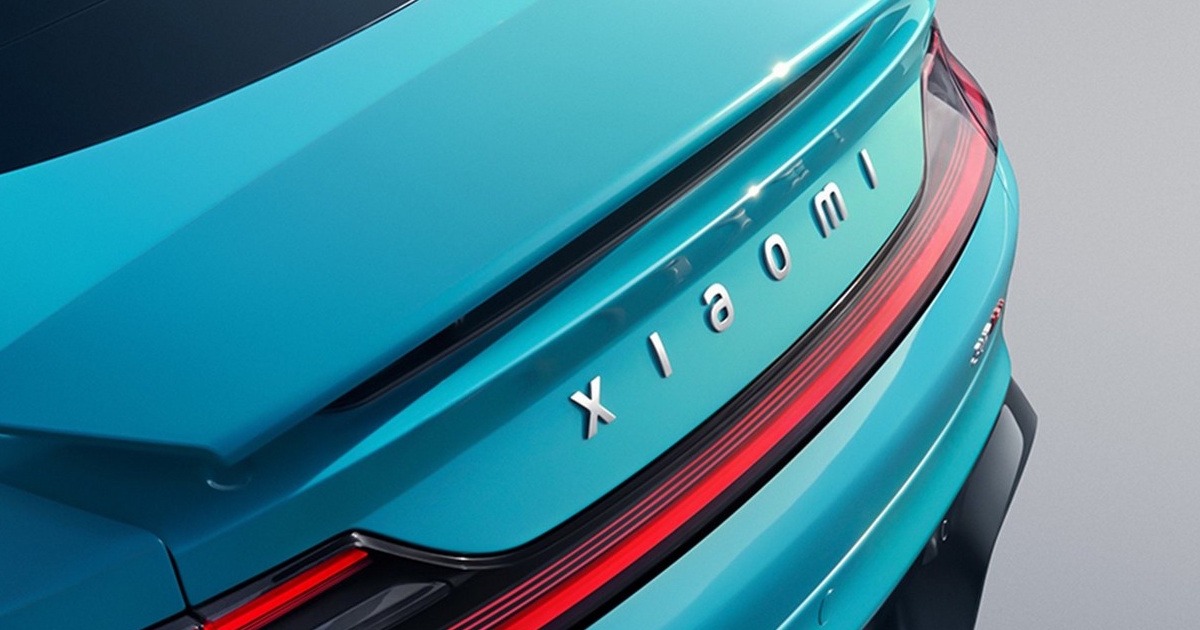
Xiaomi has made its first move into battery swapping, and the details make it a more interesting story than the headline suggests. According to Chinese corporate registration records, Xiaomi’s wholly owned subsidiary Hanxing Venture Capital invested €3.8 million (30 million yuan) for a 23.08% stake in Zhejiang Xinglixing New Energy Technology, a battery swap operator, first reported by EV. The investment coincided with an increase in Xinglixing’s registered capital from €12.7 million (100 million yuan) to €16.5 million (130 million yuan).
A Small Stake in a Very Small Company
Xinglixing was only founded in February this year. Its majority owner, holding the remaining 76.92%, is Zhejiang Jinrui Automobile Sales Service, an established company founded in 2007 with a long history in vehicle sales, dealership networks and after sales service, rather than in battery technology itself. Xinglixing’s registered business scope covers new energy vehicle electrical accessories, battery sales, battery swap facility sales, and related research and development.
Chinese financial outlets including Securities Times and NetEase have described the move as a low cost, light asset entry into battery swapping, a notably different approach from the capital intensive path Nio has taken over the past eight years, or the standardised, multi brand platform CATL has been building since 2024. Xiaomi is buying into an existing regional operator’s dealership and after sales infrastructure rather than building swap technology or stations of its own.
None of Xiaomi’s Cars Can Actually Use It
Xiaomi currently sells the SU7 sedan and YU7 SUV, both fully electric vehicles built on an 800 volt fast charging architecture with no provision for battery swapping. The company’s newly launched SkyNomad series, the N70 Max and N90 Max extended range SUVs that debuted on 30 July, use a petrol electric range extender powertrain, which is structurally incompatible with swapping as well.
In other words, Xiaomi doesn’t have a single model on sale or announced that could actually use a swap station. Coverage from outlets including ArenaEV has framed the investment as Xiaomi keeping its options open in the segment rather than preparing an imminent product launch, a reading that matches the small size of the stake and the size of the company it’s buying into.
Where This Fits Xiaomi’s Wider Energy Strategy
Until now, Xiaomi’s approach to EV energy infrastructure has leaned on partnerships rather than ownership. The company has secured access to more than 1.26 million third party charging points through agreements with Nio, Xpeng and Li Auto, alongside its own 600 kW liquid cooled supercharging technology. Chinese media have described the Xinglixing stake as extending that strategy to include a swap component alongside fast charging and cooperation deals, rather than replacing either.
Is This About China’s New Battery Tax?
I’ve written before about the shift happening in China’s battery policy, particularly the new consumption tax on lithium ion batteries that takes effect from September this year, and the incentive it creates for automakers to produce and install their own battery cells rather than buying from external suppliers like CATL. Given the timing, it’s a reasonable question whether Xiaomi’s swap stake is part of the same defensive move.

Based on what’s actually in the tax policy, the answer is no, not directly. The exemption mechanism rewards manufacturers that produce lithium battery cells in house and install them in their own vehicles. Owning a minority stake in a battery swap facility operator doesn’t touch cell production or ownership at all, and Xinglixing’s own business scope is about selling and servicing swap infrastructure, not manufacturing cells.
What Xiaomi has actually been doing on the cell manufacturing side is a separate, less publicised story. In 2024, Xiaomi took a 5% stake in a battery cell joint venture with CATL, BAIC and Beijing Energy, formally named Beijing Times Power, or Beijing Era Battery, which broke ground that June with production originally slated for 2026. CATL holds the controlling 51% of that venture, though, which makes it more of a supply guarantee than genuine vertical integration on Xiaomi’s part. The more significant move came in April this year, when Xiaomi established a wholly owned subsidiary, Beijing Xiaomi Jingxu Technology, covering batteries, electric motors and electronic control systems, reportedly tied to a planned 15 GWh joint venture battery factory. That’s the piece of Xiaomi’s strategy that would actually plug into the tax exemption logic, and it has nothing to do with the battery swap stake making headlines this week.
The Market Xiaomi Is Buying Into
Whatever Xiaomi’s motive, it’s stepping into a segment where the two established players are moving at very different speeds. Nio operates close to 4,000 battery swap stations in China, the product of more than €2.54 billion (20 billion yuan) invested since its first station opened in Shenzhen in 2018, and has generated around €394 million (3.1 billion yuan) in swap service revenue in 2025 alone. Its growth has slowed this year while it holds back on older station hardware ahead of a fifth generation rollout, which began large scale deployment this month with a target of more than 100 new stations a month from September.
It’s worth noting that this dominance is entirely a China story. In Europe, Nio built its entire brand proposition around the same battery swap technology through its Battery as a Service model, and it has not gone well: as I detailed in my look at Nio’s collapse in Europe, thin station coverage and the rise of 800V fast charging left the swap network as an expensive liability rather than a selling point, and Germany registered just three Nio cars in May this year. Whatever Xiaomi is hoping to get out of the Xinglixing stake, Nio’s experience is a reminder that dominance in China’s swap market hasn’t translated into a working model anywhere else.
CATL has taken a different approach entirely with its Choco-SEB system, launched at the end of 2024 as an open, standardised platform other automakers can adopt rather than a network CATL operates on its own. It has already secured cooperation from 11 automakers across 18 brands, with six swappable models already on sale and 25 more planned, and it added stations roughly three times faster than Nio through the first half of this year. If battery swapping in China ends up standardising around one dominant technical platform, CATL’s approach looks better positioned to get there than Nio’s vertically integrated one.
It’s worth remembering, too, that the value case for battery swapping was never really about batteries being unreliable. As I covered in my look at what actually breaks on an EV, modern liquid cooled battery packs fail at a fraction of a percent, nowhere near frequently enough to justify swap infrastructure on reliability grounds alone. The real pitch for swapping has always been refuelling speed and avoiding a large upfront battery cost, not protecting against a battery that’s likely to fail.
CATL’s role here extends well beyond swapping, too. The same company signed a 5 GWh sodium-ion storage deal with the Dutch firm Alfen for European grid deployment, which I covered separately, and continues to dominate China’s cell chemistry mix more broadly, with LFP batteries now accounting for a record 83.3% of Chinese installations. Any standardisation of battery formats across swap compatible vehicles will run through decisions CATL is already making about chemistry, something I explained in more detail in my LFP versus NMC explainer.
Summary
Xiaomi’s investment in Xinglixing is real, but it’s a small, speculative position in a five month old regional operator, bought at a price that barely registers against the billions Nio and CATL have committed to the same segment. None of Xiaomi’s current or announced vehicles can use it, and the stake doesn’t connect to China’s new battery tax policy in the way the timing might suggest. The more consequential story about Xiaomi’s battery strategy is happening elsewhere, in its wholly owned cell manufacturing subsidiary, not in this week’s swap station headline.
FAQ
Can any Xiaomi car actually use battery swapping?
No. The SU7 and YU7 are BEVs built on an 800 volt fast charging architecture with no swap provision, and the new SkyNomad EREV models are structurally incompatible with swapping as well.
Is this investment connected to China’s new lithium battery tax?
Not directly. The tax policy’s exemption applies to manufacturers that produce battery cells in house and install them in their own vehicles. A minority stake in a battery swap facility operator doesn’t involve cell production. Xiaomi’s more relevant move on that front is a separate, wholly owned battery and motor components subsidiary established in April 2026.
Who dominates battery swapping in China?
Nio operates the largest single network at close to 4,000 stations, built through more than €2.54 billion (20 billion yuan) of investment since 2018. CATL’s Choco-SEB, launched at the end of 2024, takes an open platform approach and has grown faster in 2026, securing cooperation from 11 automakers across 18 brands.
Does Xiaomi make its own battery cells?
Not yet at meaningful scale. It holds a 5% stake in a CATL led cell manufacturing joint venture that broke ground in 2024, and separately established a wholly owned subsidiary for batteries, motors and electronic control systems in April 2026, tied to a planned 15 GWh factory.
Featured Image Source: Xiaomi
Marko Lubar is the Founder and Editor of ElectricFleet Online, where he covers the latest developments in electric vehicles, battery innovation, autonomous driving, artificial intelligence, and the technologies shaping the future of mobility.
Learn more about Marko and the mission behind ElectricFleet Online on the About Us page.
Latest News