China’s Ministry of Finance announced that lithium-ion batteries will be subject to a 2% consumption tax from 1 September this year, rising to 4% from September 2027. The move ends an 11-year tax exemption and marks a deliberate shift in how China treats its EV industry: less like a protected infant sector in need of government support, more like a mature industry that can stand on its own.
At the same time, the announcement explicitly exempts sodium-ion batteries, solid-state batteries and fuel cells from the new tax through the end of 2028, and that exemption is where the real strategic ambition lies.
Why China Is Doing This
The obvious reason is fiscal: China’s EV penetration rate has crossed 50% of domestic new car sales, and the subsidies and tax breaks that pushed the industry to this point are increasingly hard to justify. In the first half of 2026, EV retail sales in China reached 4.71 million units, 54% of total passenger car sales. The emergency measures are no longer necessary for the technology, so the government is scaling them back.
But Cui Dongshu, secretary-general of the China Passenger Car Association, offered a more revealing reading: the policy is designed to push car manufacturers to build their own batteries, and the mechanism is straightforward. Under Chinese consumption tax rules, automakers that produce batteries in-house and install them directly in their own vehicles can avoid or deduct the tax entirely. Those that buy from external suppliers like CATL will absorb the tax cost passed along the supply chain.

At the 4% rate that takes effect from September 2027, Cui calculates the added cost could reach up to €130 per vehicle for a typical 50-100 kWh battery pack. For a manufacturer building a million cars a year, the cumulative impact runs into hundreds of millions of euros annually. The policy is not just about revenue, it’s designed to push car manufacturers to build their own batteries.
Chinese consumption tax rules work on a cascade basis. Manufacturers that produce lithium batteries and install them directly into their own vehicles can avoid or deduct the tax. Manufacturers that buy batteries from external suppliers, like CATL, will bear the tax cost that gets passed along the supply chain. The message is direct: if you want to control your costs, control your batteries.
What This Means for the EV Market
For the EV market, the most direct implication is potential cost pressure on Chinese-built EVs. A 2-4% tax on lithium battery cells, when passed along the supply chain, translates to a small but non-trivial increase in vehicle production costs. Manufacturers that produce batteries in-house, primarily BYD, are insulated from this. Those that buy from CATL (Volkswagen, Stellantis, BMW, Mercedes-Benz) or other suppliers are not.
The secondary implication is that the Chinese battery industry is entering a technology transition, driven partly by this policy. Manufacturers that successfully move to sodium-ion or solid-state batteries over the next two to three years could gain both a cost and a technological advantage. That competition should eventually lead to better and more affordable batteries for the vehicles we buy. Whether and when European manufacturers will follow the same path, however, remains an open question.
The third implication, less important here on the continent but worth noting, is that the Nio-CATL battery swapping joint venture and similar arrangements that depend on standardised lithium-ion cell supply chains will need to adapt to a market where battery economics are shifting. Whether battery-as-a-service models remain commercially viable when the underlying cell economics are changing is a genuinely open question.
Who the World’s Biggest Battery Makers Are
To understand what this policy means, you need to know who currently dominates battery supply. The market is heavily concentrated at the top:
| Manufacturer | Country | 2025 global market share |
|---|---|---|
| CATL | China | 39.2% |
| BYD | China | 16.4% |
| LG Energy Solution | South Korea | 9.2% |
| CALB | China | 5.3% |
| Gotion High-tech | China | 4.5% |
CATL and BYD together held more than half of global EV battery installations in 2025. The three South Korean manufacturers, LG Energy Solution, SK On and Samsung SDI, combined held 16%. Chinese firms now hold six of the top ten spots globally, commanding a 70.4% combined market share.
CATL supplies batteries to Tesla, BMW, Mercedes-Benz, Volkswagen and Hyundai, among others. BYD produces batteries for its own vehicles and sells externally. The new tax policy creates a direct financial incentive for Chinese automakers to move away from buying from CATL and toward building their own cells, which is exactly what BYD has already done.
The Bigger Strategic Signal
Secretary-general Cui’s analysis pointed to something that rarely gets reported in Western coverage of the Chinese EV industry: CATL’s profitability is significantly outstripping that of the car manufacturers it supplies.
According to Fortune Global 500 data, Chinese automakers on the list posted a combined profit of €12.9 billion in 2025. A single leading battery company, CATL, took €6.2 billion of that. China’s auto industry posted a sales profit margin of just 3.4% in the first five months of 2026, still at a historic low. CATL’s net profit reached €9.4 billion in 2025, exceeding the combined profits of 13 A-share listed automakers.
Put simply: battery suppliers are extracting more value from the Chinese EV supply chain than the car manufacturers themselves. The new tax is one instrument through which the government is attempting to rebalance that dynamic by incentivising vertical integration.
This matters particularly for manufacturers that don’t yet produce batteries in-house. Those companies now face a structural cost disadvantage compared to BYD, which manufactures its own LFP Blade Batteries, and to GWM, which has Svolt Energy as a battery subsidiary. The policy window created by the sodium-ion and solid-state exemptions gives other manufacturers a path to catch up: invest in next-generation cell development now, and you get both the tax advantage and a technology position in the next battery cycle.
Where Europe Stands
Europe is watching this shift from a position of significant battery dependency. The top five cell suppliers to European car manufacturers tell the story clearly, based on 2026 market data from IndexBox:
| Manufacturer | Country | Share of European cell supply (2026 est.) |
|---|---|---|
| CATL | China | 35-40% |
| LG Energy Solution | South Korea | 20-25% |
| Samsung SDI | South Korea | 5-10% |
| SK On | South Korea | 5-10% |
| ACC (Automotive Cells Company) | France/Germany | > 5% |
Europe’s only significant homegrown battery startup, Northvolt, filed for bankruptcy in late 2024. Its Swedish and German assets were acquired by US advanced materials firm Lyten in August 2025, which is transitioning the facilities toward lithium-sulfur cell technology rather than continuing with conventional NMC production. ACC, the joint venture between Stellantis, Mercedes-Benz and TotalEnergies, is scaling production in France and Germany but remains a fraction of CATL and LG volumes.
The European Economic and Social Committee formally recognised sodium-ion technology as a strategic priority for EU energy independence in February this year, calling for an industrial pathway covering both lithium and sodium technologies with public grants, tax incentives and joint R&D. That’s a policy recommendation, not a law. The EU’s practical response has been financial rather than tax-based: Horizon Europe has made €263 million available for battery and mobility research in 2026, with a specific call for “sustainable and competitive cell production techniques for lithium-ion and sodium-ion batteries” worth €37.8 million. A broader EU automotive action plan worth €3.8 billion includes €1 billion for the automotive sector through 2027.
The contrast with China’s approach is stark. China is using tax policy to simultaneously penalise the old chemistry and subsidise the new. Europe is using grants and public-private partnerships. Both are trying to accelerate the same transition, but the instruments and the speed are different.
The Next-Generation Battery Race
Understanding the two technologies at the heart of this race helps make sense of why China is betting on them so heavily.
Sodium-ion batteries work like standard lithium-ion cells but use sodium instead of lithium as the charge carrier. That distinction matters commercially: sodium is one of the most abundant elements on earth, it’s available across Europe and most other regions, and it doesn’t require cobalt or nickel. The result is a cheaper cell that also handles cold weather better than standard LFP chemistry. The trade-off is lower energy density, which means a larger or heavier battery pack for the same range. CATL has already moved beyond the laboratory with sodium-ion, deploying cells commercially in grid storage applications, including the 5 GWh deal with European energy company Alfen. In Europe, French startup Tiamat Energy launched a 6 GWh sodium-ion production line in 2023, focused on high-power cells with five-minute charging capability.

Solid-state batteries are a more fundamental step change. They replace the liquid electrolyte inside a conventional cell with a solid material, which improves energy density and significantly reduces fire risk. CATL, BYD and several other Chinese manufacturers are targeting small-batch vehicle installations from 2027. The technology isn’t ready for mass production yet, but it’s closer than it was two years ago. In Europe, Horizon Europe is funding solid-state development through the BATT4EU partnership, and the European Innovation Council is launching a specific call for advanced materials in energy storage in late 2026.
The Chinese tax policy makes the timeline for this transition concrete. Manufacturers that move to sodium-ion or solid-state cells before the exemption expires at the end of 2028 will have both a cost advantage and a technology position in the next battery generation, making the deadline a genuine strategic inflection point for the industry.
Whether Europe can use this window to reduce its dependency on Chinese and Korean suppliers is the harder question, and the honest answer is: partially, and not quickly. China’s solid-state programme is already in pilot production in 2026, with demonstration vehicles targeted for 2027 and mass production planned for 2030, according to China’s own formal development roadmap. The German Council on Foreign Relations noted in December 2025 that Europe cannot expect to outcompete in next-gen battery technology unless it also invests heavily and acts strategically, warning against the assumption that the EU can simply leapfrog China’s lead by skipping lithium-ion and going straight to solid-state.
The IPCEI Batteries II programme, part of the European Battery Alliance, is funding solid-state gigafactory-scale manufacturing in Germany, France and Sweden, with pilot lines expected to deliver first cells for OEM testing from 2027. Volkswagen’s partnership with QuantumScape, which operates a pilot line in Germany, is the most advanced European industrial solid-state project. Market analysis from IndexBox projects that at least three EU gigafactories could begin commercial solid-state production between 2029 and 2031. That timeline puts Europe roughly two to three years behind China’s commercial rollout, which is a gap that will be difficult to close on volume and cost.
What Europe could realistically achieve is a meaningful domestic supply base for the premium and safety-critical segment of the solid-state market, reducing its worst-case scenario of near-total import dependency, rather than displacing Chinese producers from global leadership.
FAQ
What is China’s new battery consumption tax?
From 1 September 2026, lithium-ion batteries sold in China will be subject to a 2% consumption tax. The rate rises to 4% from September 2027. Sodium-ion batteries, solid-state batteries and fuel cells are exempt from the tax through the end of 2028.
Why is China introducing this tax now?
China’s NEV market has crossed 50% penetration and no longer needs the level of policy support that existed in 2015 when the original exemption was introduced. The tax also creates a financial incentive for car manufacturers to build their own batteries, reducing their dependence on specialist battery suppliers like CATL.
Does this affect car manufacturers that make their own batteries?
Manufacturers that produce batteries in-house and install them directly into their own vehicles can avoid or deduct the consumption tax under Chinese consumption tax rules. BYD, which makes its own Blade Batteries, benefits from this provision. Manufacturers that buy batteries from external suppliers will bear the additional cost.
Why are sodium-ion and solid-state batteries exempt?
The exemptions are designed to accelerate investment in next-generation battery technologies during the critical phase before commercialisation. CATL and BYD are both targeting small-batch vehicle installations of solid-state batteries from 2027.
Who are the world’s biggest battery manufacturers?
The top five by 2025 global market share are CATL (39.2%), BYD (16.4%), LG Energy Solution (9.2%), CALB (5.3%) and Gotion High-tech (4.5%). CATL and BYD together account for more than half of global EV battery installations.
What is Europe doing about battery independence?
Europe’s response is primarily financial rather than tax-based. Horizon Europe has allocated €263 million for battery and mobility research in 2026. The EESC has formally called for an industrial pathway covering sodium-ion and lithium technologies, including tax incentives and public grants. ACC, the European battery joint venture between Stellantis, Mercedes-Benz and TotalEnergies, is scaling production, but Europe remains heavily dependent on CATL and South Korean suppliers for cell supply.
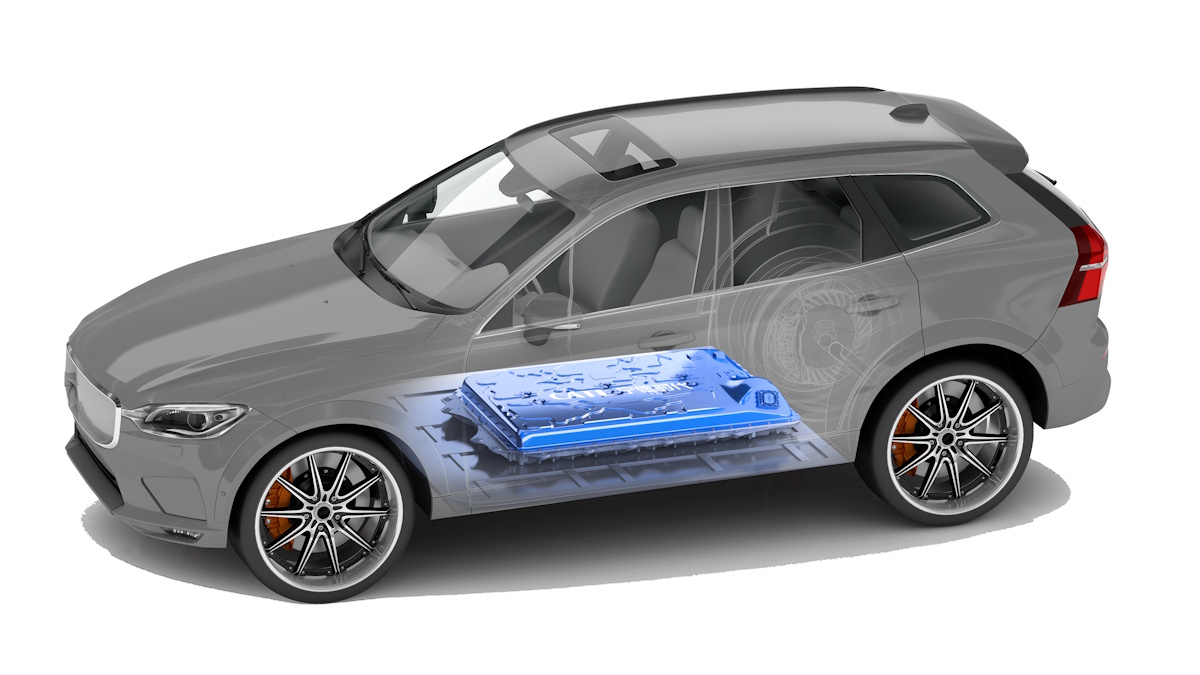
Featured Image Credit: CATL
Marko Lubar is the Founder and Editor of ElectricFleet Online, where he covers the latest developments in electric vehicles, battery innovation, autonomous driving, artificial intelligence, and the technologies shaping the future of mobility.
Learn more about Marko and the mission behind ElectricFleet Online on the About Us page.
Latest News