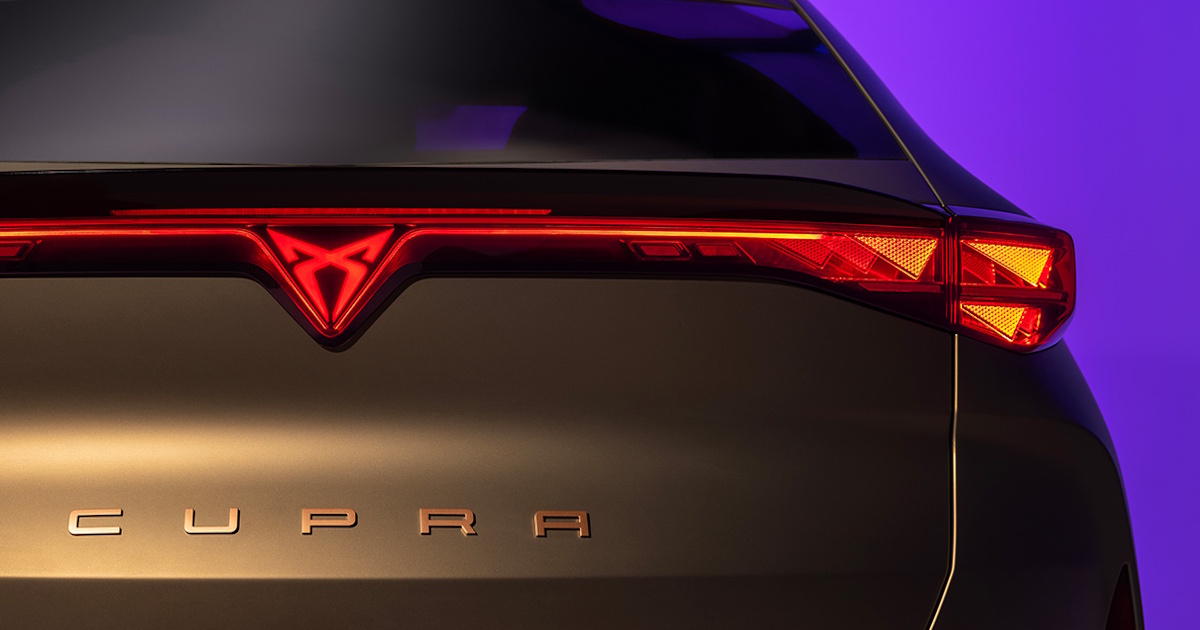
Five years ago, Cupra had just one electric car, the Born. Today, its EV lineup covers three very different segments, from the small Raval to the compact Born and the larger Tavascan.
The Raval recently joined the lineup as Cupra’s smallest and most affordable EV, while the Born remains the brand’s compact electric hatchback and the Tavascan sits at the top of the current range as its only electric SUV. The three cars are also built in different places. The Raval is produced in Spain, the Born in Germany and the Tavascan in China for the European market.
And Cupra is already working on another model. The Tindaya concept has been confirmed for production and is expected to become the brand’s new flagship towards the end of the decade.
Here’s how Cupra’s current EV lineup compares, where each model is built and what comes next.
| Model | Segment | Battery | Power | WLTP range | Built in |
|---|---|---|---|---|---|
| Raval | Small hatchback | 37 to 51.5 kWh | 85 to 166 kW | up to 446 km | Spain |
| Born | Compact hatchback | 58 to 79 kWh | 140 to 240 kW | up to 631 km | Germany |
| Tavascan | Electric SUV | 77 kWh | 210 to 250 kW | up to 553 km | China |
How the three models fit together
The three cars cover different parts of the market. The Raval is the smallest and most affordable of the three, competing with cars such as the Renault 5, Volkswagen ID.Polo and Skoda Epiq. The Born is a larger compact hatchback and remains the more performance-focused option, sitting alongside cars such as the Volkswagen ID.3, MG4 and Kia EV4.
How many fully electric Cupra models are there?
Cupra currently sells three fully electric models in Europe: the Born hatchback, the Tavascan SUV coupe, and the Raval city car, with a fourth model, the Tindaya, confirmed for future production.
At the top of the current range is the Tavascan, Cupra’s only electric SUV. It competes with cars such as the Volkswagen ID.5, Ford Mustang Mach-E and Skoda Enyaq Coupe. There is some overlap between them, but Cupra is no longer relying on a single EV to represent the brand.
Cupra Raval
The Raval is Cupra’s smallest and newest EV. It was revealed as a production model in April this year and is built at the company’s Martorell plant near Barcelona. It shares its underpinnings with the Volkswagen ID.Polo and Skoda Epiq, with all three models based on Volkswagen Group’s smaller MEB Entry platform.

The Raval is arguably the most important addition to Cupra’s EV range because it takes the brand into the much larger small-car segment. It also gives Cupra a fully electric model that is significantly smaller and cheaper than the Born.
| Specifications | Raval / Plus (LFP) | Raval V1/V2/Endurance (NMC) | Raval VZ (NMC) |
| Battery | 37 kWh (LFP) | 52 kWh (NMC) | 52 kWh (NMC) |
| Motor power | 99 kW (135 PS) | up to 155 kW (211 PS) | 166 kW (226 PS) |
| WLTP range | up to 328 km | up to 446 km | up to 388 km |
| DC charging | 23 min (10–80%) | 24 min (10–80%) | 24 min (10–80%) |
The Raval measures 4,046 mm in length, 1,784 mm in width and 1,514 mm in height. Its wheelbase is 2,600 mm. Despite being the smallest Cupra EV, it has a 441-litre boot, which is larger than the Born’s 385 litres. There is no frunk.
| Specifications | Cupra Raval |
|---|---|
| Length / Width / Height | 4,046 mm / 1,784 mm / 1,518 mm |
| Wheelbase | 2,600 mm |
| Boot | 441 litres |
| Frunk | None |
Cupra Born
The Born was Cupra’s first EV, launched in 2021. The updated version made its world premiere in March, and production began at Volkswagen’s Zwickau plant in Germany in May 2026, ahead of deliveries starting this summer.
| Specifications | Born (58 kWh) | Born (79 kWh) | Born VZ |
| Battery (chemistry) | 58 kWh (NMC) | 79 kWh (NMC) | 79 kWh (NMC) |
| Motor power | 140 kW (190 PS) | 170 kW (228 PS) | 240 kW (326 PS) |
| WLTP range | up to 483 km | up to 626 km | 629 km |
| DC charging | up to 165 kW | up to 185 kW | up to 185 kW |

The Born measures 4,322 mm in length, 1,809 mm in width and 1,537 mm in height. Its wheelbase is 2,767 mm and the boot offers 385 litres of capacity. There is no frunk.
| Specifications | Cupra Born |
|---|---|
| Length / Width / Height | 4,336 mm / 1,809 mm / 1,540 mm |
| Wheelbase | 2,766 mm |
| Boot | 385 litres |
| Frunk | None |
The Born and Volkswagen ID.3 have always shared the same MEB platform, but that has changed slightly with the ID.3 Neo. Volkswagen moved the newer model to the MEB+ platform and an APP350 motor, improving efficiency compared with the older setup.
The Born stays on the older MEB architecture for now, so on paper it is a step behind its Volkswagen sibling on the technical side, even though the two remain close in size, price and positioning. If you’re curious about who the Born is competing against for buyers, check out my article on the ID.3 and its rivals.
Cupra Tavascan
The Tavascan is the largest model in Cupra’s current EV lineup and the brand’s first electric SUV. It is also the odd one out when it comes to production. While the Raval and Born are built in Europe, the Tavascan is produced in China, at a Volkswagen plant in Hefei.
Volkswagen Anhui is a joint venture between Volkswagen and China’s JAC Group. Electrive reported that Volkswagen builds the Tavascan there because production capacity in Europe was limited, with the car built for export to European buyers rather than for the Chinese domestic market.
| Specifications | Tavascan Endurance | Tavascan VZ |
|---|---|---|
| Battery (chemistry) | 77 kWh (NMC) | 77 kWh (NMC) |
| Motor power | 210 kW (286 PS) | 250 kW (340 PS) |
| WLTP range | up to 553 km | up to 513 km |
| DC charging | up to 135 kW | up to 135 kW |

The Tavascan is 4,644 mm long, 1,861 mm wide and 1,597 mm tall, with a 2,766 mm wheelbase. It also has the largest boot of the three Cupra EVs, with 540 litres of capacity. Like the Raval and Born, there is no frunk.
| Specifications | Cupra Tavascan |
|---|---|
| Length / Width / Height | 4,644 mm / 1,861 mm / 1,597 mm |
| Wheelbase | 2,766 mm |
| Boot | 540 litres |
| Frunk | None |
Cupra’s electric lineup keeps growing, and the Tindaya is next
Cupra’s EV range looks very different from where it started. It’s also part of a new wave of European automakers that have accepted the challenge from China and are now going on the offensive, with a growing number of new models hitting the market this year. The Born was the brand’s only fully electric model just a few years ago. Today, it has a small hatchback, a compact performance-oriented model and an electric SUV, built across three countries, the Raval in Spain, the Born in Germany and the Tavascan in China for the European market. Each addition has taken Cupra into a part of the market it didn’t cover before, and the brand isn’t done yet.
Where is the Cupra Tavascan built?
The Cupra Tavascan is built in China, at a Volkswagen plant, a joint venture between Volkswagen and China’s JAC Group, and exported to Europe.
The next step is the Tindaya, and it points in the opposite direction from the Raval. Where the Raval brought Cupra into the small-car segment, the Tindaya is aimed squarely upmarket. It started life as a concept shown at the IAA Mobility show in Munich in 2025, all sharp angles and 23-inch wheels, but Cupra has since confirmed it’s heading into production. Seat-Cupra CEO Markus Haupt told Autocar the car is already in development, framing it less as a dream and more as something the brand fully intends to build.
The production version is expected to become Cupra’s new flagship, sitting above the Tavascan in the range. At 4.72 metres long, the concept is noticeably bigger than the Tavascan, and Haupt has pointed to cars like the BMW iX3 and Volvo EX60 as the kind of competition Cupra wants to take on with it. A timeframe of around 2030 has been mentioned, which lines up with when the Volkswagen Group’s new Scalable Systems Platform, or SSP, is expected to be ready, since the Tindaya is being built around that architecture rather than the current MEB platform.

What the car will actually run on is still an open question. The concept used a range extender setup, a 1.5 litre TSI petrol engine acting purely as a generator for two electric motors, delivering a combined 365 kW. Haupt has been clear that shouldn’t be read as a preview of the production spec. Cupra wants to keep its options open as the market shifts, so the Tindaya could end up fully electric, keep some version of the range extender, or land somewhere else entirely depending on how things look by the time it’s ready.
For now, the Raval, Born and Tavascan make up Cupra’s electric lineup in Europe. But with the Tindaya already confirmed, Cupra is working through a clear pattern, adding one EV at a time, each aimed at a part of the market the brand didn’t reach before, rather than trying to cover everything at once.
FAQ
Which Cupra EV has the longest range?
The Cupra Born has the longest range in the lineup, reaching up to 631 km WLTP with its larger 79 kWh battery.
Does the Cupra Raval use the same battery as the Born?
No. The entry-level Raval and Raval Plus use a smaller 37 kWh LFP battery, while the higher trims get a 52 kWh NMC battery, which is also shared with the Volkswagen ID.Polo.
What is the Cupra Tindaya and when will it launch?
The Tindaya is Cupra’s upcoming flagship SUV, confirmed for production after debuting as a concept in 2025. It’s expected to arrive around 2030 on Volkswagen Group’s new SSP platform, sitting above the Tavascan in the range.
Marko Lubar is the Founder and Editor of ElectricFleet Online, where he covers the latest developments in electric vehicles, battery innovation, autonomous driving, artificial intelligence, and the technologies shaping the future of mobility.
Learn more about Marko and the mission behind ElectricFleet Online on the About Us page.
Latest News