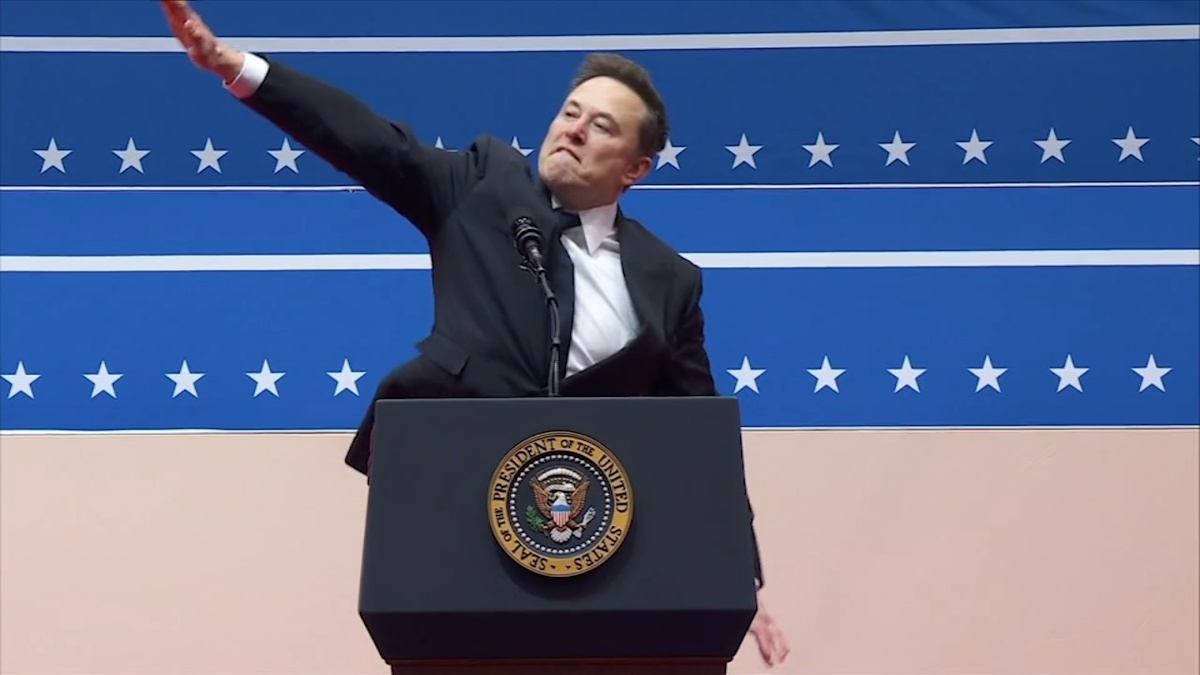
For well over a year, Tesla sales slid hard, and a large part of the reason was the man at the top. Elon Musk moved into politics in a very visible way, endorsed a far right party in Germany, spent months inside the Trump administration, and made a gesture at a rally that a lot of people read as a fascist salute, something he rejected. The backlash was immediate, and plenty of European buyers decided they would rather not give their money to a brand attached to all of that.
Then something interesting happened: the sales came back. As of May 2026, Tesla is climbing again across China, Norway, France and several other markets. I understand the instinct to boycott completely, and I am not here to defend anything Musk has said. I just think choosing a car this way is a mistake, and the recovery only makes that clearer. Here is why.
The boycott was real, but it did not last
Let me be clear that this was not an imaginary trend. Tesla registrations in Europe fell for thirteen months in a row heading into January 2026, when the company registered roughly 8,000 cars across the region and held a market share of about 0.8 percent. The anger and dissatisfactin were real and the numbers proved it. What is just as telling is what happened next. By May 2026, Tesla China posted its strongest month of the year, with wholesale volume of nearly 86,000 vehicles, up more than 39 percent on the same month last year. In Norway, Tesla was the single best selling car brand of the month with a 21.5 percent share of the entire market, and the Model Y led the country’s sales charts on its own, accounting for one in every five new cars registered. France saw Tesla sales jump by a remarkable 655 percent year on year, with healthy gains in Denmark, Spain and Sweden too. In other words, the boycott made headlines, it hurt for a while, and then a lot of those same buyers quietly came back. That tells you something about how durable a purchase decision built on anger really is.
To be fair, the rebound is not purely a story of people forgiving Musk. A refreshed Model Y, new financing deals, the spread of Tesla’s driver assistance software and a generally maturing market all played a part, just as Musk’s politics was only one of several reasons sales fell in the first place. The same competition from Chinese brands now building cars inside Europe is still very much there, but that is exactly the point. Real buying decisions are made on a mix of price, product and timing, not on a single moral verdict about one executive. When the car got more compelling, people bought it again, politics or not.
What you are actually paying for when you buy a Tesla
When you buy a Model 3 or a Model Y, you are not writing a personal cheque to Elon Musk. You are paying the tens of thousands of people who designed the battery pack, wrote the software, engineered the motors, and put the car together. Whatever you think of the chief executive, the engineering underneath these cars is genuinely good. The Model Y became one of the best selling cars in the world, full stop, not just the best selling electric one, because it does the basics extremely well. Boycotting the badge punishes the workforce far more than it punishes the billionaire, whose wealth sits mostly in stock and barely moves when you choose a different car. If your goal is to register disapproval of one person, refusing to buy the product made by thousands of other people is a strange way to do it.

Musk is a person, with all the flaws that brings
Here is the part I keep coming back to. Elon Musk is, before anything else, a human being. I don’t think he’s some uniquely gifted genius, although he is clearly an extraordinary businessman. I also do not think he is a uniquely bad person. He is a man with strengths and weaknesses like everyone else, and the difference is the size of the spotlight. The more famous you are, and the more time you spend in front of cameras and on social media, the higher the odds that your worst moments end up permanently on the record. Most of us would not come out of that level of scrutiny looking clean either. That does not excuse anything he has said or done, it just means the standard people are applying to him is one almost nobody could survive.
Switching to a Chinese brand does not solve the ethics
This is where the moral reasoning starts to wobble. A lot of the buyers leaving Tesla are switching to Chinese brands. China is a country with a long and well documented record of serious human rights abuses. If your principle is “I refuse to fund people whose values I reject,” then a large share of the alternatives fail that same test, and arguably fail it on a far larger scale than one executive’s posts on X.
I’m not telling anyone to avoid Chinese cars. Some of them are excellent value and I have written about plenty of them, and the tariff situation around them is its own complicated story. My point is narrower: if you’re going to apply an ethical filter to your car purchase, you have to apply it evenly, or it is not really a principle at all. It is just a preference dressed up as one.
No electric car is clean once you reach the mine
It gets harder still: battery production is, in certain cases, environmentally damaging. Mining lithium, nickel, and cobalt has a real cost in water use, land, and in some supply chains, labour conditions. This is not just a Tesla problem, but an electric car problem, and it applies just as much to the Chinese rivals and the European ones as it does to anything coming out of Berlin or Texas. If you want to dig into how the different battery chemistries stack up, the picture is genuinely nuanced, but the headline is simple. There is no electric car on sale today that is completely clean once you trace it back to the mine. So if ethics is your filter, nothing passes.
European brands are not exactly saints either
Maybe you decide to play it safe and buy European. Take Volkswagen, which is currently selling a strong lineup of electric cars. It was founded in 1937 under the Nazi regime, set up to build a “people’s car,” and it used forced labour during the war. More recently it ran Dieselgate, deliberately cheating emissions tests on around eleven million vehicles worldwide, a scandal that cost it tens of billions of euros and a great deal of trust. I am not singling Volkswagen out as worse than anyone, that’s exactly the opposite of my point. Pick almost any large carmaker with a long history and you will find something indefensible in the cupboard. So choosing a VW or an Audi to feel morally cleaner than a Tesla is, at best, selective memory.
Boycott everyone, or boycott no one
This is the logical endpoint, and I think it is the honest one. Once you accept that every large company has done something it shouldn’t be proud of, singling out Tesla starts to look less like a principle and more like picking the villain who happens to be in the headlines this year. Consistency leaves you with two choices. Either you boycott essentially every carmaker, which is not a realistic way to live, or you judge each car on what it actually is: the engineering, the price, running costs, safety record, and how well it fits your life. That is a standard you can actually apply, and it doesn’t collapse the moment you look at it twice.

So, should you buy a Tesla?
Buy the car that suits you. If a Model Y is the best car for your money and your needs, the fact that you can’t stand its chief executive is a weak reason to pay more for something worse. And if a Chinese or European rival genuinely fits you better on price, range, or comfort, then buy that instead, because there are more strong alternatives than ever. The sales recovery in 2026 makes the wider point for me. When the boycott was loudest, plenty of people swore off the brand for good, and yet within a year many of them were back in showrooms once the product made sense for them again. Choose on merit, not on the mood around a name. If you want to change what Musk does in politics, the ballot box is where that actually happens. Your driveway is not.
FAQ
Did the Tesla boycott actually work?
Only for a while. Tesla recorded thirteen straight months of falling registrations in Europe heading into 2026, and Musk’s politics was one of the reasons, alongside an ageing model range and cheaper rivals. By May 2026, though, sales were recovering strongly, with Tesla China up more than 39 percent year on year, Tesla topping the Norwegian market, and France up 655 percent. The boycott hurt, then largely faded.
Does boycotting Tesla actually hurt Elon Musk?
Not much. His wealth is tied mainly to Tesla’s share price and his other companies, not to the profit on any single car. A boycott affects the workforce and the brand far more directly than it affects his personal finances.
Are Chinese electric cars a more ethical choice than a Tesla?
That is hard to argue. China has a well documented record of serious human rights abuses, and battery supply chains raise their own environmental and labour questions. If your reason for avoiding Tesla is ethical, the same logic complicates a switch to most Chinese brands too.
Should I buy a Tesla in 2026?
Judge it on the car. Look at the price, the range, the running costs, the safety, and how well it fits your needs, then compare it honestly against its rivals. If the Tesla wins on those terms, your opinion of its chief executive is a poor reason to choose something worse.
Featured Image Credit: ABC11
Marko Lubar is the Founder and Editor of ElectricFleet Online, where he covers the latest developments in electric vehicles, battery innovation, autonomous driving, artificial intelligence, and the technologies shaping the future of mobility.
Learn more about Marko and the mission behind ElectricFleet Online on the About Us page.
Latest News