If you read automotive media over the past two years, you’d be forgiven for thinking Chinese electric cars are simply taking over European roads. Some headlines would have you believe the battle is already lost for traditional manufacturers. The reality is considerably more complicated, and in some cases, the opposite is true.
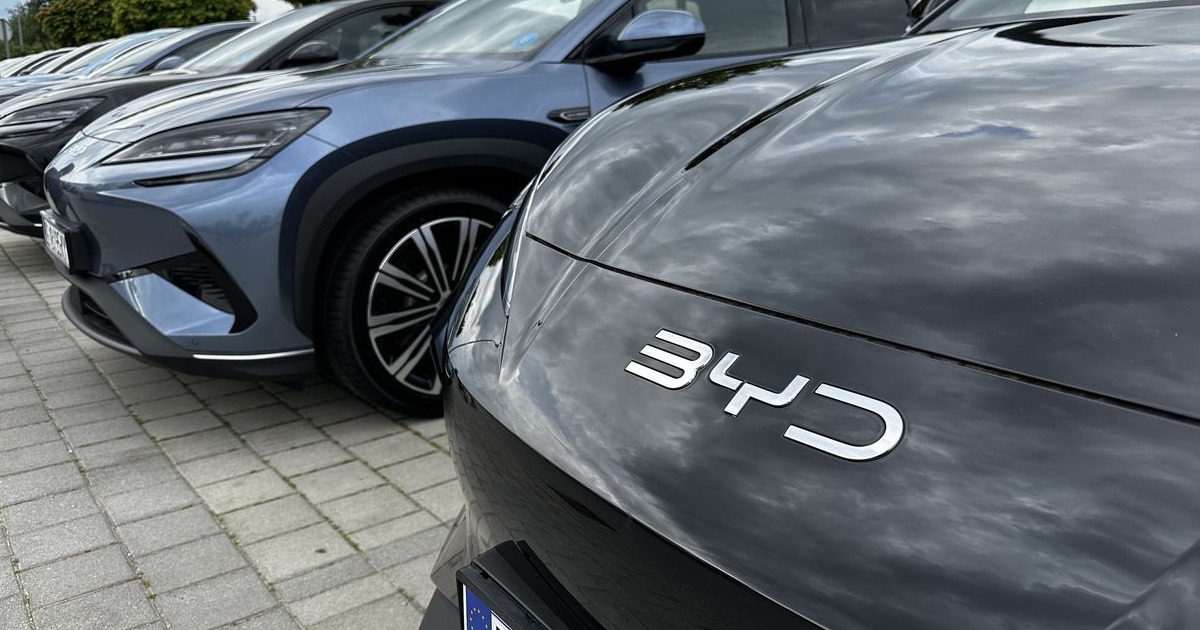
Yes, BYD tripled its European sales to nearly 188,000 vehicles in 2025. Yes, Leapmotor is growing fast. And yes, Chinese brands are genuinely disrupting the affordable EV segment. But alongside that success story runs a quieter and less-reported one: several Chinese manufacturers have quietly retreated, restructured or simply failed to find an audience in Europe. I covered the broader landscape of Chinese EV manufacturers in Europe nearly two years ago. A lot has changed since then, and not all of it in the direction those early optimists expected.
Understanding which brands are actually winning, and why some aren’t, tells you more about the future of the European EV market than the headline numbers alone.
The Brands That Have Stumbled or Retreated
Great Wall Motor is the clearest case study. GWM arrived at the 2021 Munich Motor Show with genuine fanfare, set up a European headquarters, hired a full team of around 100 people and launched two sub-brands: Ora for affordable EVs and Wey for premium SUVs. By 2023, European sales across all brands reached just 6,300 units, fell 25.4% in 2024 and dropped another 30% in 2025 to around 3,500 vehicles. In August 2024, GWM shut its Munich headquarters, laid off all its European staff and moved control of European markets back to China, managed through local independent importers. The brand has since returned with a broader product slate including hybrids and petrol models alongside EVs, targeting 13 European countries by the end of 2026 and a European factory with 300,000-unit annual capacity by 2029. Whether that second attempt lands differently is the question worth watching.
Aiways is a different story. The brand had genuine early momentum in Europe, launching through a partnership with SAIC’s European distribution network, but financing problems in China eventually killed the European operation. Distribution partners were left without stock, customers were left without service support, and the brand quietly faded from European roads. That’s the scenario European buyers most dread when considering an unfamiliar Chinese brand.

Nio is a case I’ve covered in depth here before, and the numbers remain as stark as they were when I last wrote about them. Fifteen registrations in Germany in the first half of 2026, with the Hamburg Nio House closed, country leadership positions left permanently empty and the original promise of 120 battery swap stations in Europe by 2023 never delivered. Nio hasn’t officially left Europe, but the version of it that arrived with Nio Houses, premium pricing and battery swapping as its core proposition no longer exists in any meaningful commercial sense.
HiPhi, the luxury EV brand backed by Human Horizons, announced European expansion ambitions in 2022 and 2023. By early 2024, Human Horizons had suspended salaries in China and effectively frozen new development. The European plans remain on paper but nothing meaningful has materialised.
Arcfox, BAIC Group’s premium EV brand developed in partnership with Magna, technically has European homologation and distributors on paper. In practice, there are no visible sales figures, no dealer network and no meaningful brand awareness in Europe. The brand’s focus has shifted to Southeast Asia, while BAIC’s own EV division in China has been cutting production capacity under pressure from BYD and Geely. Arcfox is an example of a third category that often gets overlooked: brands that haven’t left Europe because they never meaningfully arrived in the first place.
Voyah and Hongqi, luxury EV brands backed by Chinese state-owned giants Dongfeng and FAW respectively, fall into a similar bracket. Both have token presences in Scandinavia, Germany and the Benelux, with annual sales that rarely reach three figures. Behind them are deep-pocketed parent companies that won’t declare bankruptcy overnight, but European buyers aren’t buying, and the brands are slowly fading into irrelevance without ever having made a real impression.
Why Some Chinese Brands Struggle in Europe
The reasons aren’t mysterious, and they’re consistent across the brands that have failed or retreated.
The first is the service network problem. European buyers, particularly in Germany and Scandinavia, ask hard questions about what happens when something goes wrong: who fixes the car, whether parts are available and how long software updates will continue for a model that sold in small numbers. Chinese manufacturers that entered Europe through independent importers, without either their own dealer infrastructure or a major European partner behind them, cannot answer those questions convincingly. The brands that are surviving, BYD building its own network, Leapmotor running through Stellantis, GAC Aion through Magna Steyr, all have a credible answer. The ones that didn’t have one are the ones that struggled.
The second is the used car value problem. Chinese EVs in Europe have shown faster-than-average depreciation, partly because brand recognition is low and partly because the product lifecycle is so short. In China, a car model might be refreshed or replaced within two or three years, which reflects the market there: buyers expect rapid technology turnover and update their vehicles frequently. European buyers tend to keep cars for five to ten years. A car that’s been discontinued in China two years after it launched in Europe, with uncertain parts and software support going forward, is not an attractive proposition for a family making a ten-year financial commitment.

The third is the EU tariff structure. Brands without European manufacturing and without the scale to absorb tariff costs find their pricing advantage over established European brands disappears. The brands that have invested in European production, whether in Hungary, Austria, Spain or elsewhere, are structurally better positioned to compete on price than those shipping cars from Chinese factories.
The fourth, and perhaps most underappreciated, is the software update gap. Owners of Chinese EVs in Europe consistently report that OTA updates arrive months later than for the same models in China, and that features available in China never make it to European cars at all. When the car is your primary transport and the software defines a significant part of the ownership experience, being treated as a second-tier market is a genuine problem for long-term brand loyalty. It’s a criticism that applies even to brands that are otherwise doing well, and it’s something European regulators are increasingly scrutinising as connected car software becomes a safety and consumer protection issue.
The Brands Actually Winning
The contrast with the brands that are genuinely succeeding in Europe is instructive. BYD, MG, Leapmotor, Geely-group brands including Zeekr, and Xpeng all share some combination of: European manufacturing or a credible path to it, a European distribution partner with existing infrastructure, competitive pricing at scale, and a product cadence that matches what European buyers actually want.
MG deserves a special mention because it’s been in Europe longer than any other Chinese brand and has something other rivals lack: name recognition that predates Chinese ownership. European buyers remember MG as a British sports car brand, which lowers the trust barrier considerably. The brand has an established dealer network, a broad model range from the affordable MG4 Urban to the IM5, and confirmed plans for European production by 2027. It was the largest Chinese EV brand in Europe by volume for several years running before BYD’s 2025 surge.

Xpeng deserves particular mention here too. The brand has expanded to 28 European countries, recorded its best-ever German month in March this year and launched the L03 simultaneously in China and Europe. That’s a different level of commitment to Europe than the brands that entered with a handful of models and no clear follow-through plan.
BYD’s lesson from its own difficult 2024 is worth noting. Early European sales were disappointing. The response was not to retreat but to add plug-in hybrids, expand dealer coverage and adjust the product mix. European sales then tripled in 2025. That pragmatism is what separates a company serious about Europe from one treating it as an experiment.
What This Means If You’re Buying
If you’re considering a Chinese EV, the brand’s long-term European commitment matters as much as the spec sheet. A car with 500 km of range is less appealing if the company that built it has retreated from European operations and your nearest authorised service centre is unclear. The questions worth asking are straightforward: does the brand have its own European dealer network or a credible European partner, has it committed to European production, does it provide timely OTA updates to European cars, and how does the car hold its value relative to established brands?
The Chinese brands that answer those questions well are genuine alternatives to European cars. The ones that can’t are taking a risk with your long-term ownership experience, regardless of how impressive the launch specifications are.
FAQ
Which Chinese EV brands have left Europe?
No major Chinese manufacturer has formally exited the entire European market, but several have significantly scaled back or never meaningfully launched. Aiways effectively ceased European operations due to financial difficulties in China. Nio has retreated from active sales in most markets outside Norway. GWM shut its Munich headquarters in 2024, though it is attempting a return. HiPhi’s European launch plans stalled after its parent company froze operations in China. Arcfox, Voyah and Hongqi have European homologation or token presences but no meaningful sales volume or dealer networks.
Why are some Chinese EVs struggling in Europe?
The main factors are the lack of European service infrastructure, rapid depreciation of residual values, EU import tariffs, slow or absent software updates for European cars, and product lifecycles that are too short for the European market’s long-term ownership expectations.
Which Chinese EV brands are actually doing well in Europe?
BYD, MG, Leapmotor, Xpeng and Geely-group brands including Zeekr are performing well. Chery’s Omoda and Jaecoo brands grew strongly in 2025. The common thread is either European manufacturing, a strong European distribution partner, or both. MG has the additional advantage of existing brand recognition from its British heritage, which lowers the trust barrier with European buyers.
Is it risky to buy a Chinese EV from a less-established brand?
It depends on the brand’s European setup. A Chinese EV sold through an established European partner like Stellantis or with the brand’s own European dealer network carries less long-term risk than one imported by a small independent distributor with no service infrastructure. Parts availability, software support and resale value are the key questions to answer before buying.
Latest News