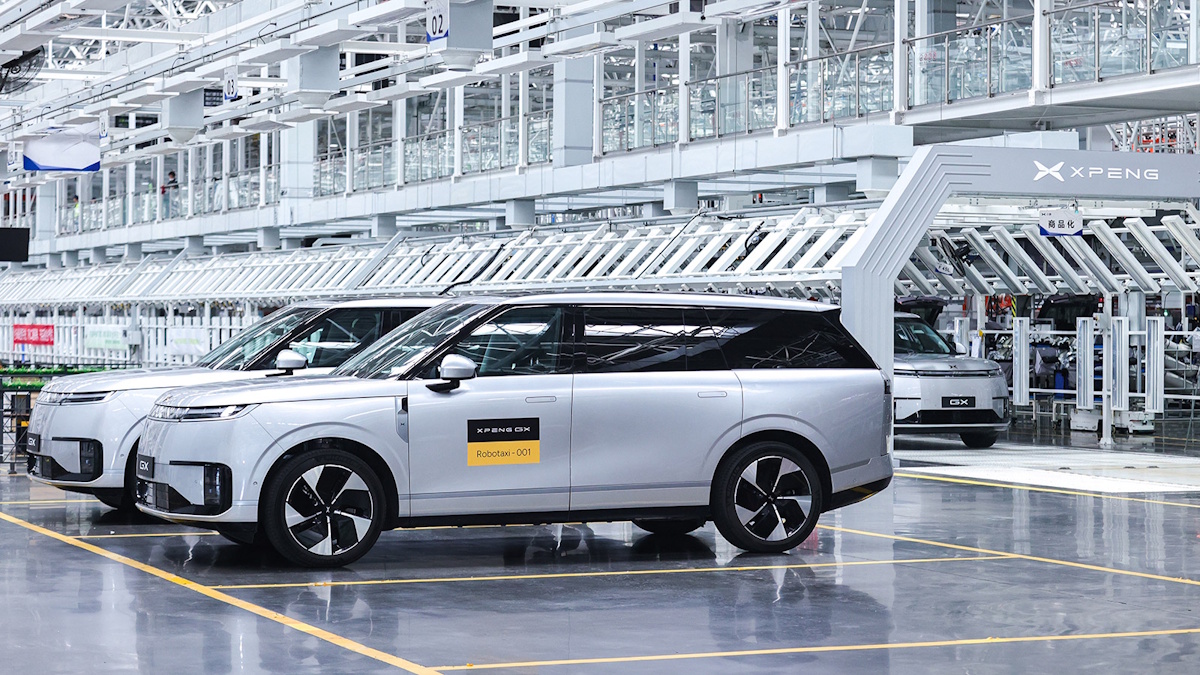
XPeng has started rolling out its first mass produced robotaxi in China, marking a small but important step in its wider push into autonomous driving and future mobility services. The company is also aiming to begin pilot operations in the second half of 2026, with a gradual rollout expected after that.
While XPeng is moving ahead in China, Europe is also quietly developing its own robotaxi projects. One of the more advanced examples is the Verne programme from the Rimac Group in Croatia, which has already built and tested more than 60 prototype vehicles and is now preparing for testing in Zagreb.
First robotaxi enters production in China
XPeng’s first robotaxi units have now officially entered mass production at its facilities in Guangzhou. These vehicles are built on a dedicated autonomous driving platform and are designed from the ground up for driverless operation once the system is ready for commercial use.
For now, production volumes are expected to stay relatively low. We’re talking a few hundred to a few thousand units over the next year or so, mainly to support testing, data collection and early deployment preparation.
Pilot operations targeted for 2026
The company is currently planning to start pilot robotaxi operations in the second half of 2026 in selected cities in China. These early trials will be used to refine the software, improve safety systems and gather real world driving data. As with most projects in this space, full commercial rollout will depend heavily on regulatory approval and how well the system performs during these early stages.
The robotaxi programme is part of XPeng’s broader strategy, which the company often describes as a “Physical AI” ecosystem. That includes autonomous driving, robotics and other AI driven technologies built around its own software and hardware development. In parallel, XPeng is also working on other futuristic mobility concepts such as humanoid robots and flying vehicles. Robotaxis are just one part of a much bigger long term plan.
Europe is also working on its own robotaxi push
XPeng is not the only one exploring this space. In Europe, the Verne robotaxi project developed by Project 3 Mobility under the Rimac Group has reached an important milestone, with more than 60 prototype vehicles already built and tested.
The next step is on road testing in Zagreb, where the project is preparing for further validation and eventual deployment. It is still early stage, but it is one of the more advanced robotaxi efforts in Europe when it comes to actual physical prototypes on the ground.
The bigger picture in the industry
XPeng is one of several Chinese companies investing in robotaxi technology, alongside names like Baidu and other EV makers exploring similar ideas.
At the moment, most of these projects are still in pilot or testing phases, with limited real world deployment. The same is true in Europe, where projects like Verne are still working through testing, safety validation and regulatory steps before any large scale rollout.
FAQ
What has XPeng launched?
XPeng has started mass production of its first robotaxi designed for autonomous mobility services.
When will robotaxi services start?
Pilot operations are planned for the second half of 2026 in selected cities in China.
Is the robotaxi fully driverless?
It is designed for fully driverless operation, but real world deployment still depends on testing and regulatory approval.
How many vehicles are being produced?
Early production is expected to be in the low thousands over the next 12 to 18 months, mainly for testing and pilot use.
Is Europe also working on robotaxis?
Yes, for example the Verne project in Croatia has already built over 60 prototype vehicles and is now preparing for testing in Zagreb.
What is XPeng trying to achieve long term?
XPeng is building a wider ecosystem that includes autonomous driving, robotics and AI based mobility systems, with robotaxis as one key application.
Featured Image Source: Xpeng
Marko Lubar is the Founder and Editor of ElectricFleet Online, where he covers the latest developments in electric vehicles, battery innovation, autonomous driving, artificial intelligence, and the technologies shaping the future of mobility.
Learn more about Marko and the mission behind ElectricFleet Online on the About Us page.
Latest News