Omoda and Jaecoo have passed 100,000 combined sales in Britain, less than two years after Omoda first launched here in August 2024, with Jaecoo following in January 2025. Between them, the two Chinese brands now hold close to 5.7 percent of the UK new car market, according to SMMT registration figures. That’s a genuinely impressive number for two brands that barely existed here two years ago, and it’s not just impressive relative to their own age. Vauxhall, a name British buyers have known for over a century, posted a 4.8 percent market share over the same first half of 2026. Two newcomers have already overtaken it.
Why the growth has been so fast
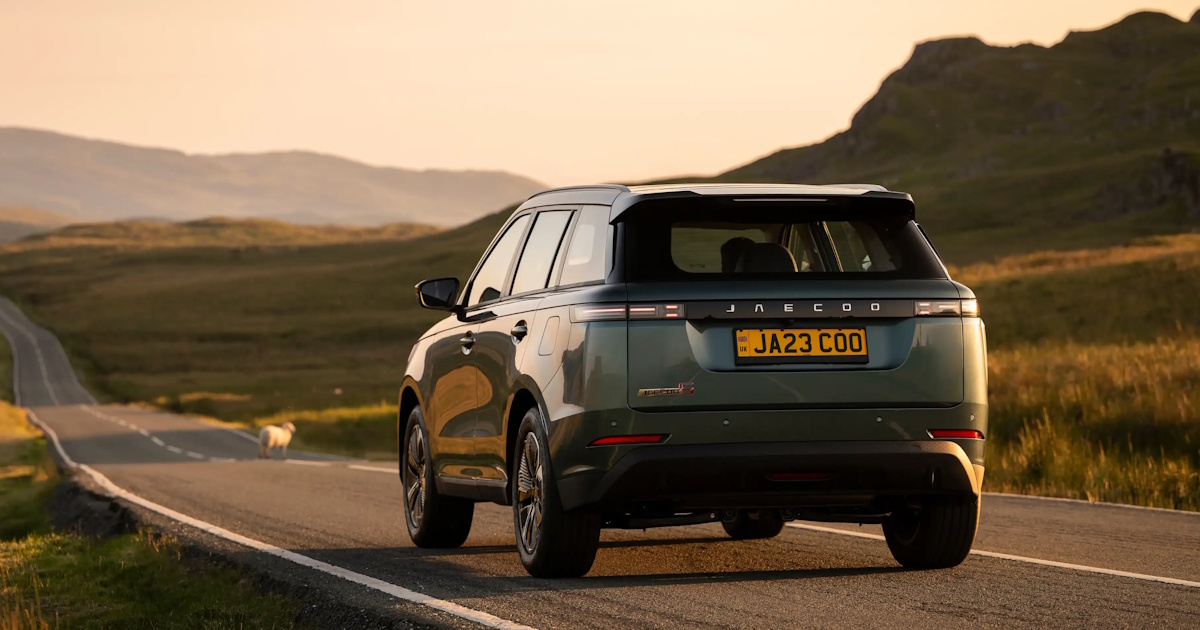
Most of that volume comes down to just two cars. The Jaecoo 7 has sat inside the UK’s top 10 best sellers every month since September 2025, with more than 53,000 registered since it went on sale in February that year. Three quarters of those buyers went for the plug-in hybrid SHS-P version rather than the petrol model, and two thirds of registrations were private retail buyers rather than fleet deals, a healthier split than most new entrants manage. The Omoda 5 was the brand’s first car in the UK and has racked up over 36,500 sales of its own, also leaning heavily retail.
That retail-heavy split matters, because it points away from the usual shortcut new brands use to inflate early numbers, dumping heavily discounted cars into rental and fleet channels. Industry coverage of the wider Chinese brand push in the UK has made a similar point: Jaecoo, BYD and Omoda posted the strongest UK market share gains of any brands in the first half of 2026, at a time when several established volume manufacturers were losing ground. The combination that seems to be working is straightforward: well-equipped plug-in hybrids priced below what legacy brands charge for similar spec, paired with a retailer network that expanded to more than 144 locations almost as fast as the cars themselves arrived.
It’s mostly hybrid sales, not electric
To be clear about what’s actually driving this, since this is a site about EVs, it’s mostly hybrid and plug-in hybrid sales, not electric ones. Jaecoo and Omoda both sell EV versions of some models, the Jaecoo E5 and Omoda 5 EV among them, but the SHS-P plug-in hybrid is doing most of the work here rather than the battery electric line-up. It’s also worth saying the Jaecoo 7 hasn’t been universally praised despite the sales numbers. Several UK reviewers have pointed out that the steering and ride quality lag behind the car’s value for money and equipment list.
Both brands are backed by Chery, which recently passed 20 million vehicle sales globally and has been expanding its own presence in the UK too. Chinese brands as a group took close to a fifth of new UK car registrations in July 2026, roughly double their share from the same point last year, and Omoda and Jaecoo are currently the biggest of that group by volume, ahead of MG and BYD. An Omoda 4 is planned to join the range in 2027. I’ve covered how the wider group of Chinese manufacturers is establishing itself in Europe in more detail in my pieces on Chinese EV manufacturers producing in Europe and which Chinese EV brands are likely to stick around.
Source: Jaecoo UK
Marko Lubar is the Founder and Editor of ElectricFleet Online, where he covers the latest developments in electric vehicles, battery innovation, autonomous driving, artificial intelligence, and the technologies shaping the future of mobility.
Learn more about Marko and the mission behind ElectricFleet Online on the About Us page.
Latest News