Tesla has launched a startup competition called the Cell Giga Challenge, inviting early-stage companies to pilot their technologies inside the live battery cell production line at its Gigafactory in Germany. Applications are open now through JUNI, a Berlin-Brandenburg startup platform backed by Germany’s federal economics ministry and the EXIST programme, with a deadline of 24 July 2026. The programme officially starts in August.
The challenge is directly tied to Tesla’s 4680 cell ramp at Giga Berlin. In May 2026, Tesla committed an additional $250 million to more than double its cell production target at the site from 8 GWh to 18 GWh annually, pushing total investment in the cell operation toward €1 billion. At 18 GWh, the Grünheide plant would produce enough cells for roughly 250,000 to 350,000 vehicles per year. Tesla expects to need over 1,500 employees for cell production alone, with output scaling through the first half of 2027.
What Tesla Is Looking For
The challenge targets startups with solutions across five areas: materials, equipment, operations, automation and artificial intelligence. Tesla is specifically looking for technology that “measurably improves quality, speed, cost, safety, or scalability” in battery cell manufacturing. It frames itself as a “customer and cooperation partner” rather than an investor or accelerator, which is a meaningful distinction.
The process runs in five stages: an online application, a screening against real manufacturing requirements, a technical interview, a pitch day in front of Tesla stakeholders, and finally pilot discussions. The strongest teams can move into a paid pilot project with Tesla’s cell team inside the working factory. That last part is genuinely unusual. Access to a live, capital-intensive gigafactory line is something most early-stage hardware companies never get anywhere near.
Why Tesla Is Doing This Now
This is the more interesting question, and there are two ways to read it.
The first is that it’s a smart open-innovation move. Tesla has a large, expensive cell line in Europe and wants to accelerate improvements in yield, automation and materials by tapping into a startup ecosystem it might not otherwise encounter. A live gigafactory is a compelling prize for an early-stage company, and Tesla gets a low-cost look at technologies it can later license or acquire. This is standard practice in aerospace and semiconductors. It’s less common in automotive, which makes Tesla’s willingness to do it notable.

The second reading is less flattering. The 4680 cell programme has been Tesla’s most troubled manufacturing effort since it was announced at Battery Day in 2020. The company has repeatedly missed cost and yield targets, has leaned on suppliers like LG Energy Solution and Panasonic for its vehicles even while pushing its own cells, and is now doubling its capacity commitment at Grünheide before it has fully proven competitive 4680 production. Opening the production line to outside startups to make it “faster, better, and more scalable” is, at minimum, a signal that the in-house engineering team hasn’t solved all the hard problems yet.
Both readings can be true simultaneously. What’s clear is that Tesla needs the 4680 to work at scale and at cost, and it’s willing to try unconventional approaches to get there.
The Battery Race Tesla Is Running Against
The Giga Challenge doesn’t exist in a vacuum. While Tesla works to scale 4680 production in Germany, its Chinese competitors have been moving quickly on their own battery technology. CATL’s Shenxing Pro cells are already enabling 10-80% charges in around ten minutes in production vehicles. Zeekr’s Golden Battery technology has demonstrated similar real-world capability. BYD’s megawatt charging programme is pushing charge rates that would have seemed implausible five years ago.
Tesla’s 4680 cell is a different bet. Rather than maximising charge speed in smaller cells, it prioritises energy density, manufacturing simplicity and structural integration, with the cell forming part of the vehicle’s floor and reducing the number of components required. If the cost and yield targets are hit, it should give Tesla a structural manufacturing advantage. The challenge is getting there at scale, and at a speed that matches what Chinese manufacturers are already doing on the charging side.
What This Means for Tesla’s European Competitiveness
Giga Berlin is Tesla’s only European manufacturing facility and its primary source of supply for a market where the competitive picture is shifting quickly. The Model Y has been Europe’s best-selling EV consistently, but the number of credible Model Y alternatives from Chinese and European manufacturers has grown significantly in the past 18 months. Maintaining volume and margin in Europe depends significantly on whether Giga Berlin can produce cells at a cost that supports competitive pricing.
The 18 GWh target is ambitious. Successfully scaling to that capacity, with cells that meet Tesla’s own cost requirements, would represent a genuine industrial achievement in Europe and would meaningfully strengthen Tesla’s position in a market it can’t afford to lose ground in. Whether external startups can help close the gap is a real question. The Cell Giga Challenge is at least an acknowledgement that the problem is hard enough to warrant looking outside for help.
FAQ
What is Tesla’s Cell Giga Challenge?
It’s a startup competition run by Tesla in partnership with JUNI, a Berlin-Brandenburg startup platform backed by Germany’s federal economics ministry. Tesla is inviting early-stage companies to pilot manufacturing technologies inside the live 4680 cell production line at Giga Berlin. Applications close 24 July 2026, with the programme starting in August.
What is the 4680 battery cell?
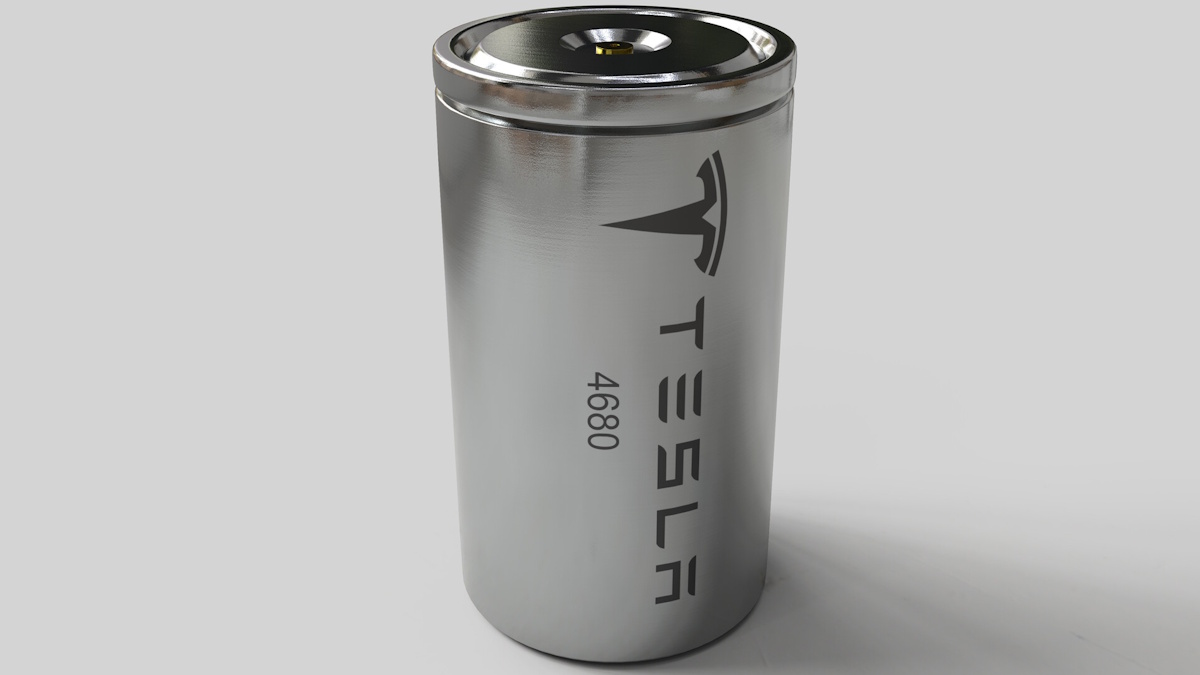
The 4680 is Tesla’s in-house cylindrical battery cell, announced at Battery Day in 2020. It is larger than Tesla’s previous cells (46 mm in diameter, 80 mm tall), intended to offer higher energy density, lower cost and structural integration as part of the vehicle’s floor. Scaling production to competitive cost and yield has been Tesla’s most persistent manufacturing challenge since the cell was announced.
Why does Tesla need outside help with 4680 production?
The 4680 has faced repeated delays in hitting cost and yield targets since 2020. Tesla has supplemented its in-house cells with cells from LG Energy Solution and Panasonic. Opening the line to startups is a signal that specific manufacturing challenges, in materials, automation or process control, remain unsolved at scale.
How much is Tesla investing in cell production at Giga Berlin?
Tesla committed an additional $250 million in May 2026 to expand cell capacity at Giga Berlin from 8 GWh to 18 GWh annually. Total investment in the cell operation is approaching €1 billion. At 18 GWh, the plant would produce enough cells for approximately 250,000 to 350,000 vehicles per year.
When will Tesla reach 18 GWh at Giga Berlin?
Tesla is targeting the first half of 2027 for the cell ramp to reach meaningful scale. Full capacity at 18 GWh is expected to require over 1,500 employees dedicated to cell production.
Featured Image Credit: Artstation
Latest News