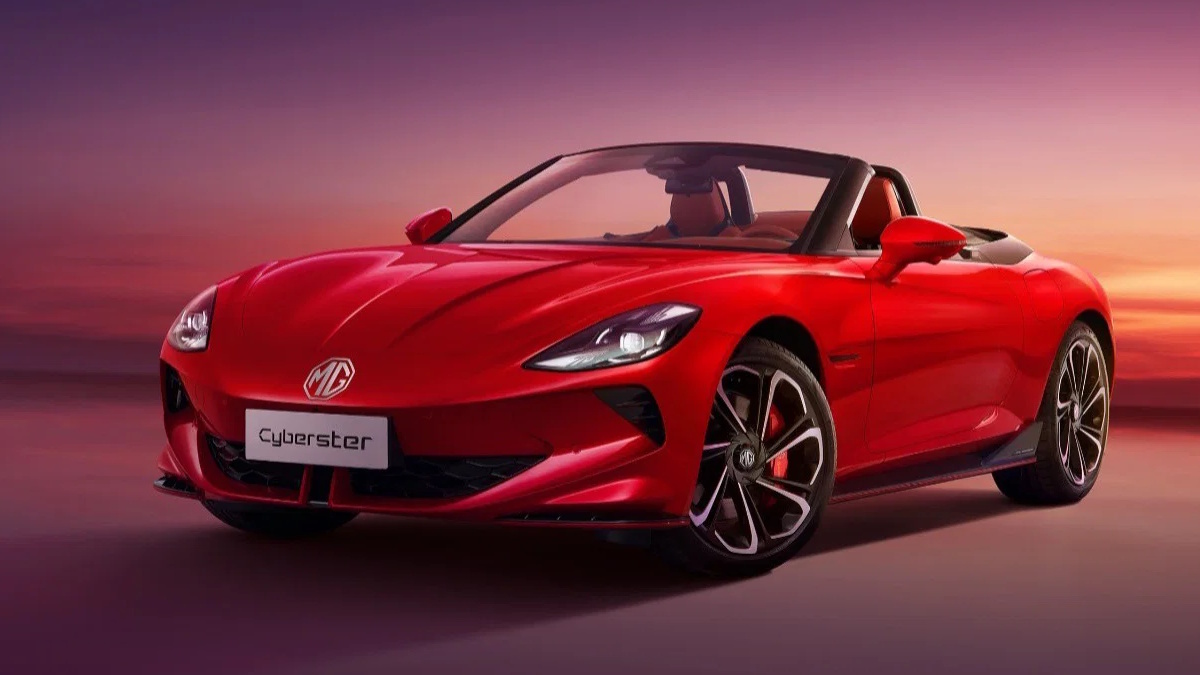
MG is Europe’s best-selling Chinese car brand, with over 300,000 cars sold across the continent in 2025. Every one of those cars came from China, with a 45.3 percent EU import tariff baked into the price. SAIC, the company that owns MG, wants to fix that, and it looks like Spain is where the first European factory will land. Building locally would eliminate the tariff cost entirely, and for a brand already operating at that kind of volume, the impact on pricing and competitiveness would be substantial. Five other Chinese manufacturers are already ahead of it, with factories in Hungary, Austria and Spain either running or coming online this year. But MG’s move is arguably the one that matters most to the average European car buyer, simply because MG is the brand they are most likely to already know.
Table of Contents
- Why Chinese Brands Are Building in Europe, Not Just Selling Here
- Who Is Already Producing in Europe Right Now
- Spain Is Becoming the Centre of Chinese EV Manufacturing in Europe
- The Tariff Politics Behind the Factory Locations
- European Manufacturers Are Not Standing Still
- What This Means If You Are Buying an EV in Europe
- What Local Production Could Actually Mean for the Price
- FAQ
Why Chinese Brands Are Building in Europe, Not Just Selling Here
When the European Commission introduced additional tariffs on Chinese-made EVs in October 2024, the idea was to give European manufacturers a fairer shot. The tariff rates ranged from 17 percent for BYD up to 35.3 percent for SAIC, on top of the standard 10 percent duty that was already there. You can read a full breakdown of those rates in my detailed overview of EU tariffs on Chinese electric vehicles.
Brussels probably expected Chinese brands to either absorb the hit or pull back a bit, but what actually happened was different. Several manufacturers started looking at Europe not just as somewhere to sell cars, but as somewhere to build them. The maths is simple: a BYD assembled in Hungary is treated the same as a Volkswagen assembled in Germany. Build inside the EU, and the tariffs simply stop applying.
For MG, with a dealer network already spread across 34 countries and 300,000 annual sales to back it up, the numbers make a strong case on their own. A 45.3 percent tariff on every car shipped from China is a massive drag on what the brand can do with pricing. Northern Spain, specifically the Galicia region, has been reported as the most likely home for its factory.
Who Is Already Producing in Europe Right Now
MG would be joining a group of Chinese manufacturers that have already made this move. Five brands are now building cars inside Europe, through a combination of purpose-built factories and contract manufacturing partnerships.
BYD is the biggest commitment in the group. Its factory in Hungary represents an investment of up to €4 billion and is designed for an eventual annual capacity of 300,000 vehicles. Trial production began in January 2026, with full series production expected from the second part of this year. The first model coming off the line is the BYD Dolphin Surf, with the Atto 2, Atto 3, Seal and Seal U all planned for the same facility going forward. BYD’s presence in Hungary is not a rushed response to tariffs either. The company has been operating in the country since 2017, starting with electric bus production and battery assembly before establishing its full European headquarters in Budapest in 2025.

Xpeng and GAC Aion are both producing at Magna Steyr’s facility in Austria. Magna Steyr is one of the world’s leading contract vehicle manufacturers, which means both brands get access to world-class production quality and a fully running operation without building from scratch. Xpeng began producing the G6 and G9 in Austria in September 2025, and GAC Aion followed two months later with the Aion V, adding the Aion UT in March 2026. For buyers, this means both Xpeng and Aion models are now sidestepping the tariffs that would otherwise apply.
In Spain, Chery has been producing vehicles since late 2024 through a joint venture with local company Ebro-EV Motors at the former Nissan plant in Barcelona’s Zona Franca area. The first models were the Ebro S700 and S800, plug-in hybrid SUVs sold under the revived Ebro name. Chery’s own-branded models, including the Omoda 5 in electric and combustion versions, are planned for the same site. And Leapmotor, working through its joint venture with Stellantis, is preparing to start production of the Leapmotor B10 at a Stellantis facility in Zaragoza from the third quarter of this year.
Spain Is Becoming the Centre of Chinese EV Manufacturing in Europe
It is worth looking at Spain specifically, because the amount of Chinese automotive investment landing there is no coincidence. The country abstained from the EU tariff vote, which mattered to Chinese manufacturers in a very direct way. Following the vote, China instructed its automakers to limit major investments in countries that had supported the tariffs. Countries that did not support them, or abstained, became significantly more attractive.
The result is that Spain has attracted an unusual cluster of Chinese automotive activity. Chery and Ebro are in Barcelona, while Leapmotor is in Zaragoza. On top of that, Geely is reportedly acquiring a former Ford facility in Almussafes, which would give the group that also owns Volvo, Polestar, Zeekr and Lynk and Co its own production base in Europe under its own name. If MG lands in Galicia as well, Spain will have quietly turned itself into the main Chinese EV manufacturing hub on the continent, which is quite something for a country that was not really on the automotive map in that way before.
The Tariff Politics Behind the Factory Locations
Hungary tells a different version of the same story. The government there has maintained close ties with Beijing by EU standards, and it voted against the tariffs. The result is that Hungary has become the default hub for Chinese automotive investment in Central Europe. BYD chose Szeged for its passenger car plant, and CATL is building a major battery facility in the region. Together these investments are creating something that looks a lot like a Chinese EV industrial cluster sitting inside the EU’s eastern border.

A different story comes from Austria. Magna Steyr is a company that has nothing to do with tariff politics. It is simply one of the best contract manufacturing operations in the world, and Xpeng and GAC Aion are using it because they can start building cars there now, with existing certifications and a proven production line, rather than spending years getting a new factory up and running.
The Leapmotor situation makes the politics a bit harder to ignore. Production of the T03 was running at a Stellantis plant in Tychy, Poland, from June 2024. Poland had voted in favour of the tariffs. In March 2025, production ended with no detailed explanation given. The timing made the reason reasonably clear, and Zaragoza, Spain became the replacement location shortly after.
European Manufacturers Are Not Standing Still
None of this means European manufacturers have been sitting on their hands. The pressure from Chinese brands has pushed them to finally get serious about affordable electric vehicles, and 2026 is where that is starting to show.
Volkswagen, Renault, Škoda, Opel, Fiat and Cupra are all bringing smaller and more accessible EVs to market this year, with several models targeting the under €25,000 segment that Chinese brands have been making inroads into. These are not concept cars or distant promises, but production models arriving in showrooms. The Renault 5 is already performing well in UK sales charts, the Škoda Epiq is generating significant interest, and Volkswagen looks more focused on accessible pricing than it has for decades.
European brands also have advantages that Chinese manufacturers are still working to establish: deep dealer networks, decades of brand familiarity, strong residual value track records, and extensive charging infrastructure partnerships, and those things do not disappear overnight. What is changing is that it is a much tougher market than it was few years ago. Local production removes one of the last things that put Chinese brands at a disadvantage. A Chinese EV built in Spain or Hungary is on exactly the same footing as anything built in Germany or France. That is a genuinely new situation, and everyone is still working out what it means.
What This Means If You Are Buying an EV in Europe
For buyers, most of this is good news. Take tariff costs out of the equation and prices should come down over time, though how quickly depends on how hard brands end up competing with each other. Some will pass the savings straight on, others will use them to pad margins.

There is also the question of origin labelling. Company car policies at a growing number of organisations specify EU-origin requirements. Cars assembled at Magna Steyr in Austria, at BYD’s Szeged plant in Hungary, or at the Ebro facility in Barcelona all meet that requirement. For fleet operators, this matters directly. For private buyers, it is worth knowing that a car badged as a Chinese brand may well have been built 800 kilometres away.
When MG finally makes the factory announcement official, it will add the biggest Chinese brand name in Europe to a list that is already growing fast. Pair local production with the dealer network MG already has, and it becomes a noticeably stronger proposition than it is today.
What Local Production Could Actually Mean for the Price
The big question is whether scrapping the tariffs would make Chinese cars cheaper. The short answer is probably yes, but don’t expect prices to drop by the full amount of the tariffs.
The MG4 EV currently starts at €42,990 in Germany. The MG4 EV Urban, a newer entry-level model on a different platform, starts at €24,990. Both are built in China and both arrive in Europe carrying a 45.3 percent combined import tariff.
That tariff doesn’t translate directly into a line item on the sticker price. By the time a car reaches a German forecourt, the retail price includes the customs value of the car, the tariff on top of that, shipping, dealer margins, and 19 percent VAT on the whole lot. The tariff is baked into the pre-VAT cost, which means its effect on what you pay is real but not immediately obvious.

The natural question is how much cheaper they would be if built in Europe instead. The honest answer is: meaningfully cheaper, but not by the full tariff amount, and for two reasons.
First, there is solid evidence from across the automotive industry that manufacturers tend to absorb at least part of tariff costs into their own margins rather than passing everything on to buyers. NPR’s analysis of industry earnings data found that car manufacturers have mostly taken tariff costs as a hit to profits rather than pushing them straight through to sticker prices, and Carscoops’ review of major automaker financial filings reached the same conclusion. The reverse works the same way: when tariffs disappear, manufacturers do not automatically cut prices by the equivalent amount either.
Second, building cars in Spain or any other Western European country costs more than building them in China. Labour, energy, and local supply chain logistics all push the per-vehicle cost up, which eats into the saving before any of it reaches the buyer.
What that means in practice is that MG could realistically lower prices on European-built models, improve its own margins, or do a bit of both. Given that the MG4 EV at €42,990 is already under real pressure from rivals like the Volkswagen ID.3 and Renault Mégane E-Tech, the competitive environment would push MG towards passing at least some of the saving on. For the Urban at €24,990, even a modest reduction would be a significant move in a segment where every few hundred euros matters.
FAQ
Is MG planning to manufacture electric vehicles in Europe?
Yes. SAIC, MG’s parent company, has confirmed it is pursuing a European manufacturing facility. Spain is reported to be the frontrunner location, with the Galicia region in the northwest of the country cited in multiple reports. No official announcement of a final site has been made as of mid-2026.
Why does MG need to build cars in Europe?
MG currently faces EU import tariffs of 45.3 percent on its China-made electric vehicles. Manufacturing inside the EU would eliminate those tariffs entirely, making the cars more competitively priced and allowing MG to improve its margins or pass savings to buyers, or some combination of both.
Which Chinese car brands are already building EVs in Europe?
As of mid-2026, five Chinese manufacturers have active or imminent European production: BYD in Hungary; Xpeng and GAC Aion in Austria; Chery through its Ebro joint venture in Spain; and Leapmotor through its Stellantis joint venture in Spain, too.
Why is Spain attracting so much Chinese automotive investment?
Spain abstained from the EU vote on Chinese EV tariffs, which made it an acceptable destination for Chinese automotive investment at a time when China was discouraging its manufacturers from investing in countries that had voted in favour of those tariffs. Spanish national and regional governments have also actively pursued this investment.
Does a Chinese EV built in Europe avoid import tariffs?
Yes. Once a vehicle is manufactured inside the EU, it is treated the same as any domestically produced car, regardless of the brand’s country of origin. The import tariffs that apply to vehicles shipped from China do not apply to vehicles assembled within the EU.
What is Geely doing in Spain?
Geely is reportedly in the process of acquiring a former Ford production facility in Spain, where it plans to produce electric vehicles. If confirmed, this would give Geely the group direct European manufacturing capacity, separate from the European production already carried out by its subsidiaries Volvo and Polestar.
Are European car brands also launching affordable EVs in 2026?
Yes. Volkswagen, Renault, Škoda, Opel, Fiat and Cupra are all bringing more affordable electric models to market in 2026. The competitive pressure from Chinese brands has been a significant factor in accelerating this, and several European models are now targeting price points below €25,000.
Will Chinese EVs made in Europe be cheaper to buy?
Not necessarily right away. Removing tariff costs does create the conditions for lower prices over time, but manufacturers may also use the improved margins to invest in dealership networks, after-sales support or marketing. The competitive environment will largely determine how quickly and how much of that saving reaches the buyer.
Will the MG4 become cheaper if MG builds it in Europe?
Probably yes, but not by the full amount of the tariff. The 45.3 percent combined tariff on China-made MG cars is a real cost baked into the current price, but evidence from across the automotive industry shows that manufacturers tend to absorb part of tariff costs into their own margins rather than passing everything through to buyers. The reverse applies too: removing tariffs does not automatically translate into an equivalent price cut. On top of that, manufacturing in Europe costs more than manufacturing in China, which offsets part of the saving. The most likely outcome is a meaningful price reduction if MG chooses to stay competitive, but the exact amount will depend on how much pressure the brand faces from rivals in each segment.
Featured Image Credit: MG Motor
Latest News