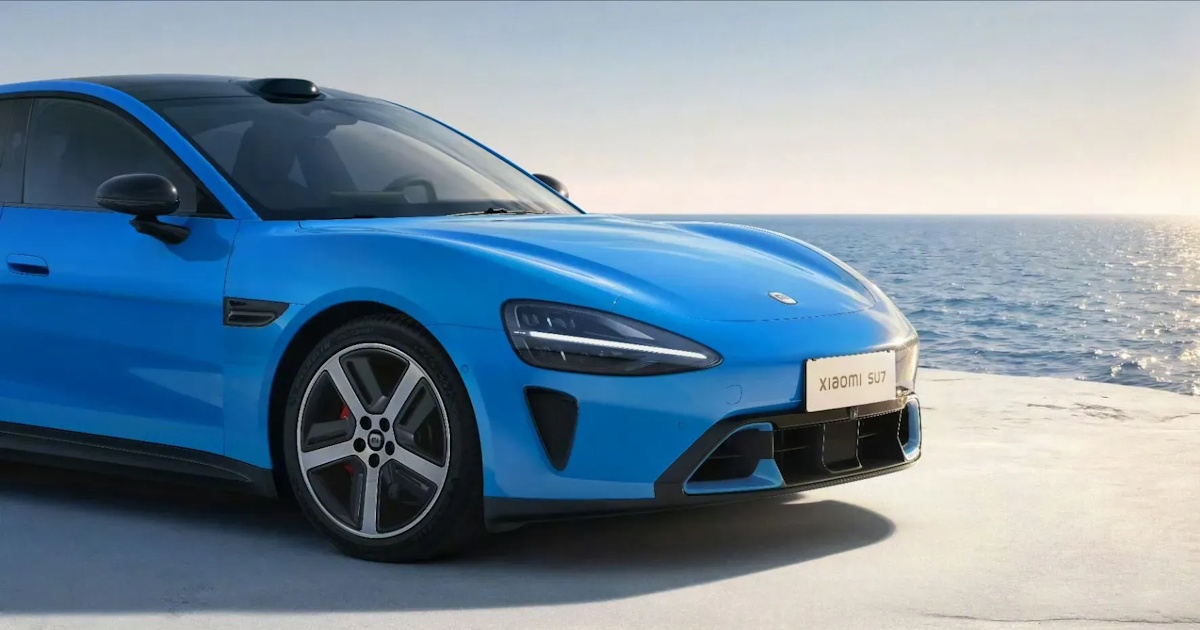
Xiaomi announced this week that cumulative deliveries of its SU7 sedan have passed 500,000 units, reaching that mark two and a half years after the car first went on sale. It’s a genuine milestone for a company that only entered the car business in 2024, but it’s worth putting in context, both the good and the less good parts, since the headline number alone doesn’t tell the whole story.
How Xiaomi got here
The first-generation SU7 launched on 28 March 2024, with deliveries starting a few days later. The high-performance SU7 Ultra followed in February 2025, and an updated second-generation SU7 arrived in March 2026, keeping the same design language with a few tweaks. Across 2025, the first-generation car delivered 258,000 units in China alone, making it the best-selling premium electric sedan in the country and outselling the Tesla Model 3 that year.
Including the YU7 SUV, which launched in mid-2025, Xiaomi’s total EV deliveries now sit above 760,000. The company reached its first 500,000 combined deliveries in under two years, which is the fastest any Chinese EV startup has hit that number. Li Auto took almost four years to get there, Leapmotor needed more than five, and both Nio and Xpeng required close to six. The market has grown a lot since those brands started out, so it’s not a perfectly clean comparison, but the gap is wide enough that it says something about how quickly Xiaomi built demand.
The SU7’s growth has actually slowed a lot
Here’s the part that’s easy to miss if you only read the 500,000 headline. Through the first seven months of 2026, the SU7 delivered 101,540 units, down 43.6 percent compared with the same period in 2025. Most of that drop traces back to the changeover between generations. Xiaomi stopped building the first-generation car in February 2026 after 370,000 units to prepare the factory for the refresh, which meant deliveries fell to just 1,133 in January and 218 in February. Since the new SU7 reached full production in April, monthly deliveries have settled at around 23,000, a lower ceiling than the first generation was hitting through the second half of 2025. July came in at 21,044 units, essentially flat month on month but down close to 14 percent year over year.

The SU7 has still outsold the Tesla Model 3 in China every month since April, once both were selling their current-generation cars, 101,540 units against 68,533 for Tesla through July. And the refreshed car’s launch wasn’t exactly quiet either, with 15,000 orders in the first 34 minutes and over 80,000 within its first six weeks, priced from around €27,800 (219,900 yuan) up to around €38,500 (303,900 yuan) for the top Max trim.
The YU7 is doing more of the heavy lifting
Across Xiaomi’s full lineup, the YU7 SUV has actually outsold the SU7 this year, with 114,782 deliveries in the January to July period against the sedan’s 101,540, giving it just over half of Xiaomi’s total output. Total deliveries across both models reached 216,322 units through July, which is only 39 percent of Xiaomi’s 550,000 target for 2026. Hitting that target now means averaging close to 67,000 vehicles a month for the rest of the year, more than double July’s pace, and the highest month the current two-model lineup has ever managed is 50,212, set back in December 2025.
To close that gap, Xiaomi is leaning on a new range extender lineup called Sky Nomad, its first entry into that segment, which launched for pre-sale on 30 July. The seven-seat N90 Max starts at around €38,000 (299,900 yuan) and the five-seat N70 Max at around €32,900 (259,900 yuan), with deliveries due to begin in September. Chinese outlet Cailian reported pre-orders may already be past 100,000, though that figure hasn’t come from Xiaomi directly. I covered the rest of Xiaomi’s model range, including the YU9 and YU7 GT, in my article on where Xiaomi’s lineup is headed next, and broke down what actually changed in the facelifted car in my second-generation SU7 piece.
Financially, the car business still isn’t easy money
Xiaomi’s EV division posted an operating loss of around €390 million (3.1 billion yuan) in the first quarter of 2026, after turning its first ever quarterly profits in the second half of 2025. The company reported its second quarter results the same day this delivery milestone came out, and by most pre-earnings estimates it was heading for another weak quarter, with analysts pointing to launch costs around the new SU7 and margin pressure as the main drags. Selling half a million cars clearly hasn’t translated into an easy, profitable business yet.
None of this touches Europe directly for now. Xiaomi has said it’s targeting entry into the European EV market in the second half of 2027, with right-hand drive markets like the UK following in 2028. On paper, the SU7 would be a serious contender once it actually arrives, but that’s still well over a year away.
Featured Image: Xiaomi
Marko Lubar is the Founder and Editor of ElectricFleet Online, where he covers the latest developments in electric vehicles, battery innovation, autonomous driving, artificial intelligence, and the technologies shaping the future of mobility.
Learn more about Marko and the mission behind ElectricFleet Online on the About Us page.
Latest News