Geely just put a real date on something its founder had only hinted at for months: the company’s new chairman confirmed on Monday that Chinese brand cars will start rolling off Volvo’s own European production lines from 2028.
The announcement came at Geely Auto’s first half results call, and it doubled as the company’s first move under new leadership. Li Shufu, who founded Geely and still chairs the wider Geely Holding Group, stepped down as chairman of the listed Geely Auto unit. An Conghui, who previously ran Zeekr, is taking over. Gan Jiayue becomes the new chief executive, and Gui Shengyue moves up to vice chairman.
Cars Built at Volvo’s Own Factories From 2028
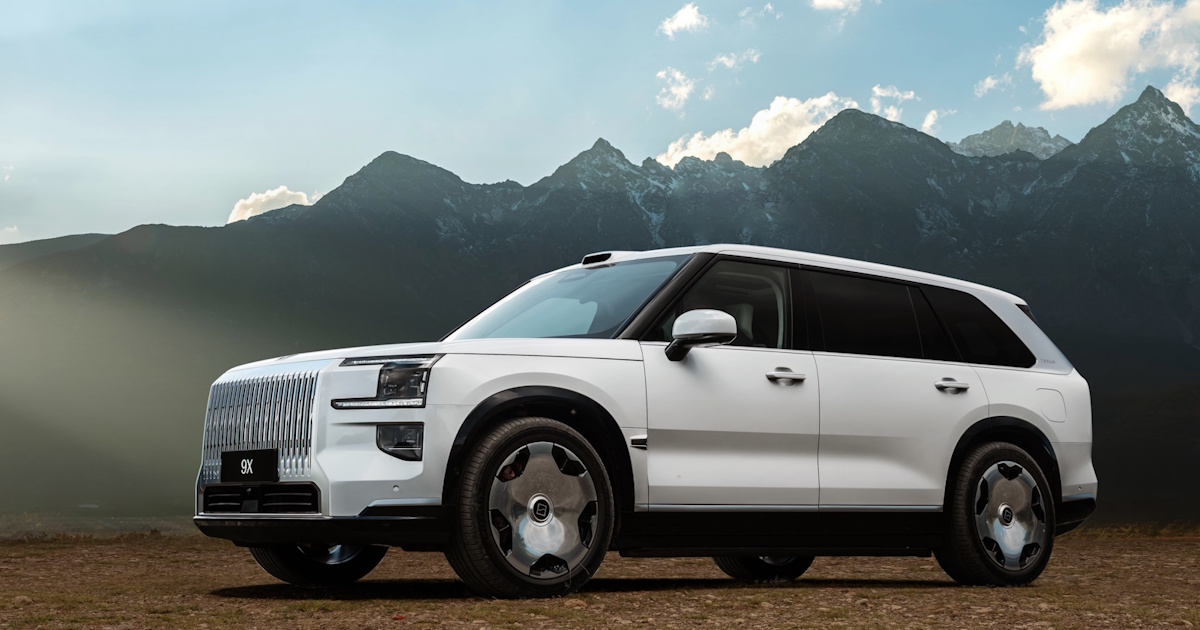
An said Volvo’s factories in Sweden, Belgium and Slovakia will become a manufacturing base for Geely’s premium brands. He didn’t name exact models, but CarNewsChina reports the likely candidates are the Lynk & Co 900 and two Zeekr crossovers, the 9X and the 8X.
Why is Geely using Volvo’s factories instead of building new ones? Building inside the EU avoids the tariffs Brussels placed on Chinese made electric vehicles, which run up to 35.3% depending on the brand. Using Volvo’s existing spare capacity also means Geely doesn’t have to spend money building a new factory from scratch.
This isn’t a brand new idea, since Li Shufu said back in March that Geely and Volvo should share their European factory capacity rather than build new plants, warning that the industry has very serious overcapacity right now, but what’s new is the date and the brands attached to it. I’ve been tracking every part of this shift toward local production in my full picture of Chinese EV manufacturers building cars in Europe, including the separate Geely and Ford joint venture opening in Valencia and the Polestar 7 coming out of a new Volvo plant in Slovakia. This latest move adds a third layer: Volvo’s own, working factories now building cars for its sister brands too.
The Tariff Math Behind the Decision
The reason keeps repeating across the whole industry. Cars built inside the EU skip the tariffs Brussels placed on Chinese made electric vehicles back in 2024, tariffs that go as high as 35.3% depending on the brand. I broke down exactly how those rates work in this overview of EU tariffs on Chinese electric vehicles. Building at a factory the wider Geely group already owns solves that problem without spending a cent on new construction.
Is this the same as the Geely and Ford joint venture in Spain? No. The Valencia plant is a separate joint venture between Geely and Ford, expected to start production in 2028 as well. The Volvo plants announcement covers different factories, owned entirely within the Geely Holding Group.
The numbers behind Monday’s announcement help explain the confidence too. Geely Auto raised its full year export target from 640,000 to 920,000 vehicles, after shipping more than 100,000 cars abroad in both June and July alone. First half exports reached 474,228 units, up 158% from the year before, and revenue for the same period hit roughly €22.2 billion (¥173.6 billion), with net income for the second quarter alone up 36% to about €627 million (¥4.9 billion). Geely Holding Group, the wider conglomerate that also owns Volvo, Zeekr and Polestar, ranked ninth globally by sales in 2025 with just over 4 million vehicles delivered, a scale I covered in my breakdown of Chinese automakers breaking into the global top 10.
Beyond Volvo: Spain and Malaysia Too
Volvo’s plants are only one part of a bigger plan. The Ford joint venture in Valencia, Spain, which I’ve covered on this site, is on track for 2028 too, with capacity for around 500,000 vehicles a year once it’s shared between the two brands. An also confirmed a similar plan for Proton’s plant in Malaysia, upgrading it into a Southeast Asian production hub with a matching 500,000 vehicle annual capacity target, according to Caixin Global.
Featured Image: Zeekr
Marko Lubar is the Founder and Editor of ElectricFleet Online, where he covers the latest developments in electric vehicles, battery innovation, autonomous driving, artificial intelligence, and the technologies shaping the future of mobility.
Learn more about Marko and the mission behind ElectricFleet Online on the About Us page.
Latest News