Tesla spent months trying to get FSD deeper into the Chinese market, but the goalposts just moved. According to a South China Morning Post report, analysts now say broader Beijing approval for Tesla’s higher level autonomous driving remains a distant prospect, and the reason isn’t really about how good FSD is behind the wheel.
What China’s New Rulebook Actually Requires
China’s Ministry of Industry and Information Technology (MIIT) approved the country’s first mandatory national standard for Level 3 and Level 4 self driving systems on July 30, and it takes effect on July 1, 2027. GB 44721-2026 covers passenger and cargo vehicles running L3 or L4 automated driving, though it leaves out automated parking. The baseline requirement is easy to state and hard to meet: a car’s driving system has to perform at least as well as a competent, attentive human driver, and it can’t create unreasonable risk for anyone on the road. For L3 systems specifically, the rules require the system to actively monitor whether the driver is ready to take back control, and manufacturers get held accountable for what happens while the system is driving. Drivers have to get at least ten seconds warning before a potential accident, which is stricter than the UN’s own global technical regulation on automated driving, approved just a month earlier in June, one that China itself helped write.
What level is Tesla’s FSD currently rated at? Tesla’s FSD is rated L2+, meaning it’s an assisted driving system where the driver stays legally responsible at all times, not a Level 3 or Level 4 automated driving system.
That timeline matters for Tesla because FSD isn’t even close to qualifying. It currently sits at L2+, meaning the driver stays legally responsible at all times no matter how hands off the system looks, and that’s a full step below the L3 threshold this new standard is built around. I covered exactly what separates these levels, and why the Full Self Driving name doesn’t match the legal reality behind it, in my explainer on SAE’s autonomous driving levels. China’s own definitions track the same SAE framework: L3 is hands off, L4 is minds off, and FSD currently qualifies as neither.
Tesla did get FSD Supervised officially confirmed as available in China back in May, timed neatly with Musk’s Beijing visit as part of a US state delegation. But it’s badged there as Intelligent Assisted Driving rather than Full Self Driving, because MIIT banned marketing terms like autonomous and self driving from ADAS branding back in 2025. A one time purchase costs around €8,200 (¥64,000) in China, and Tesla had targeted full nationwide rollout across every eligible vehicle by the third quarter of this year. That deadline has already slipped once from Musk’s earlier promise of February or March, and broad approval still hasn’t landed.
Data, Not Software, Is the Real Roadblock
So what’s actually holding things up? Independent analyst Xing Lei, who runs the automotive research platform AutoXing, put it plainly: “The foundation of the approval would be the regulations over data.” Tesla can’t legally send the driving data it collects in China back to the US, so it built a local AI data centre specifically to train and validate FSD within Chinese borders instead. That’s a bigger lift than tuning a neural network for Chinese intersections and scooter traffic, and it’s the layer of compliance that will decide whether Tesla ever clears L3 or L4 certification at all.
Why is data regulation the biggest obstacle for Tesla in China? Tesla can’t legally transfer the driving data it collects in China back to the US, so it has to process and train FSD entirely within a local data centre, which is a slower and more complex path than a purely technical certification.
While Tesla waits, Chinese rivals already have a head start. Changan’s Deepal brand and BAIC’s Arcfox brand both received China’s first L3 approvals back in December 2025, months before Tesla even secured broad supervised access. The new mandatory standard reshuffles the competitive picture further: Huawei helped write parts of it and has the full stack hardware and software to meet it comfortably, BYD faces real work adapting its software systems engineering, and Xpeng and Nio both need to shift from fast, iterative updates to the kind of rigorous validation the new rules demand. I’ve covered how Xpeng is positioning its own VLA driving system for exactly this kind of scrutiny, including its L4 ambitions for 2028, in my piece on Xpeng’s push to rival Tesla FSD in Europe, and this domestic bar applies to that roadmap just as much as it does to Tesla’s.
Tesla Is Fighting the Same War on Two Fronts
Tesla has spent the past year lobbying regulators in France, Germany and beyond over FSD’s approval in Europe too, and only a handful of EU countries have signed off so far. According to CleanTechnica, the company has also pushed several European regulators, including the Dutch RDW, to keep FSD safety review data confidential rather than public. In China Tesla can’t move the data it collects out of the country, while in Europe it’s fighting to keep the data regulators collect on FSD from ever becoming public, and both fights come down to the same instinct: control who gets to see what the car is actually doing.
Is Tesla facing similar problems with FSD in Europe? Yes. Only a handful of EU countries have approved FSD so far, and Tesla has also pushed some European regulators to keep its safety review data confidential rather than public.
MIIT has signalled what comes next too: tighter market access rules and a new framework for sharing safety incident data across the industry, the kind of standardised data exchange that connected vehicle technology depends on more broadly, which I explored in my guide to V2X and C-ITS. For Tesla, the July 2027 deadline gives it a fixed target, but hitting it means solving a data problem before it solves a driving problem, and right now it’s behind on both counts in the one market it can least afford to lose.
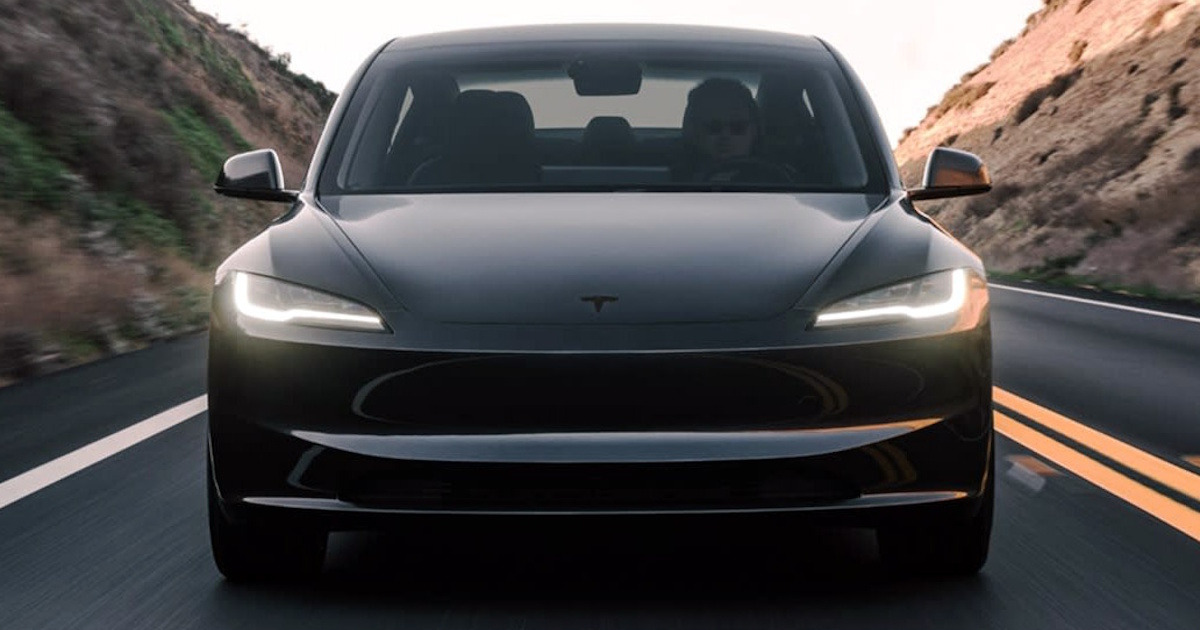
Featured Image: Tesla
Marko Lubar is the Founder and Editor of ElectricFleet Online, where he covers the latest developments in electric vehicles, battery innovation, autonomous driving, artificial intelligence, and the technologies shaping the future of mobility.
Learn more about Marko and the mission behind ElectricFleet Online on the About Us page.
Latest News