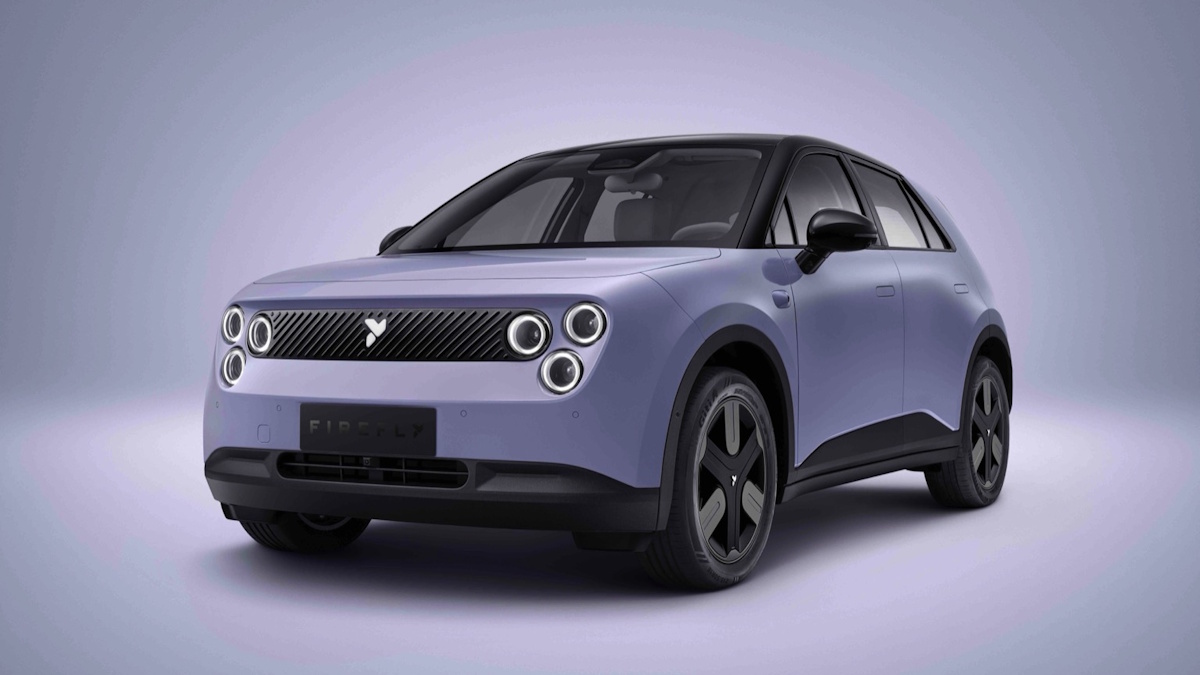
When Nio launched Firefly as its city car brand for Europe, the idea made sense on paper: a small, likeable electric car that would finally give the Chinese EV manufacturer something to work with on the old continent. The pitch was simple, and the timing felt right, especially now that Europe is clearly moving toward smaller electric cars. Almost a year after the first cars were delivered, though, it’s hard to shake the feeling that not much has actually happened.
A launch that never really got loud
The first Fireflies arrived in Europe in August 2025, landing in Norway and the Netherlands. Both are sensible choices: Norway basically runs on EVs at this point, and the Netherlands isn’t far behind. The UK got a mention too, with its own announcement of an upcoming launch. The British market has one obvious appeal: no EU import tariffs. Whether that would actually translate into lower prices for buyers is a different question, and a more complicated one.

If you go to the official Firefly website today, it still shows only those two original markets. But the car has been quietly turning up elsewhere. Austria got its first Firefly deliveries without much fanfare, almost as if it happened while nobody was looking. That’s sort of the theme here, things are moving, just not in any way that feels deliberate or confident.
The tariff problem nobody can talk their way around
The most obvious reason Firefly is struggling in Europe is also the most boring one: it costs too much. The EU slaps a 30.8% tariff on electric vehicles imported from China, and Nio has no way to sidestep that. For a premium sedan, an extra 30% on the price is painful. For a small city car where buyers are already shopping on a budget and comparing every euro, it’s close to a suicide. The whole point of a car like the Firefly is that it’s accessible, and the tariff makes that much harder to pull off.
And the competition in that segment is genuinely fierce. The list of EVs available in Europe for under €30,000 includes the Renault 5, the Hyundai Inster, the Citroën ë-C3, and the Dacia Spring, among others. These are established names with dealer networks, service infrastructure, and brand recognition that Nio simply doesn’t have in Europe yet. Asking buyers to take a chance on a relatively unknown brand is one thing. Asking them to pay a premium for it is quite another.
The swap station saga
The price issue alone is not the whole story, though. Nio’s European strategy has been… let’s call it evolving. When they arrived, they put serious money into building a battery swap service network. The idea being that instead of waiting to charge, you’d pull in, swap your flat battery for a full one in a few minutes, and drive off. Nio has built its entire identity around this technology back in China, and they were convinced Europeans would love it too.

Unfortunately, European customers turned out to be largely indifferent to battery swapping, and Nio went from pushing the service hard to quietly slowing the rollout, to basically stopping it altogether.
Here’s the thing that makes this especially strange when it comes to Firefly: the car isn’t even compatible with the swap stations. So Nio’s flagship attempt at winning over European cities is a car that can’t use the one feature Nio is supposed to be famous for. You have to wonder what the internal conversations looked like. How does a company spend years and a lot of money positioning battery swap as its big differentiator, and then launch a product that has nothing to do with it?
Too much going on at home
Some of this starts to make sense when you look at what Nio is dealing with in China. The domestic EV market there is relentless, with new competitors and price wars that don’t let up. Nio has been under real pressure, and when a company is fighting on its home turf, overseas markets tend to get whatever attention is left over.

The result in Europe has been a string of leadership changes that don’t exactly inspire confidence. Frequent management shuffles are usually a sign that something isn’t working, and from the outside it looks like Nio hasn’t quite figured out who should be running the European operation or what they should be trying to do. The numbers make it concrete: in April 2026, Nio exported just 44 cars in total across all three of its brands (Nio, Onvo, and Firefly) together. For a company with genuine ambitions in Europe, that’s not a slow start. That’s barely a presence.
So what now?
None of this means the Firefly is a bad car. It looks good, it’s well suited to city driving, and it comes from a company that genuinely knows how to build electric vehicles. In different circumstances, it could be a real contender in European cities.
But a good car can only do so much when the company behind it is stretched thin, the pricing is working against it, the strategy keeps changing, and the management keeps turning over. Nearly a year in, Firefly is present in Europe in the technical sense. Whether it’s actually arrived is a different question.
| Firefly | Specification |
|---|---|
| Architecture | 400 V |
| Battery | 41.2 kWh LFP |
| Electric Motor | 105 kW (141 hp), 200 Nm torque |
| Drivetrain | Rear-motor, rear-wheel drive |
| 0–100 km/h | 8.1 seconds |
| Range (WLTP) | 330 km |
| Consumption | 15.2 kWh/100 km |
| DC Fast Charging | 100 kW, 10–80% in 30 min |
| AC Charging | 7 kW single-phase / 11 kW three-phase |
| Boot Space | 404 L (expandable to 1,253 L) |
| Frunk | 92 L |
| Safety | Euro NCAP 5-star |
FAQ
Is the Firefly EV available in Europe?
Yes, though in a very limited way. Deliveries started in Norway and the Netherlands in August 2025, and the car has also turned up in Austria. The official website still only lists the two original markets, which gives you a sense of how cautious the rollout has been.
Why is the Firefly expensive in Europe?
The EU charges a 30.8% import tariff on electric vehicles coming from China, and Nio has no way around it. For a small city car where price is one of the main selling points, that’s a serious handicap, especially when you’re up against established options like the Renault 5 or Citroën ë-C3 that don’t carry the same burden.
Can the Firefly use Nio’s battery swap stations?
No, and that’s one of the more puzzling aspects of the whole story. Battery swapping is the technology Nio has built its identity around, but the Firefly isn’t compatible with the swap stations. Given that Nio has already scaled back its European swap station network significantly, it raises real questions about how much long-term thinking went into this launch.
How many cars has Nio sold in Europe? The numbers are not encouraging. In April 2026, Nio exported just 44 cars worldwide across all three of its brands: Nio, Onvo, and Firefly combined. For a company with stated ambitions in the European market, that’s close to invisible.
Is the Firefly coming to the UK? It’s been announced, yes. The UK has a practical advantage in that it sits outside the EU tariff regime, though that doesn’t automatically mean British buyers will get a lower price. No firm launch date has been confirmed.
Who is the Firefly competing against in Europe? Mostly well-established city EVs from brands that European buyers already know and trust: the Renault 5, Hyundai Inster, Citroën ë-C3, Dacia Spring, and Leapmotor T03, among others. Most of these are available for under €30,000 in base trim, and they come with dealer networks and service infrastructure that Nio hasn’t built up yet.
Marko Lubar is the Founder and Editor of ElectricFleet Online, where he covers the latest developments in electric vehicles, battery innovation, autonomous driving, artificial intelligence, and the technologies shaping the future of mobility.
Learn more about Marko and the mission behind ElectricFleet Online on the About Us page.
Latest News