Euro NCAP exists to stop people dying on European roads, and for most of the past two decades the five star rating has done real work, pushing manufacturers toward stronger structures and better restraint systems. But somewhere along the way, a big part of the industry stopped asking whether a system actually makes drivers safer and started asking what it takes to hit five stars on the test sheet, and those two questions do not always point to the same car. Closing that gap is exactly what the 2026 protocol needs to do, and I don’t think it goes quite far enough yet.
Chasing Five Stars Became The Goal Instead Of The Result
This isn’t me reading too much into the situation, Euro NCAP’s own Secretary General said it out loud. Speaking to media in Brussels, Dr Michiel van Ratingen described how manufacturers approach the rating quite openly, admitting that a carmaker paid to deliver five stars will optimise the vehicle purely to hit five stars, and calling that dynamic, in his own words, “the downside of Euro NCAP”. When the head of the organisation running the test admits the test itself became the target, that explains a lot about why so many safety systems feel designed for a scoresheet rather than for the road.
You can see it most clearly in the audible warnings. Constant speed alerts, lane departure chimes, driver attention nags that fire whether you actually need them or not. Manufacturers clearly know these irritate people, and Euro NCAP’s own 2026 update is partly built around that exact frustration, with the organisation openly framing the goal as getting drivers to stop reaching for the off switch in the first place. A safety system that gets switched off protects nobody, and that’s not some small side issue either. J.D. Power’s 2024 ADAS study found that vehicle alerts are the single biggest complaint category people have with driver assistance technology, ahead of anything to do with a system actually malfunctioning.
The Part That Actually Worries Me
The noise is annoying, sure, but what worries me more is what happens when these systems step in at exactly the wrong second. Consumer Reports surveyed drivers on this directly and found plenty of them regularly fighting their own lane centering system, and Auto Express describes the exact scenario most drivers will recognise, moving slightly within the lane to avoid a pothole and having the system pull the car straight back into the thing it was trying to dodge. That’s not the system failing to help, it’s the system actively overruling a decision the driver just made on purpose, right in the situations where half a second actually matters.
Automatic braking has a mirror image version of the same issue. So called phantom braking, where the car slams on the brakes with nothing actually in front of it, was serious enough that NHTSA opened a formal investigation into roughly 295,000 Honda Insight and Passport vehicles, after Honda itself acknowledged more than 400 complaints of the AEB firing with no obstacle in the road. Tesla went through a similar multi year probe over the same kind of behaviour, and while NHTSA eventually closed that specific investigation once complaint volumes dropped off and no clear crash pattern turned up, it still took roughly four years to get there, which says a lot about how long a disruptive software quirk can sit inside cars people drive every day before anyone with regulatory teeth actually resolves it.
My Own Car Is A Small Scale Version Of This Problem
I’ve mentioned before that my lane keeping assist has tried to steer me toward an obstacle I was actively avoiding, and it’s worth being more specific about what that actually looks like, because it isn’t a one off glitch, it’s a pattern I can reproduce on the same stretch of road every time. My car is a year and a half old German premium sedan, and on the motorway every system behaves exactly the way it should. On regular roads it’s a different car entirely. The speed warning chimes the second I go even one km/h over a 30 or 50 zone, and it keeps chiming for as long as I stay there, adding noise at the exact moment I need to be paying attention to the road rather than the dashboard.

The lane assist is the one that actually bothers me though. More than once, spotting a pothole a little late and steering slightly to miss it, the system has pulled the wheel back toward the centre of the lane and put my wheels right into the hole I was trying to avoid. In the mildest version of that story it’s a suspension repair bill. If a child chasing a ball had been standing where that pothole was instead, it wouldn’t have been a repair bill, it would have been something far worse, and I genuinely doubt I’m the only driver this has happened to.
Euro NCAP Knows About This, Which Is Exactly Why 2026 Looks Different
To Euro NCAP’s credit, the organisation has clearly been listening to complaints like mine. The 2026 protocol now tests cars on real roads across multiple European countries, roughly 2,000 km of actual driving rather than a closed circuit, specifically to check whether speed sign recognition and lane support behave the way they’re supposed to once they leave the test track. Scores are also split into four separate stages now, Safe Driving, Crash Avoidance, Crash Protection and Post Crash Safety, so a strong result in one area can’t quietly cover for a weak one somewhere else. The first cars actually tested this way, the BMW iX3 and Zeekr 7GT, already show that split surfacing real differences between two cars that both landed on five stars.
Here’s where I think it still falls short, though. A lane assist that shoves the wheel back into an obstacle the driver was deliberately steering around shouldn’t be able to pass, no matter how good the crash protection score looks elsewhere. The framework still runs on thresholds and percentages across those four stages, and in theory that stops one weak category from being buried under a strong one, which really is an improvement over the old single score. But a car can still average its way to five stars overall, and a system that works against the driver in the exact moment it matters most isn’t a weak score that should get balanced out by a good one somewhere else, it’s a design failure, and it ought to cap the whole result regardless of what the rest of the car does well. Connected safety tech, the kind I wrote about in my piece on V2X and C-ITS, is heading toward cars sharing hazard data with each other and the road around them, but none of that helps much if a car can’t even trust its own onboard systems to get out of the way when the driver is already doing the right thing.
Why Did This Take So Long
My other issue is the timeline, because Euro NCAP has been collecting exactly these complaints for years, not months. When an organisation whose entire reason for existing is preventing death and injury on the road identifies a documented safety problem inside its own testing framework, that shouldn’t need years of committee work to fix. Consumer feedback pointed to this same frustration well before 2026 arrived, and an organisation built around a life or death mission owes it to drivers to move as fast as the fix allows, not at the pace of a typical bureaucracy once the problem is already sitting on the table.
Final Thought
I want to end on the hopeful version of this. The 2026 protocol is a genuine step in the right direction, and testing on real roads across several countries instead of a closed circuit is the kind of change that should have arrived years earlier than it did. What I’m hoping for next is that Euro NCAP treats a safety system actively working against a driver’s own evasive move as an automatic fail rather than a deduction that can be offset elsewhere on the scoresheet. Get that right, and five stars will finally mean what most buyers already assume it means. Until then, I’d still test your own car’s systems on the roads you actually drive, not just trust the sticker in the window.
FAQ
Why do some car safety systems feel more annoying than helpful?
Manufacturers have historically calibrated driver assistance features to score well on Euro NCAP’s test track scenarios rather than for everyday comfort. J.D. Power’s 2024 ADAS study found that alert frequency is the single biggest complaint category drivers have about these systems, ahead of any type of actual malfunction.
Can lane keeping assist make a crash more likely in some situations?
It can, in specific scenarios. Consumer Reports has documented drivers regularly fighting their own lane centering systems, and Auto Express describes the common case of a driver steering slightly to avoid a pothole while the system pulls the car back toward the centre of the lane instead.
What is phantom braking?
Phantom braking is when an automatic emergency braking system applies the brakes suddenly with no real obstacle present, often triggered by shadows, road markings or misread sensor data. NHTSA opened a formal investigation into around 295,000 Honda Insight and Passport vehicles over this issue, and separately ran a multi year probe into similar Tesla complaints before closing it in 2026 once complaint numbers dropped.
What’s actually changing in the Euro NCAP 2026 protocol?
Cars are now tested across roughly 2,000 km of real world driving in multiple European countries, and results are split into four separate stages instead of one combined score, so a strong result in one area can no longer hide a weak one elsewhere.
Does a five star Euro NCAP rating guarantee a car is genuinely safe?
It’s still the most reliable single indicator available to buyers, but the rating reflects the protocol in place when the car was tested. A car rated under the pre 2026 system hasn’t been assessed for real world speed sign accuracy or several of the newer test scenarios.
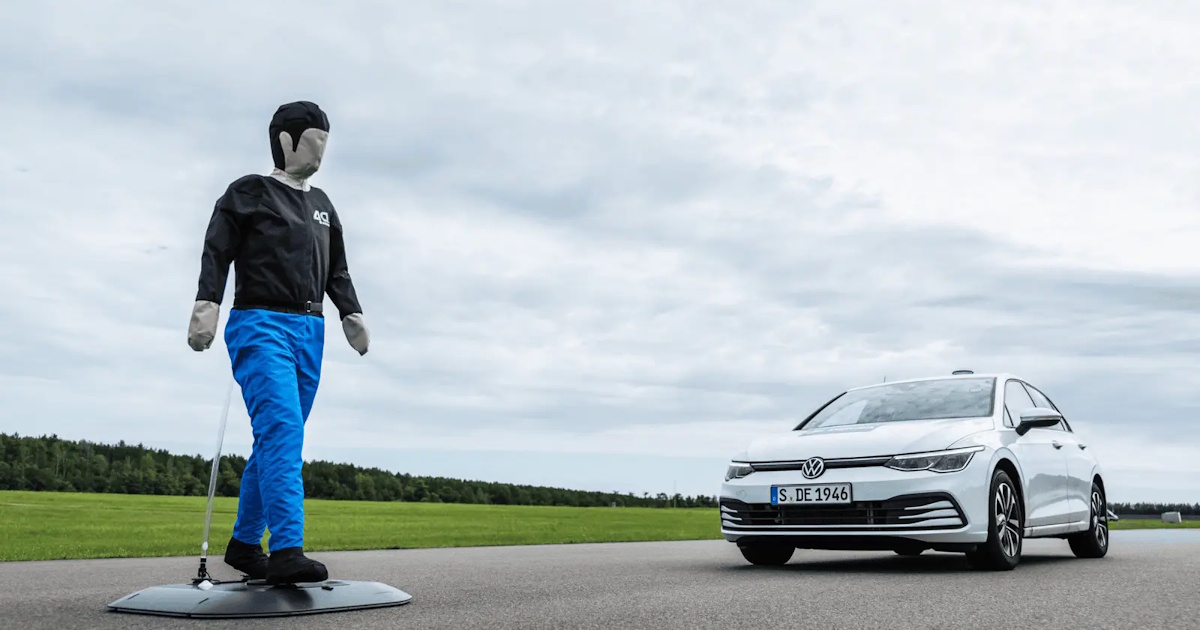
Featured Image Credit: Dekra
Marko Lubar is the Founder and Editor of ElectricFleet Online, where he covers the latest developments in electric vehicles, battery innovation, autonomous driving, artificial intelligence, and the technologies shaping the future of mobility.
Learn more about Marko and the mission behind ElectricFleet Online on the About Us page.
Latest News