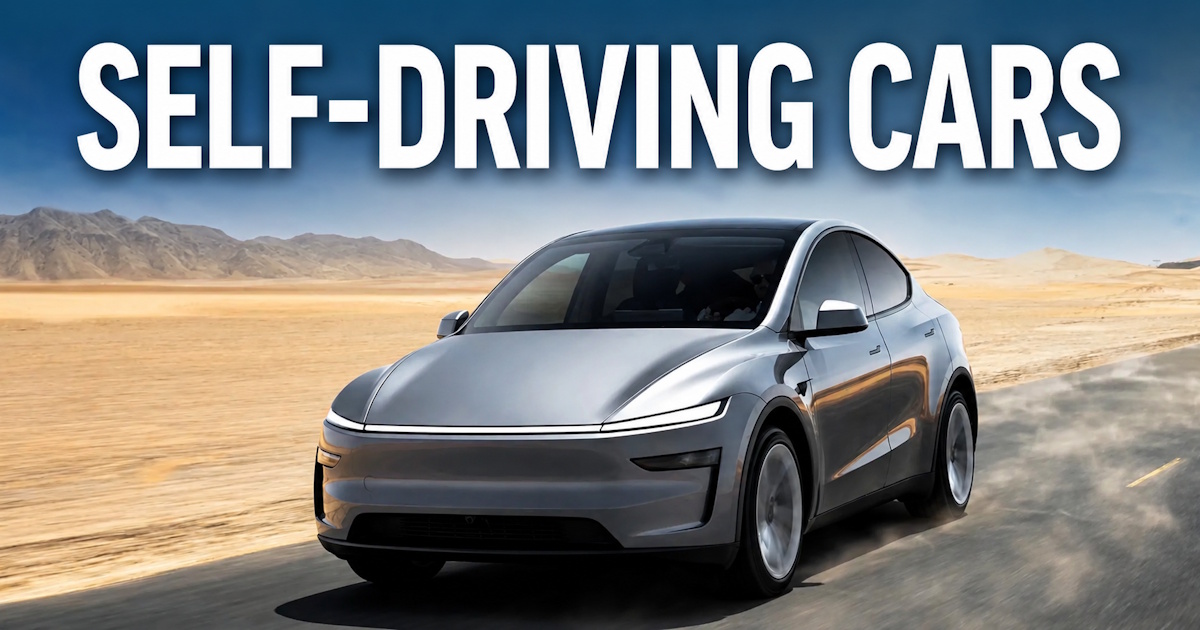
Tesla says “Full Self-Driving”, Mercedes talks about Drive Pilot, and Xpeng calls VLA the next generation of intelligent driving. Yet all of these systems mean very different things when it comes to what the car can actually do and, more importantly, who is legally responsible if something goes wrong.
None of it makes much sense until you understand the classification system that defines what each of these systems actually does. The same is true of connected vehicle technologies such as V2X and C-ITS, which complement driver assistance systems by extending a vehicle’s awareness beyond what its own sensors can see. Since they deserve a separate discussion, I covered them in a dedicated article.
The classification system is SAE J3016, developed jointly by SAE International and the International Organization for Standardization (ISO). It defines six levels of driving automation, from zero to five, and it’s the reference framework used by manufacturers, regulators and governments worldwide. The EU applies it through the UNECE vehicle regulations framework. China, Japan and South Korea each have national standards that closely align with the same levels.
The most important thing to understand before going through the levels: at Level 2 and below, a human is always the driver, even if their hands aren’t on the wheel. Automated driving doesn’t begin until Level 3. That distinction matters enormously for safety, liability and regulation.
| Level | Steering | Braking | Eyes on road | Driver legally responsible? |
|---|---|---|---|---|
| L0 | Driver | Driver | Yes | Yes |
| L1 | Shared | Shared | Yes | Yes |
| L2 | System | System | Yes | Yes |
| L3 | System | System | No (within conditions) | No (while active) |
| L4 | System | System | No | No |
| L5 | System | System | No | No |
Level 0: No Automation
The driver remains fully in control. You steer, accelerate and brake. The car can warn you about things, a lane departure warning that beeps or a blind spot indicator that flashes, but it doesn’t act on those warnings. A reversing camera is L0. So is a basic parking sensor.
Level 1: Driver Assistance
The car takes over one control input at a time. Adaptive cruise control holds your speed and distance from the car ahead, but you still steer. Lane centering keeps you in the middle of your lane, but you still control speed. The system can do one or the other, never both simultaneously. Standard adaptive cruise control, basic lane keep assist and automatic emergency braking all sit here.
Level 2: Partial Automation
This is where most modern driver assistance systems live, and where Tesla FSD and Xpeng VLA are classified. The car controls steering, acceleration and braking simultaneously on a motorway. But here’s the critical point: you are still the driver. You must watch the road at all times and be ready to take control immediately. If the system makes a mistake, you remain legally responsible because you are still considered the driver.

The “plus” designation (L2+) indicates a hands-off system that uses a camera to monitor whether you’re paying attention. If you look away for too long, it gives you a warning. Tesla FSD, Xpeng VLA, GM SuperCruise and Mercedes’ current highway systems are all L2+. They’re impressive technology, but they are not autonomous. Every vehicle sold to consumers today, including the most advanced Tesla, is L2 at most.
If you’re choosing a first car and wondering how driver assistance systems factor into the decision, my guide to the best EVs for new drivers covers that from a practical buyer’s perspective. And if you want to understand how liability works when an L2 system is involved in a crash, BYD’s God’s Eye programme is a useful real-world case study: I covered it here.
Level 3: Conditional Automation
Level 3 is where the fundamental shift happens: the system becomes legally responsible for driving within a defined set of conditions. You can legally divert your attention from driving. You can read, have a conversation or check your phone. The car handles everything, as long as conditions stay within what the system is designed for.
The defining challenge is the handover. If the system reaches the edge of its capabilities, it requests that you take control again, and you have a reasonable amount of time to respond. This is called a “minimum risk condition” handover. You need to be in a state where you can respond, even if you’re not actively watching.
Mercedes Drive Pilot was the first commercial L3 system in Europe, approved in Germany in 2022 for motorway speeds up to 60 km/h. BMW followed with Personal Pilot. Both were withdrawn by early 2026. The systems only worked under such narrow conditions that relatively few customers saw enough value in paying for them, and the liability exposure made the business case unsustainable. Honda received L3 approval in Japan for its Legend sedan in 2021. That remains the most notable commercial L3 deployment globally.
In Europe, L3 is regulated through UNECE Regulation 157, which sets the conditions under which ALKS (Automated Lane Keeping Systems) can operate hands-free: motorways only, speeds under 60 km/h, clear lane markings, no adverse weather. The connection to Euro NCAP is also worth noting: the new 2026 Euro NCAP protocol now tests driver monitoring systems more rigorously than before, partly because the line between L2+ assistance and genuine driver attention has become so important to get right.
Level 4: High Automation
The system drives the car without any need for a human driver, within a specific operational domain. That domain might be a defined geographic area, a particular type of road, certain weather conditions or specific speed limits. Within those boundaries, there is no expectation that a human will intervene. In theory, you could even sleep. The car doesn’t need a steering wheel in principle, though most current L4 vehicles have one for fallback purposes.

The most mature L4 deployments today are robotaxis. Waymo operates driverless taxis in Phoenix, San Francisco and a handful of other US cities. The cars navigate real urban traffic without a safety driver. These are genuine L4, but they operate within carefully geofenced areas where the conditions are known and extensively tested.
No L4 consumer vehicle is on sale anywhere in the world today.
Level 5: Full Automation
The system can drive anywhere, in any conditions, without any human input at all. No geofencing, no weather restrictions, no speed limits on its operational domain. A Level 5 vehicle needs no steering wheel, no pedals and no driver’s licence to operate. Level 5 does not exist outside of research settings. No manufacturer has announced a credible timeline for L5 consumer deployment.
Why Is Everyone Still Stuck at Level 2?
The biggest barrier isn’t computing power anymore, it’s liability. Moving from Level 2 to Level 3 doesn’t just require better software, it requires manufacturers to accept legal responsibility whenever the system is driving. That shift is arguably harder than the technology itself.
At L2, manufacturers sell a tool. The driver decides how to use it and remains responsible for the outcome. At L3, if the system makes a mistake while active, the manufacturer is legally liable. For a product that goes into millions of cars, that exposure is enormous. Mercedes and BMW tried it, decided the market wasn’t ready to pay enough for it, and withdrew. The regulatory frameworks exist. The technology largely works within narrow conditions. The commercial and legal calculus just doesn’t add up yet.
Why This Matters: The Liability Gap Between L2 and L3
If the system makes a mistake and there’s a crash, who is responsible? That’s the question that shapes everything about how these systems are built, marketed and regulated.
At L2, the answer is always the driver. The manufacturer provides a tool. You decide how to use it, and you remain legally responsible at all times even if your hands aren’t on the wheel. Tesla has been explicit about this in its documentation, despite its marketing suggesting capabilities beyond its legal classification.
At L3, within the defined operational conditions, the manufacturer accepts responsibility. This is why the regulatory approval process for L3 is so demanding, and why Mercedes and BMW both ultimately withdrew their systems. Accepting that liability at scale, across a mass-market product, is a fundamentally different commercial and legal proposition than selling a driver assistance tool.

This gap explains why Tesla FSD is called “Full Self-Driving” but is legally L2. It explains why Xpeng’s ambition to bring VLA to Europe by 2027 depends not just on the technology working but on European regulators deciding who is responsible when it doesn’t. It also explains why Euro NCAP safety ratings matter so much alongside these autonomous driving classifications: a car can score well on crash protection while having poorly calibrated driver assistance, and the two are separate assessments of separate things. My guide to EVs we wouldn’t recommend due to poor Euro NCAP scores is relevant reading before any purchase decision.
Where Does This Leave Us?
Despite rapid advances in software and AI, fully autonomous consumer cars remain further away than marketing departments often suggest. For now, every production vehicle available to private buyers still relies on a human driver to remain ultimately responsible. That won’t change quickly, partly because of regulatory frameworks that take years to adapt, and partly because the technology still has real limitations in edge cases that L2 systems simply hand back to the driver rather than solve.
Understanding the difference between assistance and automation isn’t just a technical detail. It’s essential for knowing what today’s systems can realistically do, where their limitations lie, and who is holding the bag when something goes wrong.
FAQ
What level is Tesla FSD? Level 2+. Despite the name, Full Self-Driving requires the driver to remain attentive and ready to take control at all times. Tesla is legally responsible for providing the system, but the driver is legally responsible for how the vehicle behaves while using it.
Why doesn’t Tesla call FSD Level 3? Because Level 3 requires the manufacturer to accept legal responsibility when the system is driving. Tesla has consistently avoided that liability by classifying FSD as L2+, which keeps the driver legally responsible at all times. Calling it “Full Self-Driving” is a marketing choice, not a technical or legal classification.
What level is Xpeng VLA? Level 2+. Xpeng’s Vision-Language-Action system is a hands-free assisted driving system with driver monitoring. It does not transfer legal responsibility from the driver to the system.
Has any L3 system been approved in Europe? Yes. Mercedes Drive Pilot received approval in Germany in 2022 for motorways at speeds up to 60 km/h. BMW Personal Pilot followed. Both were withdrawn by early 2026 because the systems only worked under such narrow conditions that few customers saw enough value in paying for them. No L3 consumer vehicle is currently on sale in Europe.
What is the difference between L2+ and L3? At L2+, the driver is always legally responsible, even with hands off the wheel. At L3, the system accepts legal responsibility while active within its defined operating conditions. The driver doesn’t need to watch the road but must be able to respond to a handover request.
Does any car currently available to buy offer Level 4 or above? No. All consumer vehicles available today are Level 2 at most. Level 4 is limited to commercial robotaxi operations in specific geofenced areas, primarily in the United States. Level 5 does not exist commercially.
Is SAE J3016 an international standard? It was developed jointly by SAE International and ISO, making it technically equivalent to an ISO standard. The EU applies equivalent levels through UNECE regulations. China, Japan and South Korea use national standards that closely align with the same framework.
Latest News