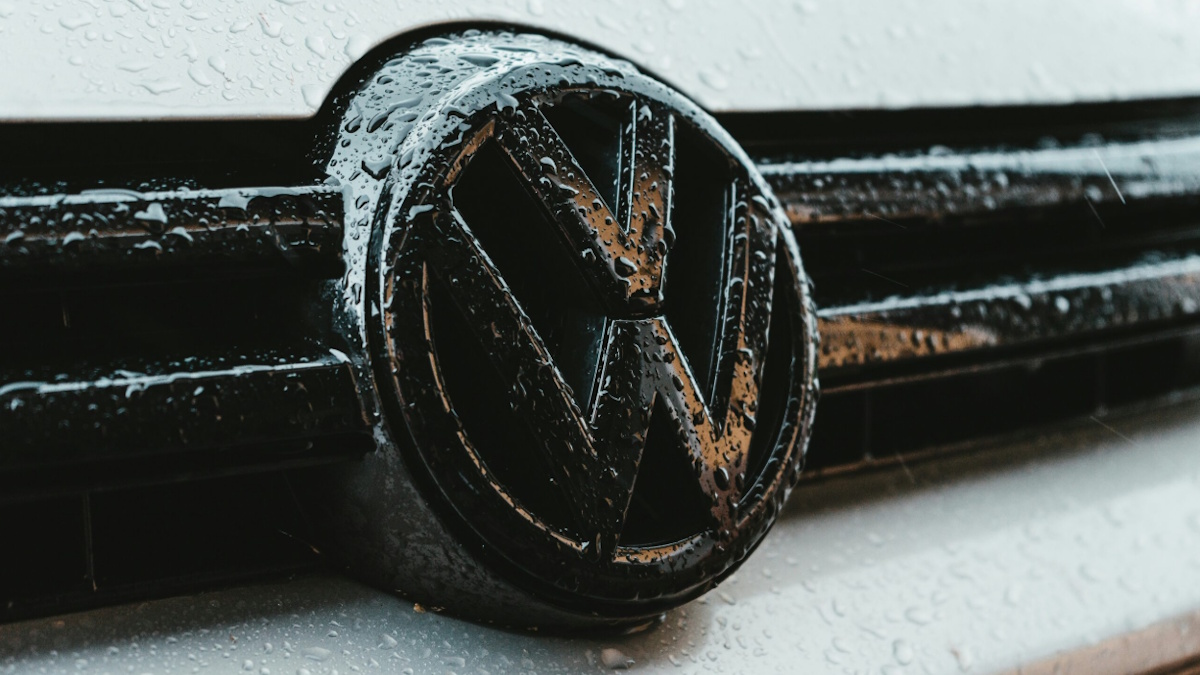
Volkswagen delivered 2.08 million vehicles globally in Q2 2026, down 8.6% year-on-year and the steepest quarterly decline the group has recorded in four years. The headline number is bad enough, and the China breakdown makes it considerably worse.
In the first half of 2026, Volkswagen handed over 971,000 vehicles in China through its three joint ventures, a fall of 26.1% year-on-year. That puts the group’s Chinese deliveries at their lowest level since the first half of 2010, when VW sold 950,300 vehicles there. Within Q2 alone, China deliveries plunged 36.6% to 424,300 units. “The situation in China remains challenging, where we were unable to escape a significant total market decline of around 20 per cent,” said Marco Schubert, a member of Volkswagen’s extended executive committee for sales.
The overall Chinese car market did contract meaningfully in the period. But Volkswagen’s decline is running considerably steeper than the market itself, which means the brand is also losing share. Chinese EV manufacturers have been taking buyers away from petrol and hybrid cars at a pace that Volkswagen has not managed to offset with its own electric models. China EV deliveries fell 35.6% for Volkswagen in Q2, and the core Volkswagen Passenger Cars brand saw its electric volumes drop 22.2%. The “In China, for China” strategy Volkswagen has been pursuing, including its software and autonomous driving partnership with Xpeng and the co-developed EV models now entering production, is designed to address exactly this problem. The results are not there yet.
The Response: Cutting Half the Lineup
CEO Oliver Blume has announced what Volkswagen is calling the Future Plan, a package of 12 initiatives tied to a 2030 target. The centrepiece is a radical simplification of the product portfolio: the global model lineup will be cut by up to 50%, and product complexity including trim levels and option packages will be reduced by up to 75%. Production capacity will be pulled back from 10 million vehicles annually to 9 million, down from a pre-pandemic peak of 12 million.
“We can only achieve this by substantially reducing complexity,” Blume said, “in our product portfolio and technology platforms, in the number of units and decision-making levels.”
In practice, this means models with limited volume or profitability are under threat. Yahoo Finance reports that enthusiast-focused but low-volume cars like the VW Golf R, Jetta GLI and Audi e-tron GT could be candidates for elimination. Volkswagen has reportedly considered closing four German plants and cutting up to 100,000 jobs, though labour representatives on the company’s supervisory board have blocked the most aggressive scenarios.
Diversiture of luxury brands has also been discussed. Lamborghini has been mentioned as a spin-out candidate, as has Ducati, though nothing has been confirmed. These would follow the model of the Porsche IPO, which raised capital while retaining group synergies.
Where Volkswagen Is Actually Growing
The news is not uniformly bad. Western Europe grew 1.8% in Q2 and 3% in H1. South America was up 9.4% in Q2. Central and Eastern Europe rose 6.7%. North America grew 7.7% in Q2, though US EV deliveries fell 49% to just 5,800 units after federal subsidies expired and new tariffs took effect.

The European EV picture is the most encouraging part of the report. Volkswagen Group remains the largest BEV seller in Europe with 377,000 units sold in H1 2026, up 8.4% year-on-year, and continuing to feature among the best-selling EVs in Europe. The electric order book for Europe grew more than 50% compared to the end of 2025, driven largely by the newly launched entry-level models: the VW ID.Polo, Škoda Epiq and Cupra Raval, which together have accumulated over 54,000 orders. These are exactly the kind of affordable European EVs that the market has been waiting for.
Plug-in hybrids also showed resilience, with PHEV and range-extender vehicle deliveries up 27% in H1 globally, reaching 246,000 units. For Volkswagen, PHEVs are buying time while the full-electric transition continues.
The China Strategy: Too Late, or Still in Play?
The deeper question is whether Volkswagen’s repositioning in China can arrest the decline before the market moves too far beyond it. The CARIAD software development programme and AI chip partnership with Xpeng was an acknowledgement that Volkswagen couldn’t build competitive EV technology alone, and needed to move faster than its traditional engineering cycles allowed. The first co-developed models are now entering production.
The problem is timing. Chinese EV buyers have short product cycles and high expectations for technology, connectivity and range. VW’s newly launched local EV models are arriving into a market that has already moved on in several respects. The group notes “early positive signals from newly introduced, locally developed electric models in China” in its statement, but those signals haven’t yet translated into meaningful volume recovery.
Volkswagen’s Chinese joint venture partners, SAIC and FAW, have their own EV brands competing in the same market, which adds another layer of complexity to the group’s position there. The long-term outcome depends on whether VW can execute its local product strategy at a pace that Chinese consumers find credible, which remains an open question.
What This Means for the European Market
For European buyers, the short-term picture is more positive. The ID.Polo and its platform siblings represent a genuine step forward for Volkswagen in the affordable EV segment, and the European order book growth suggests real buyer interest rather than marketing noise. If the 54,000+ orders for those three entry models convert to deliveries at a reasonable rate, Volkswagen’s European EV momentum should continue through the second half of 2026.
The risk is that the cost pressures from China, the restructuring programme and the capital demands of the 2030 product transition squeeze investment in areas where the group is currently competitive. A leaner, simpler Volkswagen Group may be more financially sustainable. Whether it is also a more innovative one is less certain.
FAQ
How much did Volkswagen’s deliveries fall in Q2 2026?
Global deliveries fell 8.6% to 2.08 million vehicles in Q2 2026. In China, deliveries fell 36.6% to 424,300 units. In the first half of the year, China deliveries were down 26.1% to 971,000 units, the lowest level since 2010.
What is Volkswagen’s Future Plan?
It is a package of 12 restructuring initiatives tied to a 2030 target. Key elements include cutting the global model lineup by up to 50%, reducing product complexity by up to 75%, reducing annual production capacity from 10 million to 9 million vehicles, and achieving €5 billion in cost savings. The plan was presented by CEO Oliver Blume in response to continued performance deterioration in China and globally.
Which Volkswagen models might be cut?
No specific models have been officially confirmed for elimination. Reports suggest enthusiast-focused, low-volume models like the VW Golf R, Jetta GLI and Audi e-tron GT are candidates, but Volkswagen has not published a list of affected models.
Is Volkswagen still growing anywhere?
Yes. Western Europe grew 1.8% in Q2, South America grew 9.4%, and North America grew 7.7%. In Europe, the all-electric order book grew more than 50% from the end of 2025, driven by new entry-level models including the ID.Polo. Plug-in hybrids grew 27% globally in H1.
What is Volkswagen doing about China?
Volkswagen has been pursuing an “In China, for China” strategy, developing locally relevant EV models through joint ventures and a software partnership with Xpeng. The first co-developed models have entered production, but meaningful volume recovery in China has not yet materialised.
How is Volkswagen doing in the European EV market?
Volkswagen Group remains Europe’s largest BEV seller, with 377,000 units in H1 2026, up 8.4% year-on-year. The group has over 54,000 orders for the new ID.Polo, Škoda Epiq and CUPRA Raval entry-level EVs.
Featured Image Source: Volkswagen
Latest News