Xiaomi is testing its EVs at seven sites in Sweden, Germany, Spain and Italy ahead of European sales in 2027.
That probably won’t be a four-country launch. Xiaomi’s September announcement promises European markets “including Germany” in 2027 and names no other launch market. Xiaomi has also signed memoranda of understanding with eight German dealer groups, which it calls the first step towards a sales and service network. Such a memorandum records that both sides intend to work together, and I’d expect the final dealer contracts to follow later. The company backs that up with a research and development centre in Munich. Germany is now pencilled in for the third quarter of 2027, which narrows the earlier second-half window.
Which Xiaomi Models Could Come to Europe
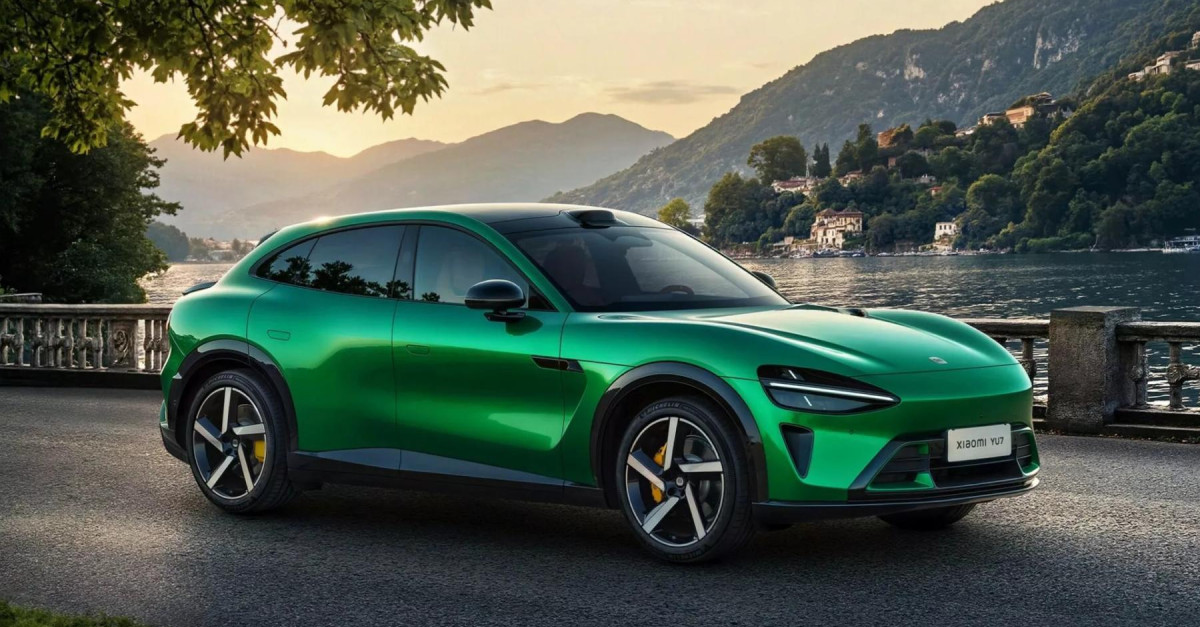
There’s no official information on European models yet, but the SU7 saloon and the YU7 SUV are expected. In July 2025, Xiaomi president Lu Weibing showed an SU7 Ultra with German plates and called it Xiaomi’s first experimental car registered in Europe. This April, a YU7 GT also set an official lap time of 7:22.755 with its Track Package on the Nordschleife, the long loop of the Nürburgring racetrack in Germany. It gave Xiaomi a way to grab attention and flex a little in front of a European audience.
China already has the second-generation SU7, launched in March 2026. I’d expect Europe to get this improved car, built on what Xiaomi learned from the first one. I haven’t seen any announcement of a second-generation YU7, although the SUV gained new Standard and GT versions in May.
The SU7 comes in three versions and the YU7 in five, so the table shows the lowest and highest figures for each model.
| Specifications | Xiaomi SU7 | Xiaomi YU7 |
|---|---|---|
| Type | Saloon | SUV |
| Battery capacity | 73 to 101.7 kWh | 73 to 101.7 kWh |
| Battery chemistry | LFP and NMC | LFP and NMC |
| CLTC range | 720 to 902 km (447 to 560 miles) | 643 to 835 km (400 to 519 miles) |
| WLTP estimate | 576 to 752 km (358 to 467 miles) | 514 to 696 km (319 to 432 miles) |
| DC charging, 10-80% | 12 to 21 minutes | 12 to 21 minutes |
| AC charging, 10-80% | Not published | Not published |
| Motor | Rear or dual, all-wheel drive | Rear or dual, all-wheel drive |
| Power | 235 to 508 kW (320 to 690 PS) | 235 to 738 kW (320 to 1,003 PS) |
| Torque | 505 to 866 Nm | 528 to 1,068 Nm |
| Boot | 493 litres | 660 to 678 litres |
| Frunk | 105 litres | 141 litres |
China-market figures, checked 27 November 2026, mainly from Xiaomi’s SU7 and YU7 pages. SU7 torque, YU7 GT torque, boot volumes and kW figures other than the GT’s come from Chinese vehicle listings, which also back up the motor layouts.
CLTC is China’s test cycle and gives higher figures than Europe’s WLTP. My estimates divide CLTC by 1.2 to 1.25, as in my WLTP and CLTC comparison, and aren’t official ratings. European specifications could differ, and I wouldn’t compare the boot figures with European rivals until they’re measured the same way.
If you’re wondering which segment these cars belong to, the SU7’s rivals are the BMW i5 and Audi A6 e-tron, while the YU7 competes with the Tesla Model Y and Škoda Enyaq. Both Xiaomis are about 5 metres long, so the YU7 is the bigger car in that second group.
Price is the other unknown. The European Commission’s tariff summary doesn’t name Xiaomi. If its China-built cars fall into the non-cooperating group, they’d pay an extra 35.3% on top of the standard 10% car tariff. Either way, I expect buyers to end up paying the full weight of the tariff.
Featured Image: Xiaomi
Marko Lubar is the Founder and Editor of ElectricFleet Online, where he covers the latest developments in electric vehicles, battery innovation, autonomous driving, artificial intelligence, and the technologies shaping the future of mobility.
Learn more about Marko and the mission behind ElectricFleet Online on the About Us page.
Latest News