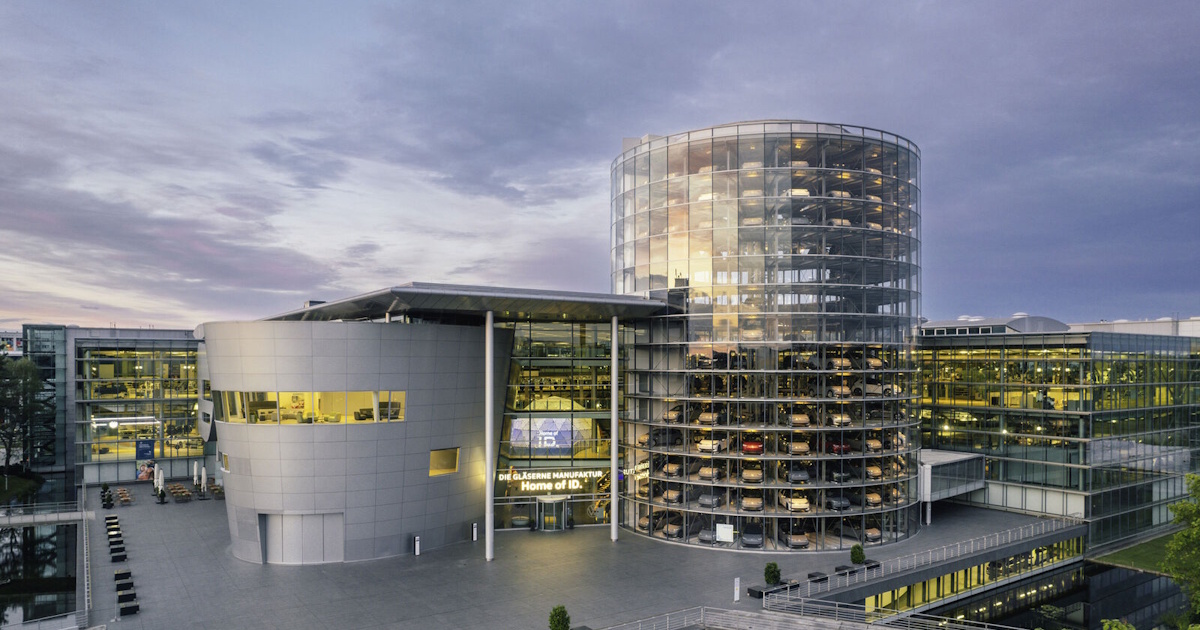
BYD could soon move into one of Volkswagen’s most recognizable production sites in Germany, according to a report from ArenaEV. The Chinese EV giant is reportedly interested in Volkswagen’s Transparent Factory in Dresden, a location long associated with VW’s electric ambitions and premium image.
Nothing has been officially confirmed yet, but even the possibility feels symbolic. Just a few years ago, it would have been difficult to imagine a Chinese manufacturer potentially operating inside one of Volkswagen’s most iconic facilities. Today, though, the European EV market looks very different.
Volkswagen’s EV Strategy Has Been Changing Rapidly
Part of the reason this story feels believable is because Volkswagen has already started rethinking several parts of its EV strategy over the past year. One of the biggest shifts has been software.
Volkswagen originally invested heavily in developing its own in house software ecosystem through Cariad, hoping to build a fully integrated digital platform for future EVs. However, the project faced delays and technical difficulties, forcing the company to adjust course.

More recently, Volkswagen has started relying more on partnerships with Chinese companies, especially Xpeng, for software and autonomous driving development. I covered this in more detail in my articles about Volkswagen’s changing software strategy and its cooperation with Xpeng on AI chips and advanced driver assistance systems.
Because of that, reports about BYD potentially using the Dresden factory no longer feel as surprising as they might have a few years ago. Volkswagen has already shown that it is becoming more open to external cooperation, especially in areas where Chinese manufacturers currently move faster.
Why The Transparent Factory Matters
The Transparent Factory is not just another production site. Located in Dresden, it was designed to showcase Volkswagen’s technology and manufacturing processes to the public, becoming a symbol of the company’s engineering identity in the EV era.
That is also why this potential move carries more weight than a standard factory agreement. If BYD were to establish a presence there, it would inevitably be seen as a symbolic moment in Europe’s shifting automotive landscape.


From BYD’s perspective, the appeal is obvious. The company continues to expand aggressively across Europe and is already building a stronger manufacturing footprint in the region. Having access to an existing German facility would offer both practical and branding advantages.
At the same time, it is hard to ignore the symbolic aspect. For BYD, operating inside a factory so closely linked to Volkswagen would likely be viewed internally as a significant milestone and, in some ways, a quiet victory over one of Europe’s traditional automotive giants.
BYD’s European Expansion Continues To Accelerate
This possible factory move also fits into BYD’s broader European strategy. The company is already increasing its presence across several European markets and expanding production capacity outside China.
Unlike some smaller Chinese brands like Arcfox still testing the waters, BYD is behaving more like a long term global manufacturer. The company continues to invest heavily in local operations, dealerships, logistics, and manufacturing infrastructure throughout Europe.
For European buyers, this means Chinese EV brands are becoming increasingly difficult to view as temporary newcomers. They are now part of the mainstream conversation, especially as traditional manufacturers continue adjusting to the pace and economics of the EV transition.
What This Could Mean For Volkswagen And BYD
For Volkswagen, the situation highlights how much the market has changed. European manufacturers are still hugely important, but the competitive balance is no longer as one sided as it once was, particularly in electric vehicles and software development.


For BYD, meanwhile, this would represent more than just another factory opportunity. It would send a clear message about how far Chinese EV makers have come in Europe in a relatively short period of time.
Whether the deal actually happens remains to be seen, but the fact that such discussions are even plausible says a lot about where the global EV industry is heading.
FAQ
What is Volkswagen’s Transparent Factory?
It is a well known Volkswagen production facility in Dresden, Germany, originally created to showcase the company’s EV technology and manufacturing.
Is BYD buying Volkswagen’s factory?
No official agreement has been confirmed. Reports suggest BYD is interested in using the facility.
Why is this considered symbolic?
The factory has long been associated with Volkswagen’s electric ambitions, so a Chinese EV maker potentially operating there reflects changing market dynamics in Europe.
Why did Volkswagen change its software strategy?
Volkswagen faced delays and problems with its Cariad software division, leading the company to work more closely with partners like Rivian and Xpeng.
Is BYD expanding in Europe?
Yes, BYD continues to grow across Europe through new models, dealerships, and manufacturing investments.
Could BYD build cars in Germany?
Potentially, yes. The reported interest in the Dresden factory suggests BYD is exploring stronger local manufacturing presence in Europe.
Featured Image Source: Volkswagen
Marko Lubar is the Editor of ElectricFleet Online, where he writes about the latest developments in the European electric vehicle (EV) market. His work focuses on EVs, battery innovation, autonomous driving, and the growing influence of Chinese automakers in Europe.
Since 2004, Marko has contributed to a variety of online publications covering technology, innovation, and the automotive industry. He holds a Master's degree in Economics and serves as Head of Sales. Throughout his career, he has also worked in various management positions, as a software developer, and as a high school economics teacher.
Passionate about making complex topics easy to understand, Marko combines his business, technical, and editorial experience to deliver clear, well-researched, and engaging content that helps readers stay informed about the future of mobility.
Latest News