When it comes to buying an electric car, range still tops the list of concerns for most drivers. It’s easy to see why: no one wants to spend half their trip worrying about finding the next charger. Many people who are thinking about switching from petrol or diesel still expect something close to 500 kilometers of range before they’ll make the leap.
The official WLTP standard used in Europe gives a good idea of what to expect, but it’s not perfect. Real-world driving (a mix of city traffic, highways, and country roads) usually cuts that number down by 10 to 20 percent. That’s why range anxiety remains one of the biggest hurdles for EV adoption, and why range satisfaction isn’t always what new owners hope for.
So, to make things easier, here’s a clear look at the most affordable EVs under €30,000 available in Europe, ranked by how far they can go on a full charge. Each one is designed for a slightly different type of driver, but all focus on practical electric mobility.
Table of Contents
- Leapmotor B10 – 361 km WLTP Range
- Hyundai Inster – 327 km WLTP Range
- Citroën ë-C3 and Fiat Grande Panda – 320 km WLTP Range
- Nissan Micra EV – 317 km WLTP Range
- Dongfeng Nammi Box and GWM Ora 03 – Around 310 km WLTP Range
- Renault 5 and Renault 4 E-Tech – Around 310 km WLTP Range
- Opel/Vauxhall Frontera and Citroën ë-C3 Aircross – 300 km WLTP Range
- Fiat 500e and Leapmotor T03 – 265–270 km WLTP Range
- Renault Twingo – 263 km WLTP Range
- BYD Dolphin Surf and Dacia Spring – Below 230 km WLTP Range
- Comparison Table: EVs by Range
- FAQ
Leapmotor B10 – 361 km WLTP Range
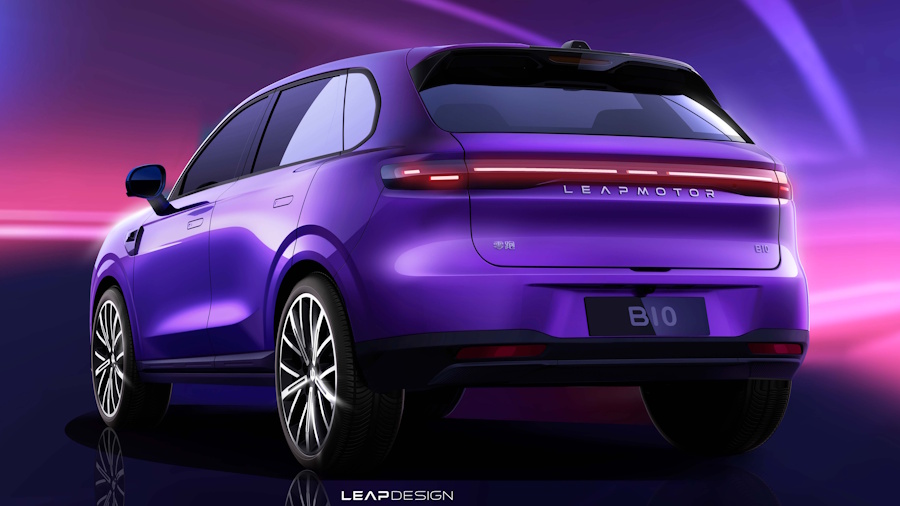
Let’s start with the champion. The Leapmotor B10 currently leads this list with a WLTP range of 361 kilometers from a 56.2 kWh battery. Its 132 kW (178 hp) electric motor gives it a bit of extra punch, making it feel more like a mid-range EV than a budget one. It’s a compact sedan with a comfortable interior, plenty of tech features, and decent boot space of 430L — perfect for everyday use or longer weekend trips.
Hyundai Inster – 327 km WLTP Range
Hyundai’s Inster is a newcomer that quickly caught attention for its combination of efficiency and price. With a 42 kWh battery and 327 kilometers of range, it’s built for the city and suburbs but can handle longer journeys when needed. The 71 kW (95 hp) motor offers smooth, steady performance, and its small size makes parking in crowded cities effortless. Inside, it’s simple but well thought out (280L of a boot space) — just what you’d expect from Hyundai.

Citroën ë-C3 and Fiat Grande Panda – 320 km WLTP Range
These two are close cousins. The Citroën ë-C3 and Fiat Grande Panda share the same platform, the same 44 kWh battery, and even the same 83 kW (113 hp) electric motor. They both offer around 320 kilometers of range and focus on comfort, ease of use, and affordability. Boot space is practical for the class, sitting at 310 for the Citroën and at 361 liters for Fiat — enough for weekend bags or a grocery haul. They’re proof that budget-friendly EVs can be stylish and fun to drive.
Nissan Micra EV – 317 km WLTP Range
The new electric Micra from Nissan borrows a lot from Renault’s EV experience and packs a 40 kWh battery for a range of 317 kilometers. The 90 kW (120 hp) motor provides lively acceleration, and the compact size makes it easy to live with day to day. It’s ideal for commuters who want a mix of reliability and personality in a small, efficient package. Oh, and it has a 326-litre boot.


Dongfeng Nammi Box and GWM Ora 03 – Around 310 km WLTP Range
China’s electric newcomers are slowly making ground in Europe, and the Dongfeng Nammi Box and GWM Ora 03 are two great examples. Both deliver 310 kilometers of range, though they have different personalities. The Nammi Box is simple, practical (the trunk volume is 326 liters) efficient, and uses a 42.3 kWh battery with a 70 kW (95 hp) motor. The Ora 03 is more expressive, with a retro-modern design, a 48 kWh battery, and a 126 kW (171 hp) motor. The boot space is modest at best, with 228L available.
Renault 5 and Renault 4 E-Tech – Around 310 km WLTP Range
Renault’s new 5 and 4 E-Tech models have created a lot of buzz, and for good reason. Both come with a 40 kWh battery and a WLTP range of 308 km (R4) and 312 km (R5). They’re powered by a 90 kW (122 hp) electric motor that offers just the right mix of performance and efficiency for daily driving. Their retro-inspired designs give them real charm, and the interiors are well equipped for a modern city lifestyle. Boot capacity is 326 liters for Renault 5, while Renault 4 offers a decent amount of 420 liters.
Opel/Vauxhall Frontera and Citroën ë-C3 Aircross – 300 km WLTP Range
If you’re after a little more space and versatility, the Opel Frontera Electric and Citroën ë-C3 Aircross might be what you’re looking for. They both use the same 44 kWh battery and 83 kW (113 hp) motor, offering up to 300 kilometers of range. Their SUV-inspired design means a higher driving position and a bit more boot space — around 380 liters, which is quite generous for this price range.

Fiat 500e and Leapmotor T03 – 265–270 km WLTP Range
Compact, stylish, and efficient: the Fiat 500e and Leapmotor T03 are the perfect city cars. Both use a 37.3 kWh battery and can travel up to around 270 kilometers on a full charge (the T03 can reach 265 km, to be precise). The Fiat 500e stands out for its iconic design and quality feel, while the T03 leans on tech features and value for money. Neither offers much boot space (185 and 210 liters, respectively), but that’s not the point, they’re built to make urban driving easy and fun.
Renault Twingo – 263 km WLTP Range
The upcoming Renault Twingo deserves a mention here, even though it won’t hit the market until early 2026. It’s shaping up to be one of the most affordable EVs in Europe, with a price expected to stay below €20,000. Despite its compact footprint, Renault promises a surprisingly practical design, offering a 360-liter boot that beats many rivals in this price segment. The Twingo will come with a 27 kWh battery, delivering an estimated WLTP range of around 263 kilometers, powered by a 60 kW motor. For city drivers or anyone looking for an affordable second car, this little electric hatch could be one of the most appealing EVs of 2026.
BYD Dolphin Surf and Dacia Spring – Below 230 km WLTP Range
At the most affordable end of the list are the BYD Dolphin Surf and Dacia Spring. The Dolphin Surf uses a 30 kWh battery for a range of 222 kilometers, while the Spring’s 27 kWh battery manages around 230 kilometers. These are basic EVs focused on keeping costs low and efficiency high. The Dacia Spring’s 33 kW (45 hp) motor is modest but gets the job done, while the BYD Dolphin Surf adds a bit more flair and power with its 65 kW (88 hp) motor. Both are ideal for short commutes and city life, and share the same boot capacity of 308 liters.
Comparison Table: EVs by Range
Looking at the comparison table, it’s clear that the Leapmotor B10 stands out as the range champion in this price bracket. The B10 is not just the winner in distance, it’s also the only fully-fledged SUV on the list, while most of the others are compact city cars or small crossovers. It’s worth noting that the B10’s higher trim level comes with an even larger battery, extending the range to around 434 kilometers, but that version pushes the price well beyond the €30,000 mark. If you want to know more about the B10 – its specs, price and availability across Europe – just click here.

| Model | WLTP Range (km) | Battery (kWh) | Max Charging Speed (kW) | Boot Capacity (L) |
|---|---|---|---|---|
| Leapmotor B10 | 361 | 56.2 | 80 | 450 |
| Hyundai Inster | 327 | 42 | 85 | 300 |
| Citroën ë-C3 / Fiat Grande Panda | 320 | 44 | 100 | 320 |
| Nissan Micra EV | 317 | 40 | 85 | 310 |
| Dongfeng Nammi Box | 310 | 42.3 | 80 | 300 |
| GWM Ora 03 | 310 | 48 | 67 | 230 |
| Renault 5 / Renault 4 E-Tech | 308–312 | 40 | 100 | 300 |
| Opel/Vauxhall Frontera / Citroën ë-C3 Aircross | 300 | 44 | 100 | 380 |
| Fiat 500e | 270 | 37.3 | 85 | 185 |
| Leapmotor T03 | 265 | 37.3 | 55 | 210 |
| Renault Twingo | 263 | 27 | 50 | 360 |
| Dacia Spring | 230 | 27 | 30 | 270 |
| BYD Dolphin Surf | 222 | 30 | 60 | 220 |
FAQ
Which EV under €30,000 has the best range?
The Leapmotor B10 currently leads the pack with 361 kilometers of WLTP range from a 56.2 kWh battery.
How realistic are WLTP range figures?
WLTP gives a useful benchmark, but in real driving you can expect 10–20 percent less depending on weather, driving style, and speed.
Which one is best for city driving?
The Fiat 500e, Dacia Spring, and Leapmotor T03 are excellent for city life. They’re small, efficient, and easy to park.
Are affordable EVs improving quickly?
Definitely. Not long ago, cars in this price range couldn’t go much beyond 200 kilometers. Now, several models comfortably exceed 300 kilometers on a charge, proving how fast EV tech is advancing.
Latest News