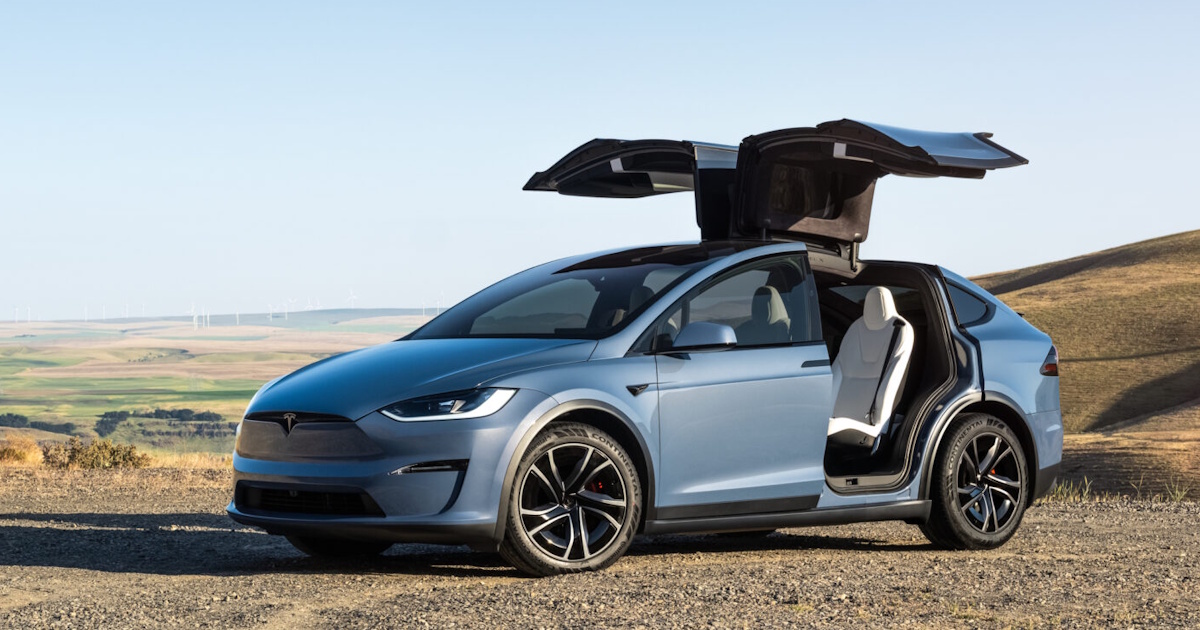
Elon Musk dropped a one line promise on X that got Tesla owners and independent repair shops excited fast. Tesla, he said, plans to open source the design and software for the Model S and Model X, the same way it did with the original Roadster back in 2023. It’s a genuinely interesting idea for two cars that just ended production, but anyone who actually went looking for that Roadster material knows the word open source has done a lot of heavy lifting here, and it’s worth being clear eyed about what that actually means before getting too excited.
What Musk Actually Said
The full statement, posted on Musk’s X account, was short: Tesla plans “to do the same with Model S & X” as it did with the Roadster. That’s it. No release date, no list of what documents or files are involved, no license terms, nothing. According to Not a Tesla App, which first flagged the tweet, Musk didn’t even clarify whether he means the original 2012 Model S software or the modern infotainment stack current cars run, and the outlet’s own guess is that it’s more likely to be the older, less commercially sensitive material.
What “Open Source” Actually Meant Last Time
This is the part worth slowing down for. Electrek ran a full audit of what Tesla actually published for the Roadster back in November 2023, when Musk used almost identical language, saying at the time that all the design and engineering was now fully open source and that whatever Tesla had, the public now had too. The reality fell well short of that.
| What Musk Said (Roadster, 2023) | What Was Actually Published |
|---|---|
| All design & engineering, fully open source | 8 files total on GitHub |
| — | 5 CAN database files (about 339 KB) |
| — | One 309 MB diagnostic software ISO |
| — | Two PDF quick guides |
| R&D documentation | Battery Monitoring Board, Vehicle Display System and HVAC Controller docs, but only behind a login on Tesla’s service portal |
| CAD files, firmware source code, bill of materials | Not included |
| An actual open source licence | Not included, just a liability disclaimer with no copyright or patent grant |
Nothing in that release gave anyone the legal right to copy, modify or redistribute the material, according to Electrek’s reading of Tesla’s own terms, which means under the actual Open Source Definition, none of it technically qualifies. That’s an important asterisk to keep in mind here, because Musk is using the exact same playbook and the exact same language for the Model S and Model X.
Why Tesla Is Doing This Now
The timing lines up with something else I’ve written about recently. Production of the Model S and Model X wound down earlier this year, and the Fremont line that used to build them is now being converted for Optimus humanoid robot production, part of the same physical AI push I covered when comparing every major EV maker’s robotics programme. With the cars no longer in production and the factory floor already being repurposed, releasing legacy engineering documents costs Tesla very little while still generating goodwill among owners, independent repair shops and the broader modding and engineering community who’ll be keeping these cars running for years without factory support.
What This Probably Means For Owners
If the Model S and X release follows the Roadster template, the realistic expectation is service manuals, some circuit and connector information, and R&D documentation for a handful of specific systems, not a full CAD package or the keys to build your own Model S from scratch. For owners and independent shops, even that limited scope has real value once Tesla eventually stops supporting these platforms directly, especially for a car with as much on board hardware complexity as the Model S.
One thing that almost certainly won’t be part of any release is the self driving software. Autopilot and FSD sit on a completely different tier of commercial sensitivity than a decade old infotainment system, and Tesla’s entire competitive position in autonomy depends on keeping that stack closed. If you want the background on how these driver assistance systems are actually classified, I’ve broken that down in my explainer on SAE autonomous driving levels, which is worth reading if you’re wondering why FSD gets treated so differently from the rest of the car.
It’s also worth remembering who this actually affects. The Model S and Model X were always flagship priced cars, and they were never big sellers in Europe to begin with, Model Y is what actually shows up in Europe’s best selling EV rankings, and it’s the car Tesla is actually building its European volume around today. If you’re shopping new rather than restoring an old flagship, my rundown of Model Y alternatives in Europe is the more useful read.
Final Thought
I like the idea behind this, genuinely. Preserving the engineering history of two genuinely important EVs, and giving independent shops a fighting chance at keeping them alive for decades, is a good thing to do. But Musk’s own track record on this exact promise, using this exact phrase, for this exact kind of car, means I’d wait for the actual file list before calling it open source. Announcing something and shipping it are two different milestones, and with the Roadster, the gap between the two turned out to be enormous.
Featured Image Source: Tesla
Marko Lubar is the Founder and Editor of ElectricFleet Online, where he covers the latest developments in electric vehicles, battery innovation, autonomous driving, artificial intelligence, and the technologies shaping the future of mobility.
Learn more about Marko and the mission behind ElectricFleet Online on the About Us page.
Latest News