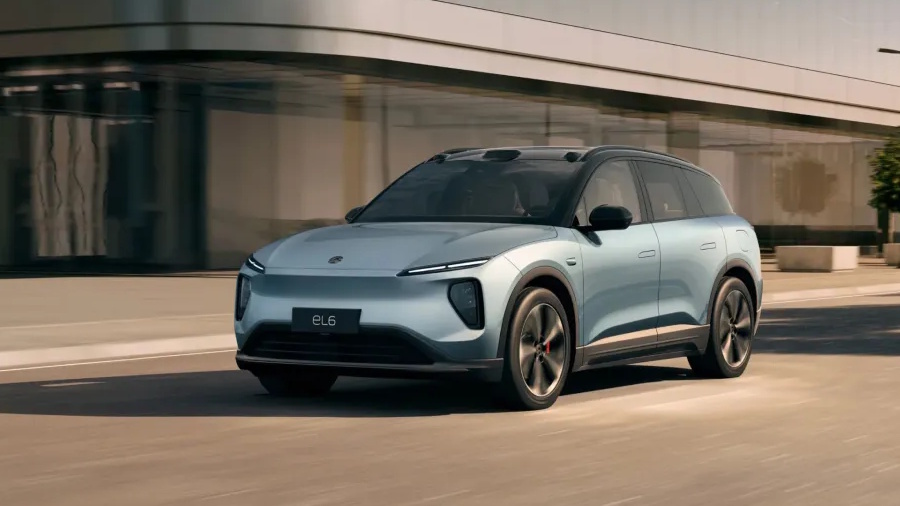
How to sum up Nio’s European strategy in one sentence? Great cars, but no clue what they’re doing.
Nio has officially restarted its journey in Denmark with the delivery of its first electric vehicle following a complete market reset. According to electric-vehicles.com, the Chinese EV maker is relaunching operations through a local distributor after its previous direct-sales strategy failed to gain traction. The first customer handover marks a symbolic but meaningful step in Nio’s renewed approach, one built on stronger local partnerships, streamlined operations, and a more pragmatic path back into the Danish market.
Why Nio switched to distributors in Denmark
Nio initially entered the Danish market with its own direct sales, marketing, and battery-swap infrastructure. But modest registrations and low uptake (just a handful of vehicles per year) prompted a rethink.

In June 2025, Nio announced its formal pivot to distributor partnerships across several European markets including Denmark. The chosen partner for Denmark is Nic. Christiansen Group (NC Group), a well-established Scandinavian mobility provider. This approach allows Nio to leverage local dealer expertise for sales, service and after-sales support, reducing overhead while offering a more familiar buying and ownership experience for Danish customers.
The relaunch’s first milestone came on November 23, when the first Nio EV was handed over to a customer under the new distributor model. Feedback from early events indicates strong public interest, although Nio has not disclosed exact order numbers.
What changed: Swap-station closure & end of battery-rental
As part of the shift, Nio has closed its only battery-swap station in Denmark and discontinued its battery-rental program (Battery-as-a-Service) in the country. This marks the first time Nio has shuttered a swap-station in Europe, reflecting a strategic realignment towards more conventional EV ownership and local dealer-based service.
Honestly, the whole Battery-as-a-Service concept is a huge misstep by Nio. While battery swapping might work in China, renting a battery in Europe from a relatively unknown EV brand (and charging premium prices for it) is, to put it mildly, not a very serious strategy.
Nio’s wider European reorganisation
Nio’s Denmark relaunch is part of a broader adjustment across Europe. According to industry reporting, several senior European executives left recently, prompting company founders to take a more hands-on role.


Under the new “multi-channel” strategy, Nio will use direct-sales in core markets where it already has infrastructure, and distributor-based sales in markets where it previously struggled or where dealer networks offer advantages.
What this means for Danish (and European) EV buyers
For Danish buyers, the switch means easier access to Nio EVs, likely faster deliveries, local servicing and a more traditional car-buying experience via dealers. For Nio, distributor partnerships reduce risk and cost, making supply and support more scalable.

The closure of the swap stations and the abandonment of battery rental could finally help Nio gain traction in Europe. Burning money on unused swap stations and building pointless Nio Houses drove the company straight into a wall.
For the broader European market, Nio’s reorganisation shows that expansion depends not only on products but on having a viable distribution and support model, especially in regions with varying adoption rates.
FAQ
Q: Does Nio still offer battery swapping in Denmark?
A: No — the only Danish swap station has been closed, and the battery-rental service discontinued.
Q: Who is distributing Nio cars in Denmark now?
A: Distribution is handled by Nic. Christiansen Group, a Scandinavian mobility provider that took over local sales and after-sales duties in 2025.
Q: When did the first delivery under the new distributor model happen?
A: The first EV handover under the new arrangement was on November 23, 2025.
Q: Is this shift unique to Denmark?
A: No — Nio is rolling out distributor-based models in several European markets starting in 2025–2026, especially where direct-sales have been challenging.
Q: Does this mean Nio is leaving Europe’s swap-station model?
A: Not entirely. Nio continues swap-station operations in other European countries where it deems viable, but Denmark is the first European market where it has closed operations.
Latest News