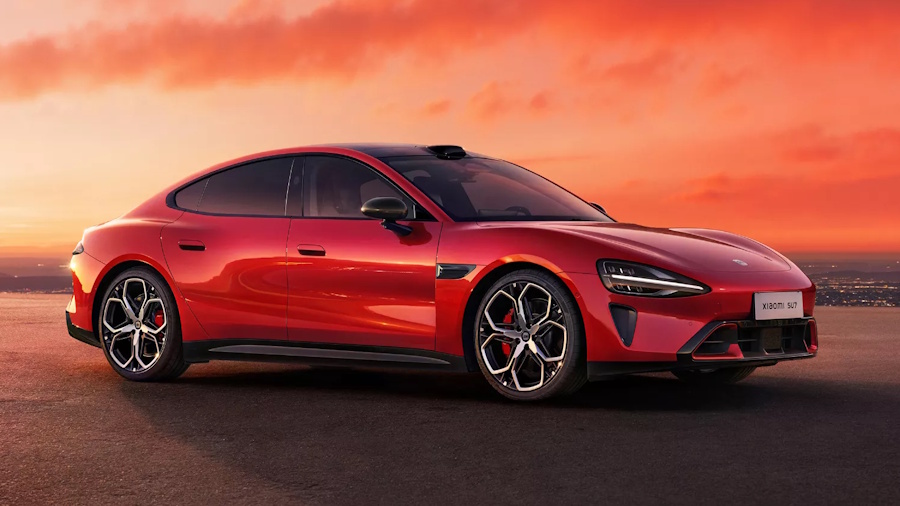
I’ve been following the electric vehicle market for quite some time now, with a particular focus on Chinese EVs entering Europe. These cars are often seen as more advanced than their European counterparts, especially when it comes to software, battery technology and pricing. And yet, despite all that, no Chinese EV available in Europe has caught my attention quite like the Xiaomi SU7.
And now, with the launch of the second-generation model, that interest only grows stronger. According to recent reports, the updated Xiaomi SU7 brings significant improvements in range, charging speed and overall technology. Perhaps even more telling is the demand: the new model secured around 15,000 orders in just 34 minutes after launch, a figure that highlights just how much momentum Xiaomi has built in a very short time.
Table of Contents
- Xiaomi SU7 2026: What’s Actually New
- Battery, Range and Charging Improvements
- What Sets the Xiaomi SU7 Apart
- Pricing Strategy: Undercutting Tesla
- Xiaomi SU7 in Europe: My Personal Take and Market Perspective
- FAQ
Xiaomi SU7 2026: What’s Actually New
At first glance, the second-generation SU7 doesn’t look dramatically different from the original model. The real changes, however, are under the skin. Xiaomi has focused on improving the core aspects that matter most to EV buyers: range, charging and overall driving technology.

The updated model now comes with an improved electrical architecture, upgraded motors and enhanced chassis systems. Features like adaptive suspension and more advanced driver assistance hardware are now more widely available across the lineup, not just reserved for top-tier variants.
Battery, Range and Charging Improvements
One of the biggest highlights of the new SU7 is its range. The Pro version now reaches up to 902 km (CLTC), placing it among the longest-range electric sedans currently available. It’s worth noting, however, that this figure is based on the Chinese CLTC standard, which reflects driving conditions in China — typically slower speeds and more city driving than in Europe. To get a more realistic WLTP value for European conditions, you can subtract roughly 20% from the CLTC range, or check out my article where I directly compare the two testing standards.
>Related: Affordable Family EVs in Europe
Charging performance has also improved significantly. Under ideal conditions, the car can add up to 670 km of range in around 15 minutes, thanks to its upgraded high-voltage architecture.
Performance remains another strong point for the SU7 lineup. The Max version delivers up to around 690 horsepower, placing it firmly in high-performance territory for an electric sedan.
Here’s a simplified overview of the key battery and range figures:
| Version | Battery (kWh) | Range (CLTC) | Approx. WLTP Range |
|---|---|---|---|
| Standard | 73 kWh (LFP) | 720 km | 560 km |
| Pro | 96.3 kWh (LFP) | 902 km | 722 km |
| Max | 101.7 kWh (NMC) | 835 km | 640 km |
What Sets the Xiaomi SU7 Apart
Beyond the headline figures like range and performance, what really sets the Xiaomi SU7 apart is the overall user experience. This is where Xiaomi’s background in consumer electronics becomes a real advantage. The car is packed with advanced technology and software that feels polished and intuitive, very much in line with what the company has already achieved with its smartphones. In many ways, it feels a step ahead of what is currently offered by most European manufacturers.


The integration with Xiaomi’s broader ecosystem is another standout feature, but it doesn’t stop there. The system also works seamlessly with both Android and Apple devices, which makes it far more flexible for everyday use. Build quality appears solid, but it’s the small details that really stand out. Features like voice commands that can open the trunk or frunk, extensive customization of buttons and screen layouts, and even programmable magnetic switches that can be placed around the cabin where they’re most convenient for the driver or passengers all contribute to a genuinely thoughtful user experience.
Combined with a competitive price point (one that will hopefully remain as aggressive if the car reaches Europe) the SU7 starts to look less like just another EV and more like a carefully designed product that prioritises usability as much as performance. If I were buying an EV today, the Xiaomi SU7 would be very hard to ignore.
Pricing Strategy: Undercutting Tesla
Despite the upgrades, Xiaomi has kept pricing aggressively competitive. The new SU7 starts at around 219,900 yuan (roughly €30,000–€32,000), going up to around 303,900 yuan for higher-end versions. This puts it directly against the Tesla Model 3, but with more range and comparable or better specifications on paper. The strategy is clear: offer more for less, while leveraging Xiaomi’s brand recognition and ecosystem.

If there was any doubt about market interest, the launch numbers quickly settled it. Xiaomi received around 15,000 orders within just 34 minutes of opening sales for the new SU7. That level of demand is notable even in China’s highly competitive EV market.
Xiaomi SU7 in Europe: My Personal Take and Market Perspective
Even though the SU7 is not yet officially available in Europe, it raises an important question: what happens when it arrives? From a European perspective, the combination of long range, fast charging, strong performance and aggressive pricing would make the SU7 extremely competitive. In many ways, it represents exactly what European buyers are increasingly looking for — but currently struggle to find at this price point.
Personally, I’ve been using Xiaomi smartphones for many years. In the meantime, I’ve also used Apple devices and currently use Samsung, but my next smartphone will likely be a Xiaomi again, because in my experience it has consistently proven superior to its well-known competitors. At home, I use at least a dozen Xiaomi devices, all working flawlessly, and I’m extremely satisfied with them. When Xiaomi EVs finally arrive in Europe, I will be following them closely — and if my budget allows, I will most likely buy one myself. From my perspective, the Xiaomi SU7 is currently the most desirable EV on the market.


At the same time, challenges remain. Brand recognition, service networks and regulatory requirements will all play a role in determining whether Xiaomi can replicate its Chinese success in Europe. Still, if this is the direction Chinese EVs are heading, the pressure on European manufacturers is only going to increase.
FAQ
What is the Xiaomi SU7?
The Xiaomi SU7 is a Chinese electric sedan, now in its second generation, offering advanced technology, long range, fast charging and competitive pricing.
What is the range of the Xiaomi SU7?
The Pro version reaches up to 902 km (CLTC). For European WLTP conditions, this roughly translates to around 722 km.
How fast can the Xiaomi SU7 charge?
Thanks to its upgraded high-voltage architecture, the SU7 can add up to 670 km of range in about 15 minutes under optimal conditions.
What battery sizes are available for the SU7?
The lineup includes batteries from approximately 73 kWh to 96 kWh, depending on the version.
How powerful is the Xiaomi SU7?
The Max version delivers around 690 horsepower, offering strong acceleration and high-performance driving.
What makes the Xiaomi SU7 different from other electric cars?
The SU7 stands out with advanced technology and software inspired by Xiaomi’s consumer electronics, seamless integration with Android and Apple devices, and thoughtful details like customizable controls and programmable magnetic switches.
Is the Xiaomi SU7 available in Europe?
Not yet, but it is expected to arrive in European markets in the future. Xiaomi’s brand recognition, service network and regulatory approvals will influence its success.
What are some unique user experience features in the SU7?
The car offers voice commands for opening the trunk and frunk, full customization of buttons and screen layouts, and programmable magnetic switches that can be placed wherever convenient for the driver or passengers.
How does CLTC compare to WLTP?
CLTC reflects typical driving in China, which is generally slower and more urban. For a rough WLTP conversion for Europe, subtract around 20% from the CLTC range.
Featured Image Source: Xiaomi
Latest News